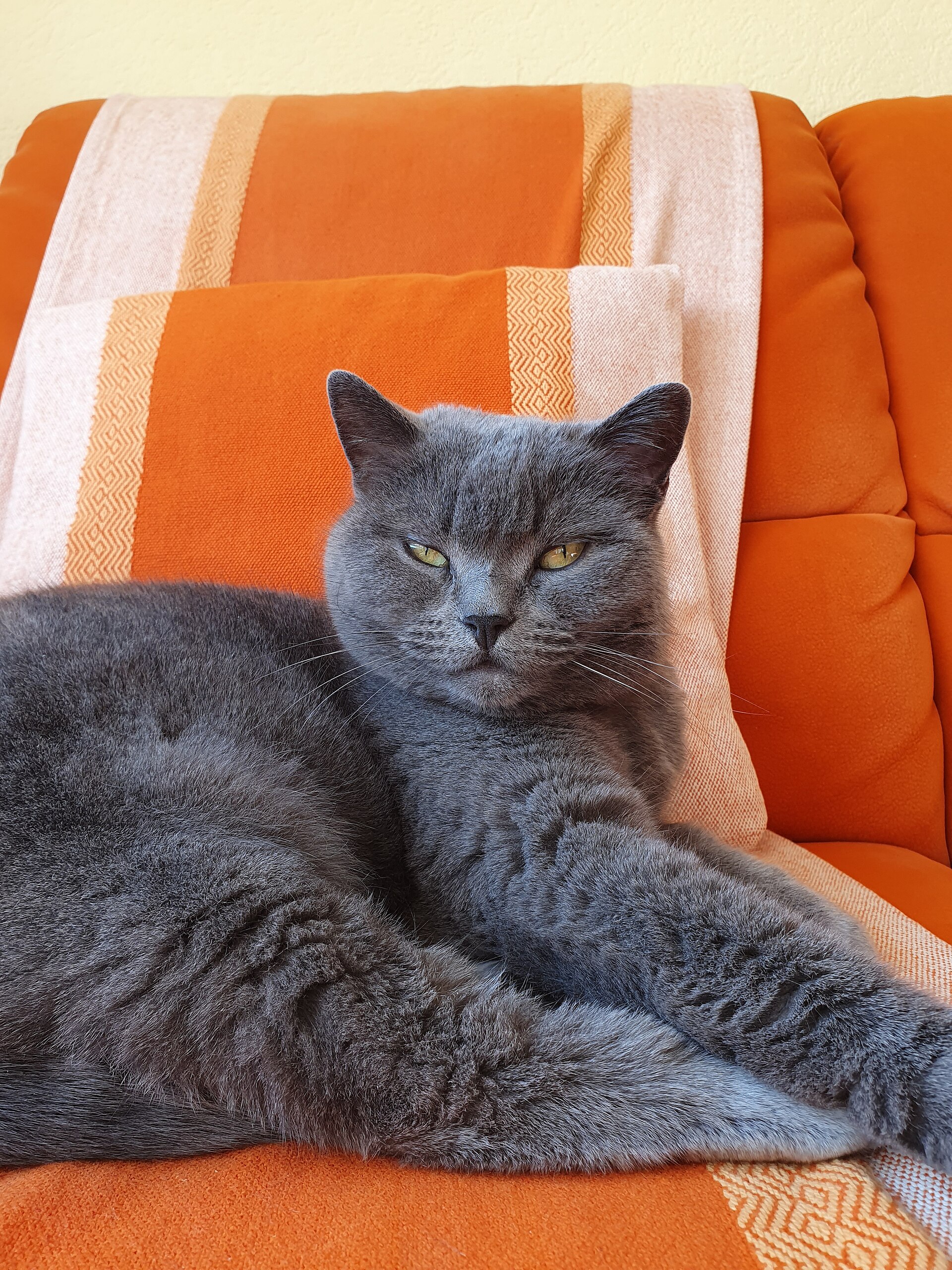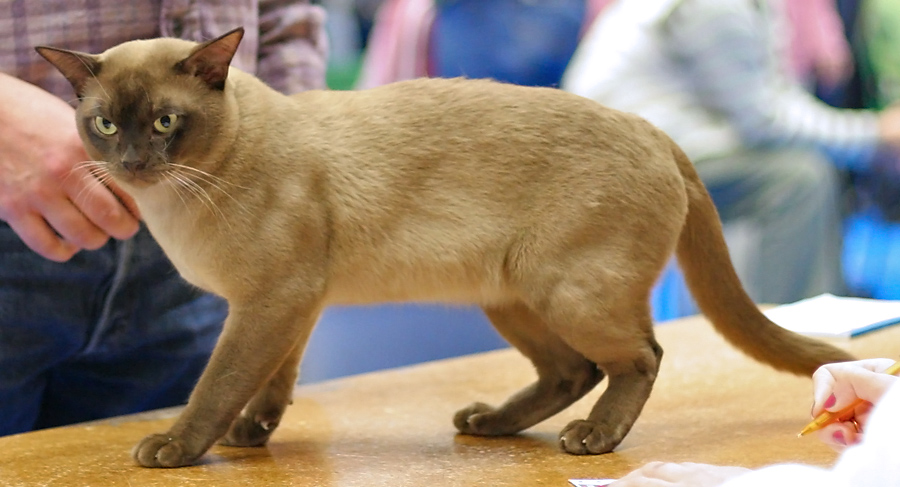
Burmese
Characteristics
Temperament
An exceptionally affectionate, sociable, people-bonded domestic cat, often described as one of the most "dog-like" cats in temperament. It is active, playful, intelligent and communicative (with a soft voice), loves contact, being held and following the family, and stays playful into old age. It suffers greatly from loneliness: it is not suited to those almost always away from home. It does well with children and other animals. In short, a warm, involved companion that actively seeks a relationship with its human.
Diet
An obligate carnivore like all cats: it needs a complete, balanced food rich in quality animal protein, suited to age, weight and lifestyle, with the right supply of taurine and always-fresh water. Being compact and greedy, it easily tends to overweight: portions should be carefully controlled. Given the great longevity, it is important to adapt the diet to the different life stages, with particular attention to the senior years. Coat care is minimal, thanks to the short, silky coat.
The Burmese is one of the most loved shorthaired cat breeds for its temperament: a compact, surprisingly muscular cat, wrapped in a glossy, satiny coat and with an unmistakable golden gaze. Famous for:
- The glossy sable coat: classically a warm dark brown (sable), silky and close-lying
- The golden eyes: large, round and expressive
- The surprising "heaviness": compact and muscular, "a brick wrapped in silk"
- The "dog-like" nature: extremely affectionate, sociable, bonded to people
- The soft voice: communicative like the Siamese, but more discreet
- The great longevity: it often lives 16-18 years and more
It enters the portal among the shorthaired cats, alongside breeds such as the Siamese, Bombay and Bengal. It is important not to confuse it with two similarly named breeds: the Bombay (essentially a black Burmese) and above all the Birman (Sacro di Birmania), which is instead a longhaired colorpoint cat, completely different.
Classification and category
The Burmese is a Felis catus, a shorthaired domestic breed. Its story begins with a brown female, "Wong Mau", brought from Burma to the United States in the 1930s and crossed with the Siamese: from there the breed developed. There are two main types, the American (Contemporary), rounder and cobbier, and the British (European), slightly more moderate. In the portal it is placed among the shorthaired cats. It is essential to tell it apart from breeds of similar name or appearance: the Bombay (also in the portal) — essentially a black-coloured Burmese, a "miniature panther"; the classic Burmese is instead sable brown; the Birman / Sacro di Birmania (in the portal) — despite the similar name, a longhaired cat with a colorpoint pattern and white "gloves", an entirely different breed; the Tonkinese — a cross between Burmese and Siamese, often with aquamarine-blue eyes; the Siamese (in the portal) — a relative in the breed's history, but slender and colorpoint, with blue eyes. Etymology: the name refers to Burma (today's Myanmar), the region of origin of the founder Wong Mau, even though the modern breed was developed mainly in the West. Parameters: Weight roughly 4-6 kg; it weighs more than its size suggests. Build medium, compact, round and very muscular. Colours the classic sable and various dilutions (champagne, blue, platinum, etc.). Longevity: remarkable, often 16-18 years and more: it is one of the longest-lived breeds, and long keeps a playful, kitten-like nature.
Habitat and distribution
The Burmese is a domestic breed: its "habitat" is the home, beside people. Some notes on origin and spread: origin from a female cat coming from Burma, the breed was developed and selected mainly in the United States and Britain; current spread worldwide as a prized companion cat, particularly loved for its sociable character. The ideal environment for this cat: constant company (it is a cat that wants to be with its family and suffers greatly from prolonged solitude); play and interaction (lively and curious, it appreciates games, attention and even "helping" with household activities); and indoor life (like many pedigree cats, it does best as an indoor cat, trusting and bonded to people). The Burmese is considered one of the most "people-oriented" cats of all: not an independent, aloof cat, but a companion that actively seeks contact, follows its owner from room to room and loves family life. For this it is not the best choice for those often away from home who cannot guarantee it company. Status: a well-established domestic breed; there are no conservation issues, but it is important to turn to serious, health-focused breeders, also because of some genetic predispositions known in certain lines.
Diet
The Burmese, like all cats, is an obligate carnivore and needs a diet rich in quality animal protein. In general: a complete, balanced cat food, suited to age (kitten, adult, senior), weight and lifestyle; animal protein as the basis, with the right supply of taurine and essential nutrients; and always-fresh water. Practical tips: attention to weight (the Burmese is greedy and sociable at mealtimes too; being compact, it easily tends to overweight if portions are not controlled); a diet for a long life (given the notable longevity, it is important to adapt feeding to the different life stages, especially in the senior years); and meals as a moment of relationship (given its affectionate nature, food and play become occasions for interaction). Crucially, more than particular needs, the Burmese requires a well-measured quality diet, to avoid overweight, and attention to needs that change over its long life.
Physical features
A medium-sized cat of round, compact and surprisingly solid appearance. The coat — the distinguishing trait: short, fine, glossy and satiny hair, very close-lying; a classic sable colour, a warm dark brown; dilutions such as champagne, blue and platinum are also allowed; a "silk" effect (the coat reflects light, giving it a silky, shiny look). The body: a compact, muscular structure, surprisingly heavy: the famous "brick wrapped in silk"; rounded shapes, from chest to head; proportionate legs and agile movement. The face and eyes: large, round, expressive eyes, golden or yellow; a rounded head with a sweet, alert expression; and low shedding (the short, fine coat needs very little care).
Character, curiosities and care
The Burmese is famous above all for its exceptionally affectionate, sociable character. It is an active, playful, intelligent cat, deeply bonded to people, often described as one of the most "dog-like" cats in temperament: it seeks contact, loves to be held and on shoulders, follows its people everywhere and takes part in household life.
The "brick wrapped in silk": this famous description perfectly captures the Burmese's physical paradox; to the touch it is much heavier and more solid than its appearance suggests: beneath the silky coat and elegant air hides a compact, all-muscle body. The founder cat: the story of the modern breed begins with a single brown female, "Wong Mau", brought from Burma to the United States in the 1930s; from her crosses, particularly with the Siamese, breeders developed the Burmese as we know it, gradually distinguishing it from related breeds. The "dog-like" cat: the Burmese is often compared to a dog for its extreme sociability and need for company; it loves to be involved in everything, can learn to play fetch and greets family members with enthusiasm; the downside is that it suffers greatly from loneliness: it is not a cat for those almost always away from home. The family of related breeds: the Burmese is at the centre of a small feline "family"; crossed with the Siamese it gave rise to the Tonkinese; bred in black it is the origin of the Bombay; it has also contributed to other breeds; knowing these relationships helps not to confuse it with its many "cousins". The long-lived, eternally young cat: besides being one of the longest-lived breeds (not rarely 16-18 years and more), the Burmese long keeps a lively, playful, kitten-like nature, even in old age; it is a companion that accompanies the family for many years while keeping its enthusiasm and desire to interact. Practical care: the Burmese needs above all company, play and attention, a well-measured diet (to avoid overweight) and minimal coat care, thanks to its short, silky coat. In return it offers a warm, constant, involved affection, a true "family" cat.
Pros
- Carattere eccezionale: affettuosissimo, socievole e legato alle persone
- Molto longevo (spesso 16-18 anni e oltre) e giocoso fino a tarda età
- Mantello corto e setoso: pochissime cure e bassa perdita di pelo
- Ottimo con bambini e altri animali: vero gatto da famiglia
Cons
- Soffre molto la solitudine: non adatto a chi è quasi sempre fuori casa
- Tende al sovrappeso se le razioni non sono controllate
- Alcune linee hanno predisposizioni genetiche note: scegliere allevatori seri
- Facile da confondere, per il nome, con Bombay e Sacro di Birmania (razze diverse)