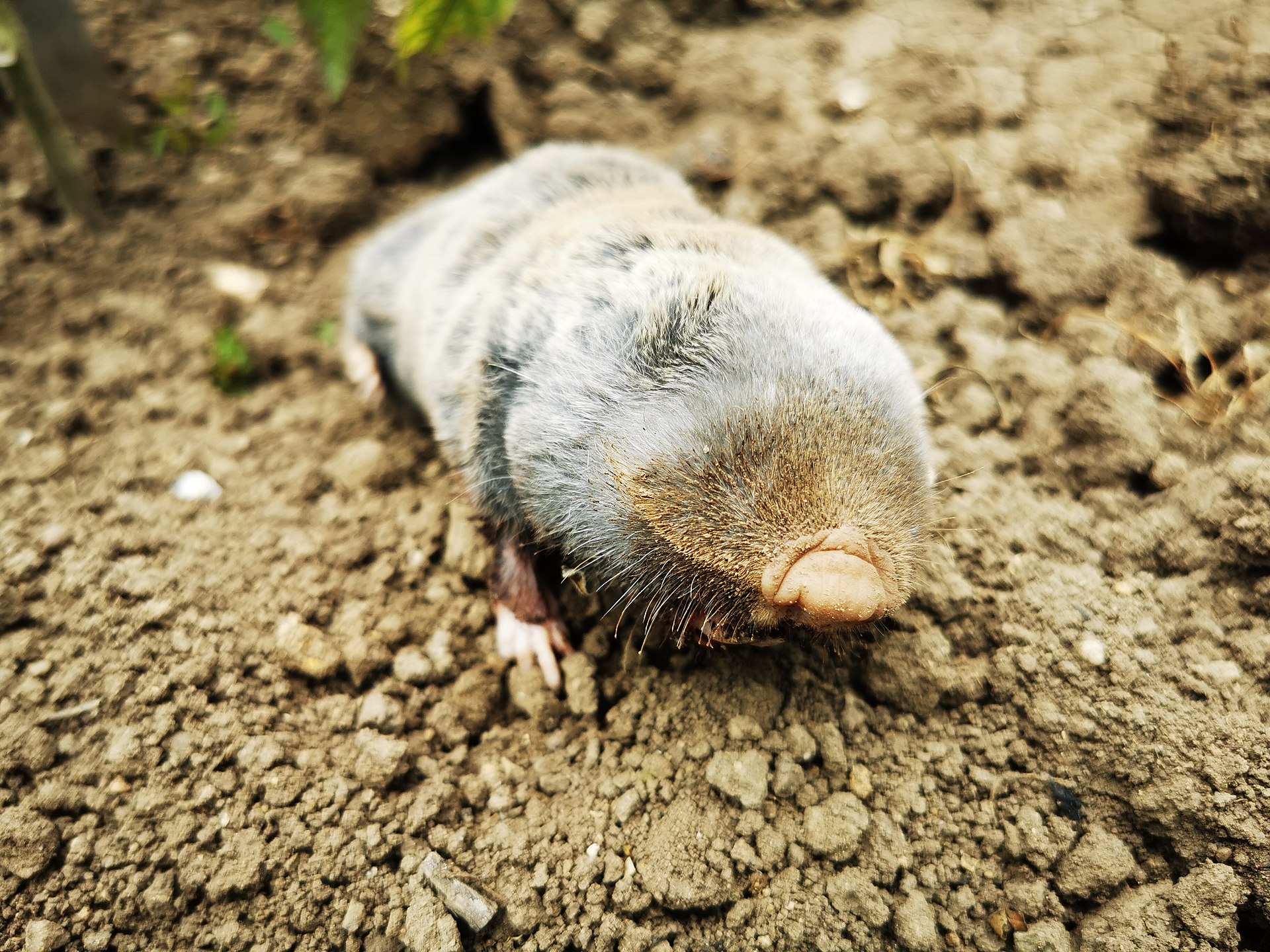
Blind Mole Rat
Characteristics
Temperament
Solitary, territorial, PERMANENTLY underground. COMPLETELY BLIND (vestigial eyes under skin). Communicates via SEISMIC HEAD-DRUMMING (ground vibrations 10-50 m). RECORD LONGEVITY for rodents (20-21 years, 7x others). TOTAL CANCER RESISTANCE (zero cases in 50+ years of studies — biomedical model!). Extreme hypoxia tolerance (CO2 60%, O2 7%). 6+ cryptic species genetically distinct. K-selected reproduction.
Diet
Subterranean herbivore/folivore. Roots 60-70% diet (wheat, barley, legumes), tubers/bulbs 15-20% (iris, tulip, lily), leaves 5-10%, occasional seeds, rare insects. Technique: olfactory tunnel search + root bite with permanently exposed incisors (also used for digging) + accumulation in 5-10 chambers up to 14 kg (record 30 kg!) per season. 30-50 g food/day.
The Blind Mole Rat (Nannospalax ehrenbergi, and related species) is one of the most extraordinary rodents in the world. Lives exclusively underground in semi-arid zones of Eastern Mediterranean and Middle East. Unique features:
- COMPLETELY BLIND: vestigial eyes covered by skin — sees nothing (though can detect seasonal light differences via pineal)
- UNDERGROUND LIFE: spends entire life underground except brief juvenile dispersal
- HEAD-DRUMMING: communicates via ground VIBRATIONS, banging head against tunnel ceiling — unique "seismic communication"
- RECORD LONGEVITY: lives 20-21 years (vs rat 2-3 years = 7-10x longer!)
- TOTAL CANCER RESISTANCE: ZERO documented cancer cases in thousands of specimens studied for 50+ years — biomedical model for anti-cancer research
- Extreme hypoxia tolerance: survives CO2 up to 60% (human 5% lethal!)
- Permanently exposed incisors: used for digging, lips close behind teeth
IUCN status: variable by species (most Least Concern). Global population: millions of individuals across Eastern Mediterranean basin.
Classification and category
Order Rodentia, family Spalacidae, subfamily Spalacinae, genus Nannospalax. Genus recently divided into 6+ distinct cryptic species: N. ehrenbergi (Mediterranean), N. xanthodon (Anatolian), N. nehringi (Caucasian), N. leucodon (Balkans), N. galili (Galilee), N. judaei (Judean). Also genus Spalax proper (4-5 species, larger).
Etymology: "Nannospalax" Greek "small" + "mole". "Ehrenbergi" honours Christian Ehrenberg (1795-1876), German naturalist. Described by Nehring 1898. Parameters: Weight 100-200 g (Spalax giganteus up to 250 g). Length 13-17 cm. Tail absent or vestigial (0-1 cm). Longevity 20-21 years in nature! (record among comparable rodents). Sexual maturity 2-3 years (late). Gestation 28-35 days. Litter 1-5 cubs (avg 2-3). 1 litter/year.
Habitat and distribution
Eastern Mediterranean and Middle East semi-arid regions. Israel/Palestine, Turkey, Lebanon, Syria, Egypt (Sinai, Nile delta), Iraq, NW Iran. Spalax sensu stricto: Russia, Ukraine, Bulgaria, Greece (larger species). Habitats: steppes/grasslands, agricultural fields, open pastures, forest edges. Avoids dense forests, rocky terrain, mountains above 2,000 m, urban, flooded areas. Underground depth: 0-60 cm. Tunnel system: 250-400 m of feeding tunnels, deep nesting chamber, separate latrine, 5-10 food storage chambers. IUCN: most Least Concern, Spalax giganteus VU, Spalax arenarius EN. Threats: intensive agriculture, persecution, habitat loss, pesticides, fragmentation.
Diet
Subterranean herbivore/folivore. Diet: roots 60-70% (wheat, barley, legumes), tubers and bulbs 15-20% (iris, tulip, lily), leaves/shoots 5-10%, occasional seeds, rare insects (5%). Technique: olfactory tunnel search + root bite + transport to storage chambers + accumulation up to 14 kg (record 30 kg!) of tubers per season. Permanently exposed incisors used for digging — lips close behind teeth. Consumes ~30-50 g food/day.
Physical features
Cylindrical body adapted to underground life. Coat: uniform grey-brown, dense short velvety, reversible direction (forward or backward without resistance). Head: VESTIGIAL EYES (1 mm, covered by skin — invisible!), NO external ears (only small internal openings), flat hardened nose, EXPOSED YELLOW INCISORS (grow 8-10 mm/month), long sensory vibrissae, functional pineal gland (detects seasonal photoperiod through skull!). Body: cylindrical, stocky, short robust legs with digging claws, no tail. Massive skull with powerful jaw muscles. Physiological: extreme hypoxia tolerance (CO2 60%, O2 7%), low metabolism, stable underground temperature 15-20°C. SEISMIC COMMUNICATION via head-drumming. Magnetoreception suspected.
Behaviour and curiosities
Solitary, territorial, PERMANENTLY underground. Each individual owns 250-400 m of tunnels. Polygamous, late winter-early spring breeding. Gestation 28-35 days. 1-5 cubs (avg 2-3) in insulated nest chamber. Cubs altricial. Juvenile dispersal ONLY moment above ground — exposed to predators (foxes, owls, snakes, leopards).
Famous: TOTAL CANCER RESISTANCE. Eviatar Nevo team (Haifa University) studied thousands of specimens for 50+ years — ZERO cancer cases. Vs rats 30-50%, humans ~40% lifetime. Mechanisms (Gorbunova, Seluanov, Manov 2012): hypoxia-induced necrosis of pre-cancer cells, "concerted cell death", functional p53, stable telomeres. Biomedical model for anti-cancer therapies. RECORD LONGEVITY 20-21 years in nature — 7-10x other rodents. SEISMIC HEAD-DRUMMING: communicates via ground vibrations 10-50 m range. "Blind but detects light": pineal gland detects seasonal photoperiod through skull. HYPOXIA TOLERANCE: CO2 60%, O2 7%. Biomedical model for stroke/infarct therapies. Cryptic speciation: 6+ genetically distinct species, morphologically identical. Root accumulation: up to 14 kg (record 30 kg). "Cancer-proof model": NIH, ERC, Rochester, Haifa research. Not real moles: convergent evolution with Talpidae. Eviatar Nevo (1929-2020): "father of Spalax research". Israeli cultural icon: stamps, coins. K-selected reproduction: small litters, late maturity, long life.
Pros
- Resistenza totale ai tumori — modello biomedico anti-cancro
- Longevità record per roditori (20-21 anni, 7x altri)
- Tolleranza ipossia estrema — modello per ictus/infarti
- Communicazione sismica unica via head-drumming
Cons
- Persecuzione da agricoltori (danni a colture)
- Alcune specie Endangered (Spalax arenarius)
- Vulnerabile ad agricoltura intensiva (aratri profondi)
- Speciazione criptica complica conservazione