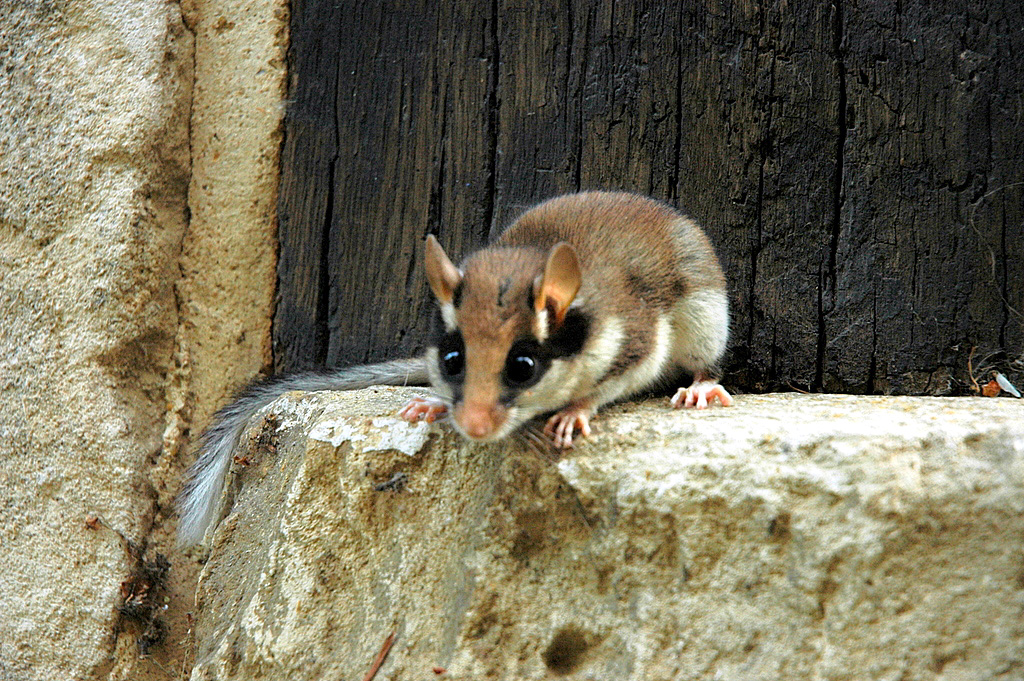
Garden Dormouse
Eliomys quercinus
Characteristics
Temperament
A small wild rodent, nocturnal, agile and curious, with an unmistakable black mask. It is NOT a common pet, but a free dormouse that lives in woods, scree and gardens. It is a skilled climber, active at night and shy by day, when it hides in nests and cavities. Among the European dormice it is the most predatory, with an unexpected hunter's side. Like all dormice, it spends many months in hibernation during winter, surviving on the fat accumulated in autumn. It is a fascinating animal to observe and protect in the wild, classified as Near Threatened and declining in many areas of Europe.
Diet
An omnivore with a marked carnivorous tendency: it is the most predatory of the European dormice. It actively hunts insects and other invertebrates (especially beetles), slugs and snails, and occasionally small vertebrates and eggs; it supplements with fruit, berries, seeds and nuts. It is a nocturnal hunter using sight, hearing and smell, and in autumn it eats abundantly to build up the fat needed for the long winter hibernation. This more carnivorous nature distinguishes it from the other dormice (the edible and hazel dormouse), more tied to fruit and seeds.
The Garden Dormouse (Eliomys quercinus) is one of the prettiest and most unmistakable rodents of the European fauna: a dormouse with a lively black "mask" that makes it a kind of little masked bandit. Fascinating for:
- The black "mask": a black band crosses the eyes and reaches behind the ears, like a mask
- The tufted tail: long, ending in a characteristic black-and-white tuft
- The large eyes and ears: adapted to nocturnal life and keen senses
- The carnivorous diet: it is the most predatory of the European dormice
- The hibernation: like all dormice, it sleeps for many months in winter
- The agility: a skilled climber, active at night among branches, rocks and bushes
IUCN status: Near Threatened (NT), declining in various parts of Europe. It enters the portal among the dormice (Gliridae), alongside the Edible Dormouse and the Hazel Dormouse: with them it completes the portal's dormouse trio, the small European rodents famous for their long winter hibernation.
Classification and category
The Garden Dormouse belongs to the order Rodentia, family Gliridae (the dormice), genus Eliomys. The species is Eliomys quercinus. In the portal it is placed among the dormice, alongside the other European dormice. It is useful to tell it apart from the portal's other two dormice: the Edible Dormouse (Glis glis) — larger, with a "little grey squirrel" look, a bushy tail and without a black eye mask; the Hazel Dormouse (Muscardinus avellanarius) — tiny, tawny-orange in colour, also without a mask; the Garden Dormouse is recognized at a glance by the striking black mask over the eyes and by the tail ending in a black-and-white tuft. The combination of black mask + black-and-white tufted tail + large ears is the garden dormouse's "identity card". Etymology: the scientific name quercinus refers to the oak (quercus) and the woods; the English name "garden dormouse" instead stresses its presence in gardens and orchards too. Parameters: Body length about 10-17 cm, plus a tail of about 9-14 cm. Weight usually about 45-120 g, higher just before hibernation. Appearance a small, slender rodent, with large eyes and an unmistakable mask. Longevity: in the wild it usually lives a few years (up to about 5). Reproduction: after hibernation it breeds in spring-summer, with litters of a few young, raised in the nest.
Habitat and distribution
The Garden Dormouse is a European rodent, widespread across much of the continent, especially in central and southern areas: its range covers much of Europe, from the Iberian Peninsula to central and eastern Europe, islands included. Preferred habitats — varied environments, natural and human-altered: woods and forests, in particular broadleaf ones; rocky areas, dry-stone walls and scree, where it finds shelter; and gardens, orchards and the surroundings of houses, sometimes even inside buildings (hence the English name). It is a nocturnal, agile, climbing animal. During the night it moves nimbly among branches, rocks and bushes in search of food, while by day it shelters in nests, cavities or crevices. Like all dormice, it hibernates for many months in winter: it accumulates fat reserves in autumn and spends the cold season in a deep sleep, in a protected refuge. IUCN status: Near Threatened (NT). Although still widespread, the garden dormouse is declining in many European regions, for reasons not fully clear but probably linked to habitat loss and fragmentation and to environmental changes. It is therefore a rodent that deserves attention from a conservation standpoint, unlike many other common species.
Diet
The Garden Dormouse is omnivorous, but with a marked carnivorous tendency: it is in fact the most predatory of the European dormice, far more than the other dormice, which prefer fruit and seeds. Its diet includes: insects and other invertebrates (an important component, especially beetles); slugs and snails; small vertebrates and eggs (occasionally it also preys on small animals and nestlings); and fruit, berries, seeds and nuts (the plant part of the diet). Features of its feeding behaviour: a nocturnal predator (it actively hunts prey at night, using sight, hearing and smell); fat accumulation (in autumn it eats abundantly to build up the reserves needed for the long hibernation); and opportunistic (the diet varies with the seasons and food availability). Crucially, this more carnivorous nature distinguishes the garden dormouse from the portal's other dormice, a reminder that, although belonging to the same family, dormice can have different feeding habits.
Physical features
The Garden Dormouse is a small rodent with a lively, unmistakable appearance. The head and the "mask" — the distinguishing trait: a black band over the eyes, extending from the muzzle to behind the ears, like a bandit's mask; large, dark eyes, adapted to nocturnal life; broad, rounded, prominent ears. The tufted tail: a long tail, covered in hair; ending in a characteristic black-and-white tuft, one of its identifying marks. The body and coat: a slender, agile body, suited to climbing; a brown or grey-brown back and a white belly, well contrasted; agile limbs, perfect for moving among branches and rocks.
Curiosities and conservation
The Garden Dormouse is a rodent as pretty as it is little known, a small "masked bandit" of European woods and gardens, whose life is marked by the rhythm of the seasons and the long winter sleep.
The bandit's mask: the most obvious feature of the garden dormouse is the black band crossing its eyes, like the mask of a comic-book thief or a little raccoon; it is this detail, together with the tufted tail, that makes it instantly recognizable and different from all the other European dormice. The sleeper that snores away the winter: like the other dormice, the garden dormouse is a true hibernation champion; in English the Gliridae are called "dormice", a name recalling sleep (from the French "dormir"); in winter the garden dormouse can sleep for many months, surviving on the fat accumulated in autumn, with its heartbeat and body temperature drastically reduced. The hunter among the dormice: unlike the edible and hazel dormice, more tied to fruit, seeds and shoots, the garden dormouse is the most carnivorous of the family; it actively hunts insects, snails and even small vertebrates, showing a predatory side unexpected for an animal of such tender appearance. The tail that "sacrifices" itself: like other dormice, the garden dormouse has a particular defence: if a predator grabs it by the tail, the skin covering it can come off, letting it escape; the exposed portion of tail then dries out and falls off; it is an emergency mechanism that can save its life, but the tail does not regrow as some lizards' do. The "garden" mouse: the English name "garden dormouse" recalls that this dormouse does not live only in woods, but readily frequents gardens, orchards and the surroundings of homes, sometimes even entering houses in search of food or a refuge for hibernation; for this reason, in some areas, it is one of the dormice most easily encountered. Conservation: despite its ordinary appearance, the garden dormouse is classified as Near Threatened by the IUCN and is declining in many areas of Europe; the causes are not yet fully clear, but habitat loss and fragmentation, changes in land use and other environmental factors probably contribute; protecting woods, hedges, old orchards and dry-stone walls, and maintaining rich, connected natural environments, is important to ensure a future for this small and fascinating masked rodent.
Pros
- Roditore grazioso e inconfondibile, con la celebre mascherina nera
- Di grande interesse naturalistico, ravviva boschi, siepi e giardini
- Utile come predatore di insetti e altri invertebrati
- Completa nel portale il trio dei gliridi (con Ghiro e Moscardino)
Cons
- È un animale selvatico e protetto, NON un comune animale da gabbia
- Classificato come Quasi Minacciato (IUCN): in declino in molte aree d'Europa
- Notturno ed elusivo: difficile da osservare
- Può entrare nelle case in cerca di cibo o di un rifugio per il letargo