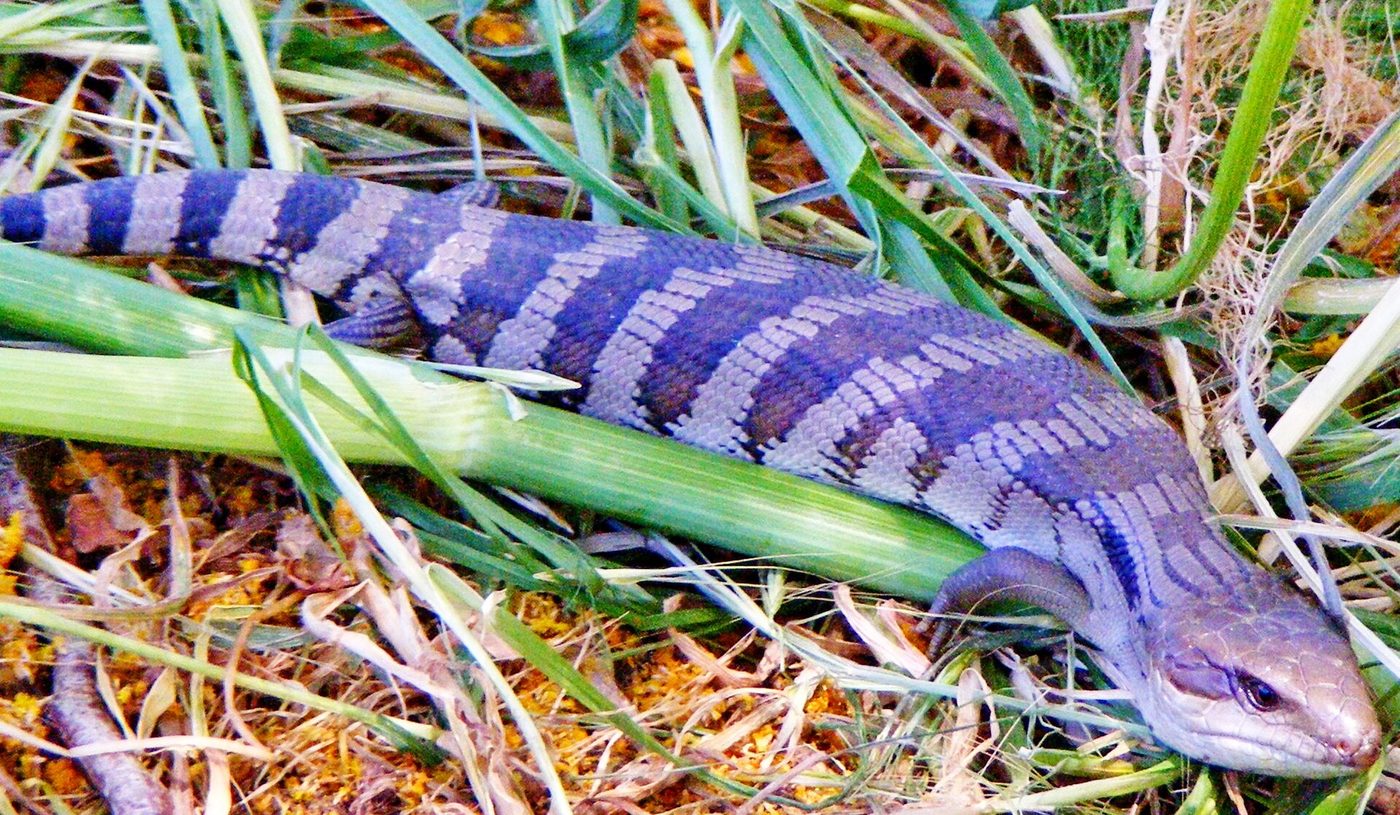
Photo: Peripitus · CC BY-SA 3.0
Blue-tongued skink
Tiliqua scincoides
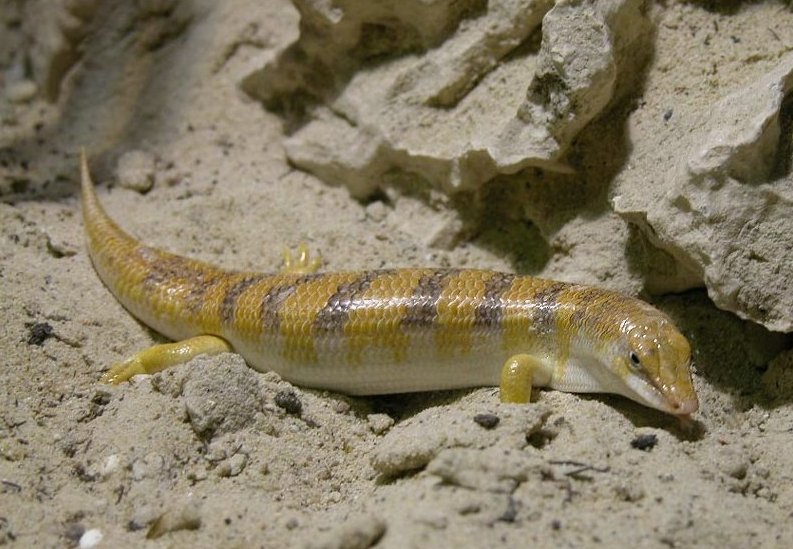
A sturdy Australian lizard with a vivid blue tongue, the blue-tongued skink is a docile, long-lived reptile that is also popular in the terrarium hobby.
Characteristics
Temperament
Docile, diurnal, ground-dwelling, slow-moving
Diet
Omnivore: insects, snails, fruit, plant matter
The lizard with the blue tongue
The blue-tongued skink is one of the largest and best-known skinks, with a stout, elongated body that can reach 45–60 cm in length, short legs and a broad, triangular head. Its name comes from its most famous feature: an intense cobalt-blue tongue that the animal displays by gaping its mouth when threatened, startling predators with an unexpected flash of colour.
Habitat and distribution
It is native to Australia, where it inhabits savannas, scrub and semi-arid regions, and it also occurs on Tanimbar Island in Indonesia. It adapts well to gardens and suburban settings, where it shelters under logs, stones and debris.
Behaviour and diet
It is a diurnal, ground-dwelling reptile with slow movements and a generally placid temperament. It is omnivorous: it feeds on insects, snails, fruit, flowers and plant matter, and its strong teeth let it crush snail shells. Unlike many reptiles it does not lay eggs: it is viviparous and gives birth to fully formed young.
Terrarium care
Its docility and longevity make it one of the most popular terrarium reptiles. It needs ample space, a warm basking spot for thermoregulation, UVB lighting, a substrate to dig in and a varied diet. It should be handled gently and calmly: when stressed it may puff up and hiss, but it rarely bites.
Conservation
The IUCN lists the species as Least Concern: it is common and widespread. In the wild the main dangers are road traffic, cats and dogs, and the use of snail baits that can poison it indirectly.
Pros
- Docile and long-lived, an excellent terrarium reptile
- Spectacular blue-tongue defence display
- Omnivorous diet that is easy to provide
Cons
- Needs proper space, heat and UVB lighting
- Long-term commitment: can live over 20 years
- In the wild vulnerable to traffic, pets and poisons