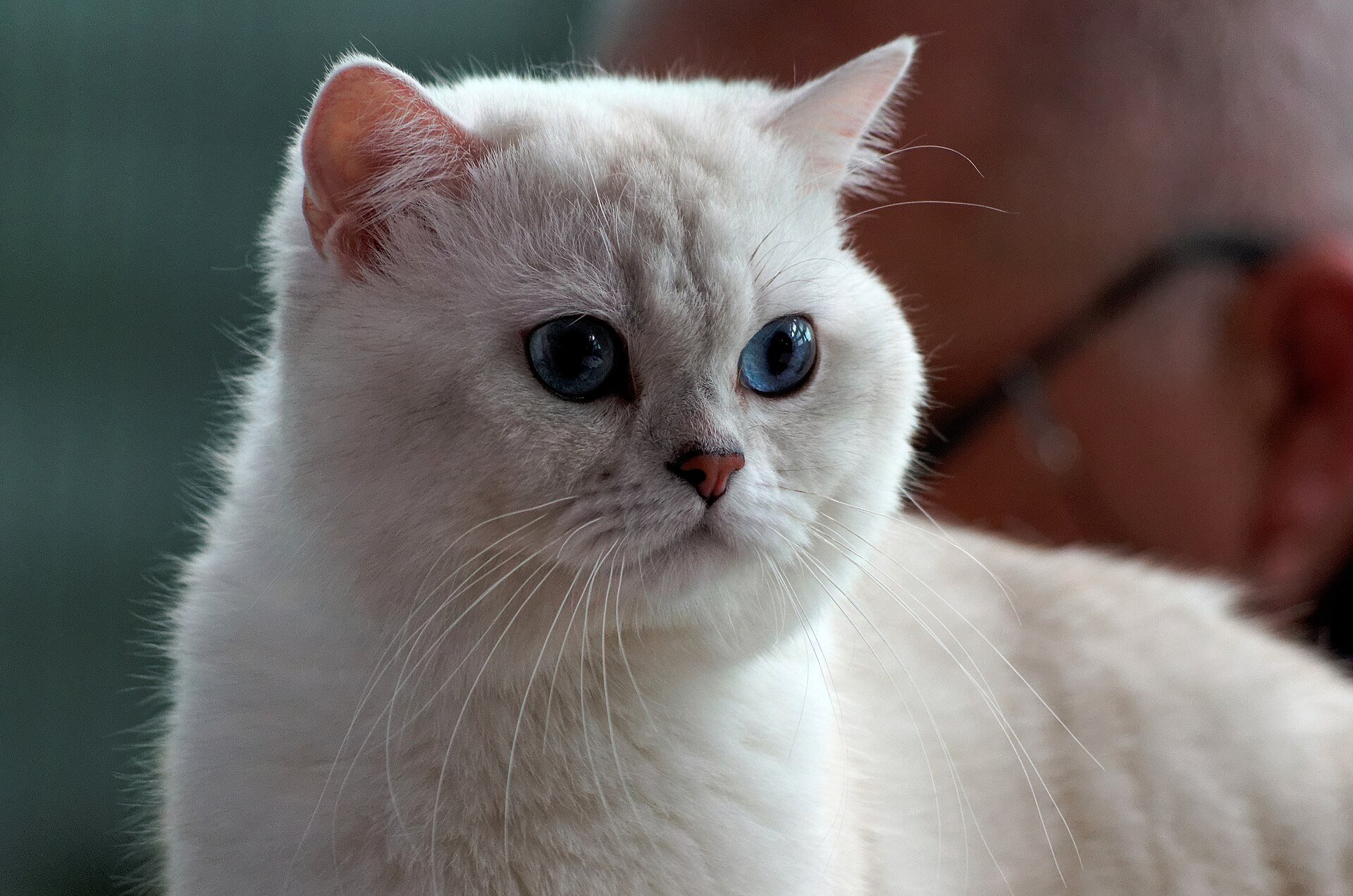
British Shorthair
Felis catus
Characteristics
Temperament
Quiet, dignified, independent, loyal. Not excessively affectionate but always present. Tolerates moderate solitude. Excellent with respectful children and other animals. Inspired the Cheshire Cat in Alice.
Diet
Obligate carnivore, prone to obesity. 250-350 kcal/day in 2-3 meals. High-quality kibble (35-40% protein) or wet food. Predisposed to HCM (annual cardio screening) and urinary stones.
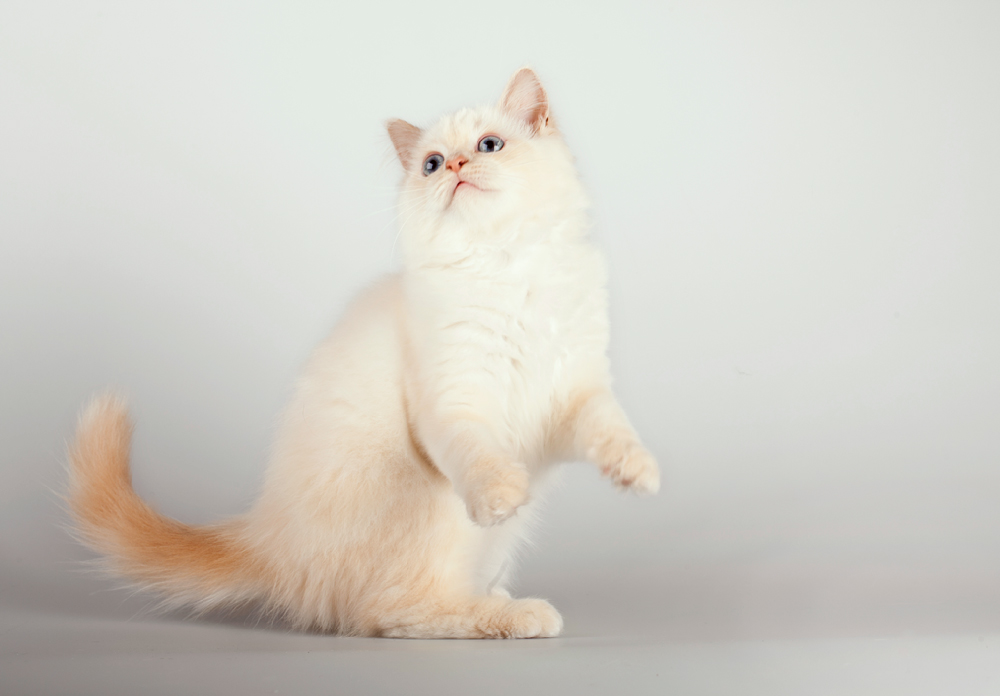
The British Shorthair (Felis catus) is one of the oldest and most prestigious cat breeds in the world, symbol of composed British elegance. Famous for the "plush coat" dense and very soft, the round muzzle and the large orange eyes, it is considered the archetype of the English cat and is likely the inspiration for the Cheshire Cat described by Lewis Carroll in "Alice's Adventures in Wonderland" (1865). Officially standardised in 1871 during the first cat show at the Crystal Palace in London, today it is one of the most popular in the world, particularly appreciated for its balanced temperament and ease of management.
Classification and category
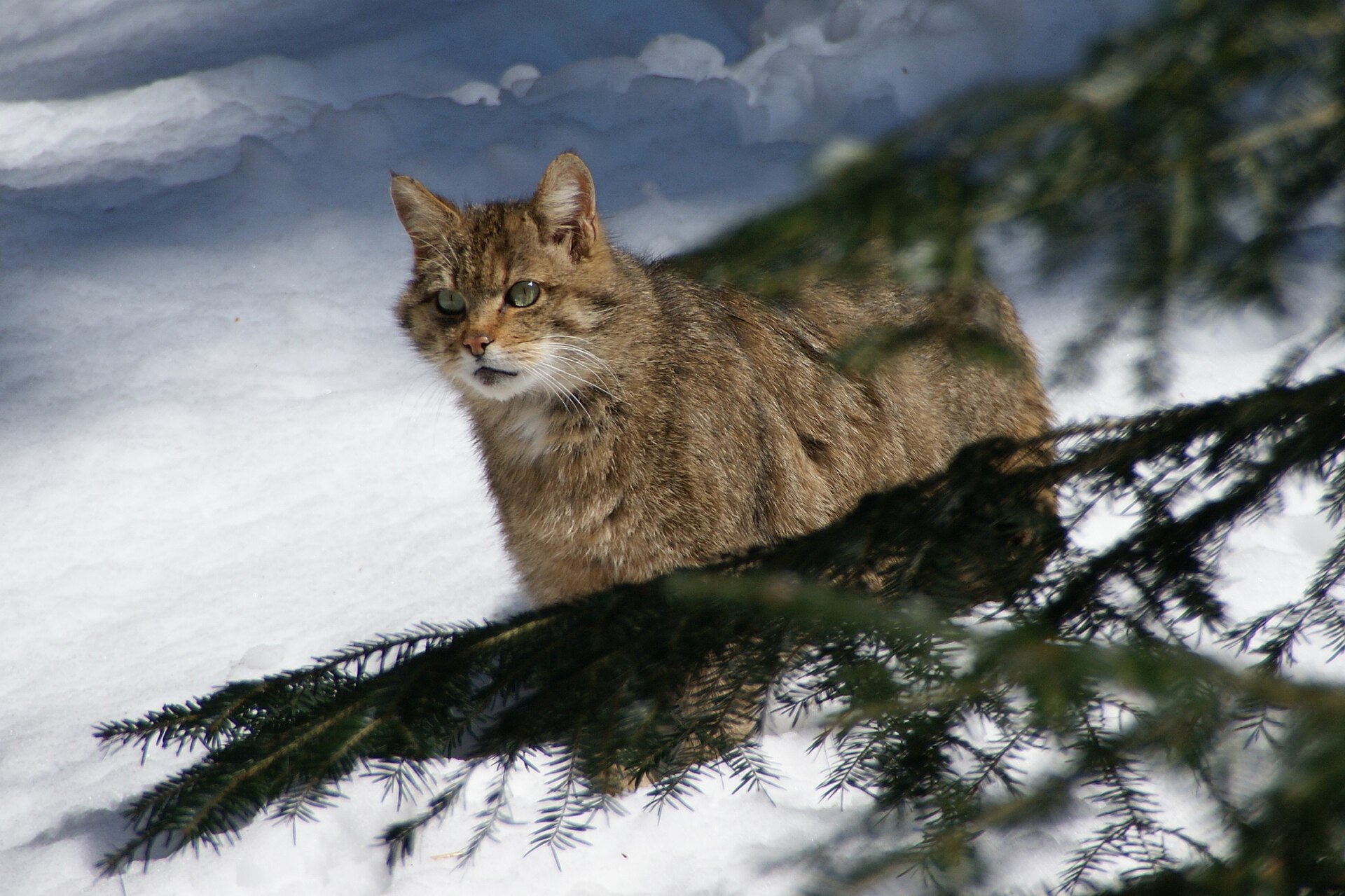
The British Shorthair belongs to the species Felis catus, the domestic subspecies derived from the African wildcat (Felis silvestris lybica). It is classified by the main feline federations (FIFe category III, GCCF Group 3 — Foreign, TICA Traditional) as a distinct breed. The standard provides for a medium-large size: weight 4-8 kg for males (some specimens up to 9 kg), 3-6 kg for females. The structure is typically "cobby" (compact, gathered), with sturdy and muscular body, heavy bones, short and sturdy legs. Full physical maturity is reached late (3-5 years), much more slowly than other breeds. There are numerous colour variants (over 100 recognised), but the most classic and iconic is the British Blue: uniform grey-blue coat with copper-orange eyes.
Habitat and distribution
The British Shorthair is a completely domestic breed, adapted to apartment life. Its tranquillity, peaceful nature and low tendency to vocalise make it ideal for urban families, even with children, elderly people and other animals. It is not a particularly active or athletic cat: it prefers the owner's company on the sofa or by the fireplace rather than climbing or hunting. It tolerates moderate solitude well (4-6 hours) but is not happy in complete isolation for days.
Historical origins date back to ancient domestic cats brought to Britain by the Romans about 2,000 years ago to control rodents in pantries. They crossbred with local wild cats developing a robust phenotype adapted to the cold and humid British climate. For centuries they were simple "farm cats" or "barn cats", until in 1871 the feline scholar Harrison Weir made them the first officially standardised breed. Today the British Shorthair is widespread globally, with significant populations in Great Britain (country of origin), USA, continental Europe, Russia, China and Japan. The average price of a pedigree kitten is 1,000-2,500 euros; specimens from show lines or rare colours can reach 3,500-6,000 euros.
Diet
The British Shorthair is an obligate carnivore with a natural tendency to obesity: its slow metabolism and low spontaneous physical activity require careful portion control. The daily caloric requirement of an adult is 250-350 kcal (depending on weight and age), distributed in 2-3 small meals. The ideal diet consists of high-quality kibble rich in animal protein (minimum 35-40%) and low in grains, or wet feeding (cans) or BARF under veterinary supervision.
The breed is particularly predisposed to hypertrophic cardiomyopathy (HCM), a hereditary heart disease: annual echocardiographic screening is recommended from 3 years onwards. Due to its sturdy structure it also tends to develop joint problems (arthrosis) in advanced age, partially preventable with balanced diet and weight control. The genetic predisposition to urinary stones requires constant attention to hydration: always fresh water, cat fountains recommended (encourage drinking), wet food in 50% proportion to dry. Portions must be divided: an 85 g can + 30-40 g of kibble are adequate for a 5 kg neutered adult.
Physical features
The British Shorthair is a compact, muscular and low cat, with unmistakable appearance. The head is large, round, with full cheeks and developed jaw (more evident in adult males who develop characteristic "gentleman cheeks" or "jowls"). The muzzle is short and broad, with little stop. The ears are small, rounded, well-spaced, never pointed. The eyes are one of the distinctive features: large, perfectly round, well-spaced, of intense and brilliant colour — orange/copper in classic British Blues, gold in black/chocolate, green-gold in silver tabbies.
The coat is the signature of this breed: short hair (1.5-2 cm), very dense, plush-thick, with abundant undercoat that gives the cat its characteristic softness to the touch. It does not adhere to the body like that of the Persian or the Exotic: it "stands out" slightly, creating a texture that recalls the skin of a teddy bear. The accepted colourings are over 100: from the classic British Blue (uniform grey-blue), to British Black, White, Cream, Red, Chocolate, Lilac, Bicolour (with white markings), Tabby, Tortie, Colourpoint, Silver Shaded. The tail is of medium length, thick at the base, with rounded tip, never thin. The legs are short and sturdy, with wide round pads. The gait is dignified, never hurried.
Behaviour and curiosities
The British Shorthair has an extremely balanced temperament, often described as "composed" or "british" in the most caricatured sense of the term. It is a quiet, independent, dignified cat: it is not excessively affectionate (does not like to be picked up for long periods), but is always faithful and present. It chooses human company to be in the same room, on the sofa next to it, but rarely "on top of" the owner. It is not a talkative cat: meowing is rare and moderate, never shrill. It does not like excessive cuddles or effusions; instead it appreciates respect for spaces and times.
It gets along with everyone if well socialised: children (if respectful), elderly people, other cats, calm dogs. It is not territorial in an aggressive way. The literary history of the breed is rich: in addition to the Cheshire Cat by Lewis Carroll, it was model for countless Victorian illustrations, and the iconic "Whiskas Cat" of the Whiskas advertisement was for decades a silver British Shorthair. Health curiosities: the breed has an extremely high adoption and appreciation rate because — unlike other "perfect" breeds such as the Persian (with respiratory problems) or the Maine Coon (with widespread HCM) — the British presents generally robust health, excellent longevity (14-20 years, some specimens exceed 22) and few grooming needs (weekly brushing, intensified in spring for moulting). The British Shorthair was the first cat in the world to win a formal cat show: the blue "Tabby" specimen of Harrison Weir, at the 1st Cat Show at Crystal Palace in London, on 13 July 1871.
Pros
- Salute robusta e longevità eccellente (fino a 22 anni)
- Manto a peluche bellissimo, poca toelettatura richiesta
- Temperamento dignitoso e equilibrato
- Ispirò il Cheshire Cat di Alice e la pubblicità Whiskas
Cons
- Predisposizione genetica a HCM (cardiomiopatia ipertrofica)
- Tendenza all'obesità, controllo porzioni necessario
- Maturità tardiva (3-5 anni)
- Muta primaverile abbondante