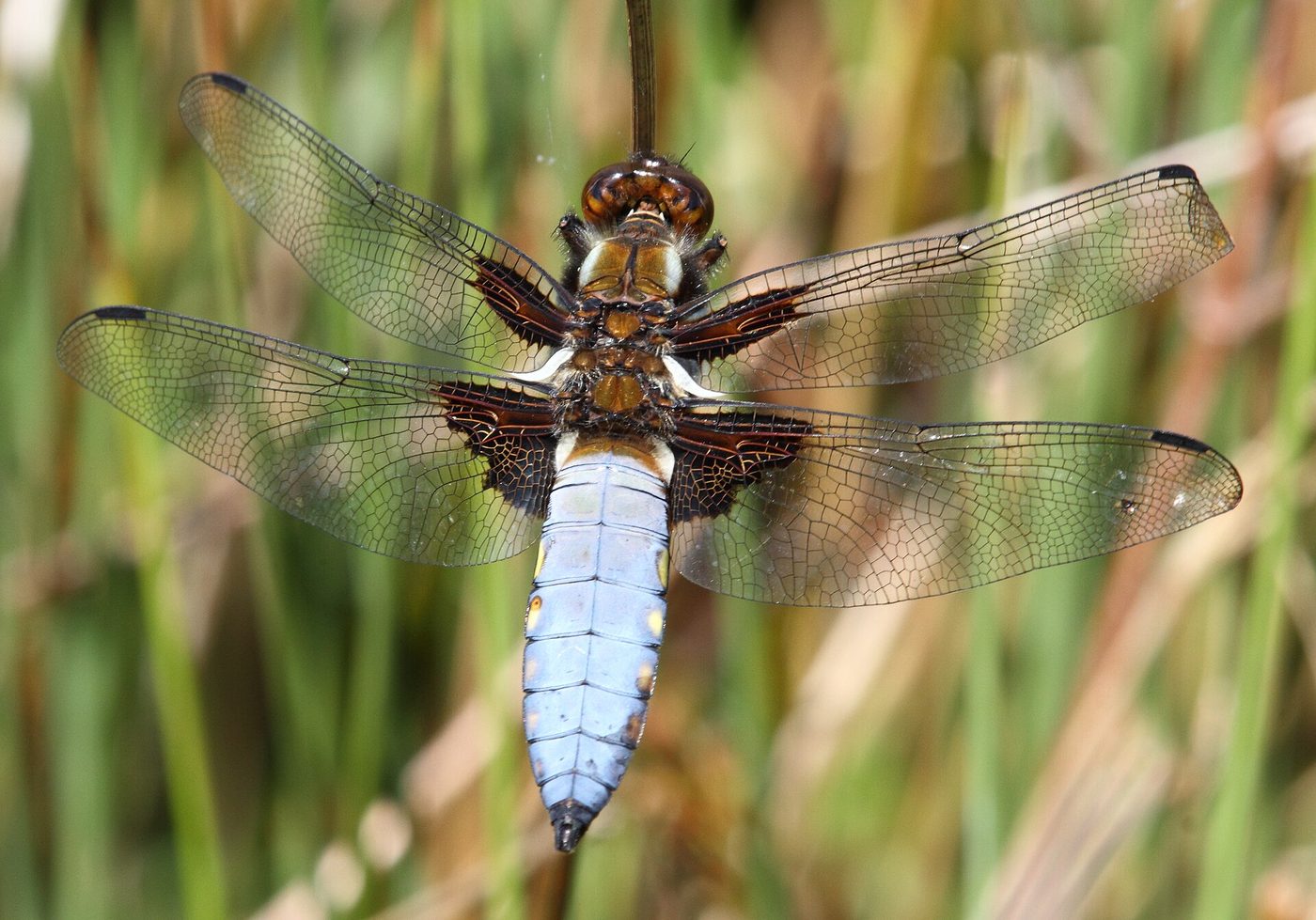
Photo: Alun Williams333 · CC BY-SA 4.0
Broad-bodied chaser
Libellula depressa
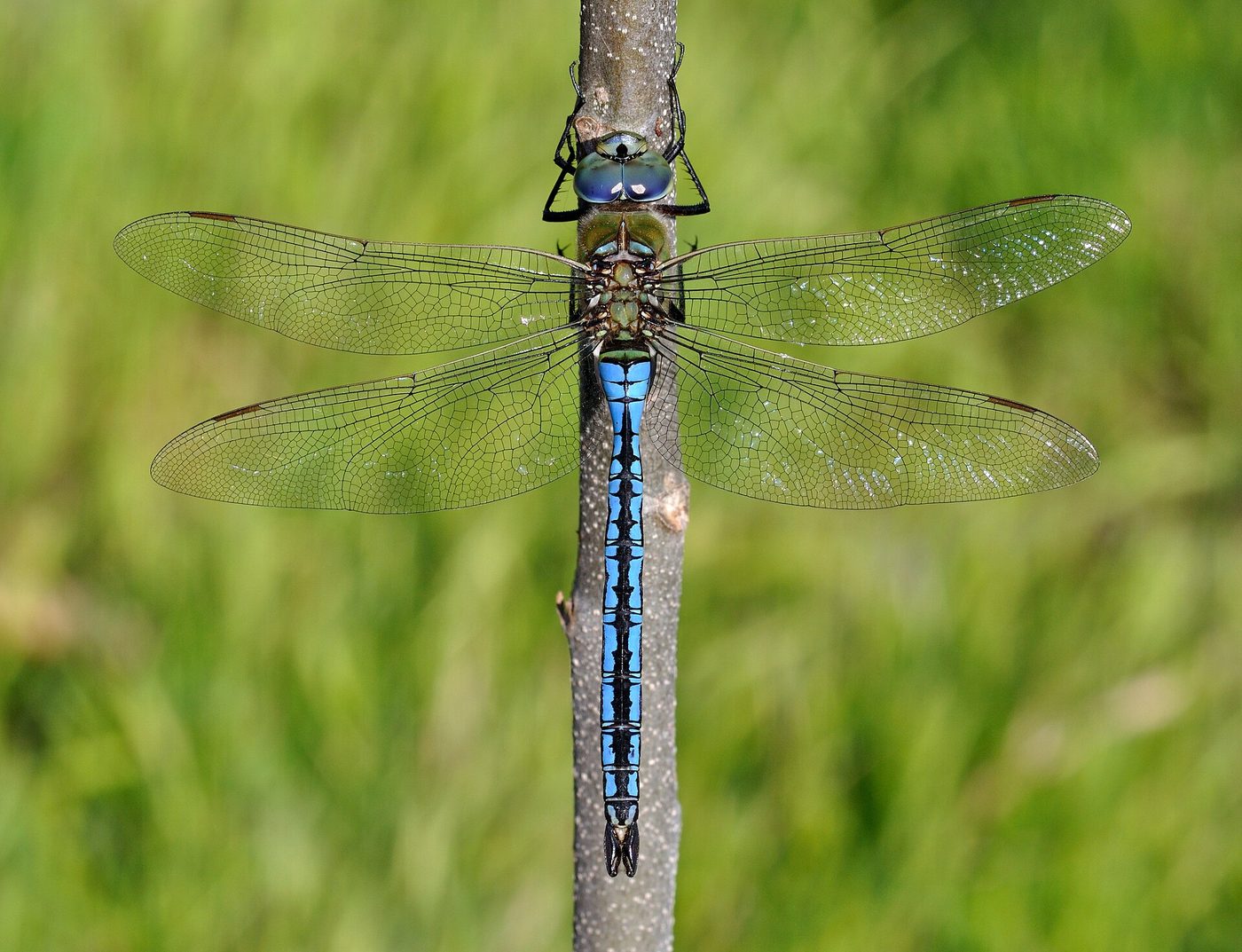
The broad-bodied chaser is one of Europe's most common dragonflies, recognisable by its broad, flattened abdomen, pruinose blue in males.
Characteristics
Temperament
Diurnal, territorial, powerful flier
Diet
Carnivorous: small insects caught in flight
The broadest abdomen among dragonflies
The broad-bodied chaser is one of the most common and recognisable dragonflies in Europe. Its distinctive feature is its unusually broad, flattened, stocky abdomen. In mature males the abdomen becomes coated in a pale, waxy blue (pruinose), while females and juveniles are a golden yellow-brown. Both sexes have four conspicuous dark patches at the base of the wings. It is a powerful, territorial flier.
Habitat and range
It is widespread across much of Europe and central Asia. It is a pioneer species: it quickly colonises pools, ponds and small bodies of still water of recent formation, with muddy or sandy banks and little vegetation, such as quarry pools, troughs and newly dug garden ponds.
Life cycle and behaviour
The aquatic larva is a voracious predator that lives on the bottom for one or two years before emerging and transforming into an adult. The adults, aerial hunters, catch small insects such as mosquitoes and midges on the wing. The males are strongly territorial: they guard the water body from a perch, driving off rivals with lightning chases.
Notable facts
Thanks to its pioneering nature, it is often one of the first dragonflies to appear at a new garden pond. In Germany it was chosen as insect of the year 2001. Like all dragonflies, it has exceptional vision thanks to its large compound eyes.
Conservation
The species is listed as Least Concern by the IUCN and remains very widespread. It benefits from its ability to colonise new aquatic habitats quickly, which makes it less vulnerable than many other dragonflies.
Pros
- Broad, unmistakable blue abdomen in males
- Pioneer species, colonises new ponds
- Useful predator of mosquitoes and midges
Cons
- Males are aggressively territorial
- The larva depends on still, sunlit water