Dingo
Canis dingo
Characteristics
Temperament
Social, intelligent, territorial and deeply independent. Lives in family packs with a wolf-like hierarchy but often hunts alone or in pairs. Communicates with howls (rather than barking), scent-marking and body language. Shy with people and highly adaptable. Pups taken very young can be tamed, but it always keeps a wild nature: not a good pet. Australia's apex predator.
Diet
Opportunistic, flexible carnivore. Hunts mammals from kangaroos and wallabies (in packs) to wombats, rabbits, rodents and bandicoots; makes heavy use of introduced species (rabbits). Also eats reptiles, birds and eggs, insects, amphibians and carrion, and occasionally livestock. Hunts small/medium prey alone and large prey in coordinated packs. As an apex predator it controls herbivores and suppresses invasive mesopredators such as foxes and feral cats.
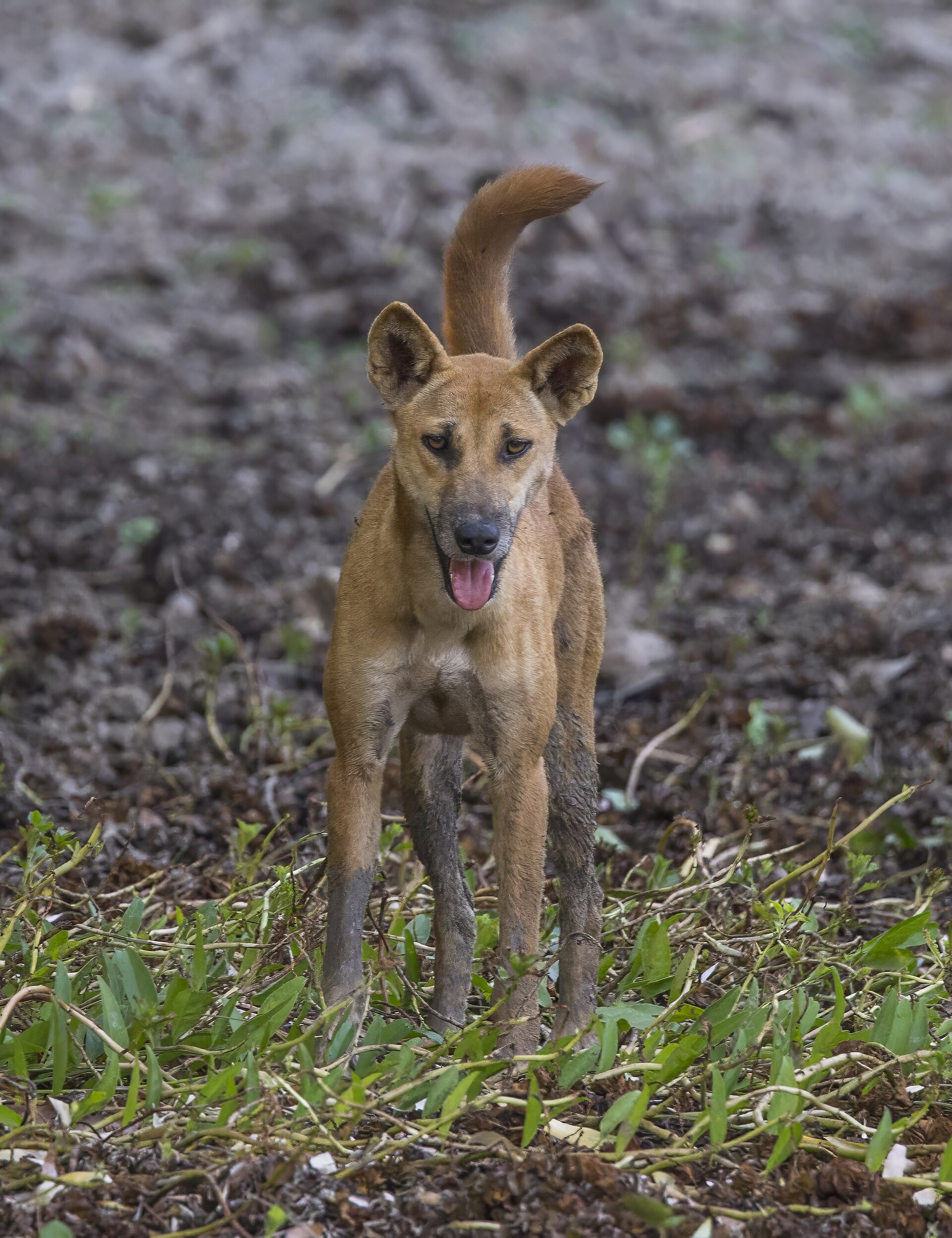
The Dingo (Canis dingo), Australia's wild dog, is the continent's largest land predator and one of the world's most fascinating and debated canids. Famous for:
- Australia's only large land predator: with no big cats or wolves, the Dingo sits at the top of the continent's food chain
- The dog "that doesn't bark": unlike the domestic dog it rarely barks, communicating mainly through howls, including choruses
- An ancient, mysterious origin: it arrived in Australia thousands of years ago, brought by sea from Southeast Asia
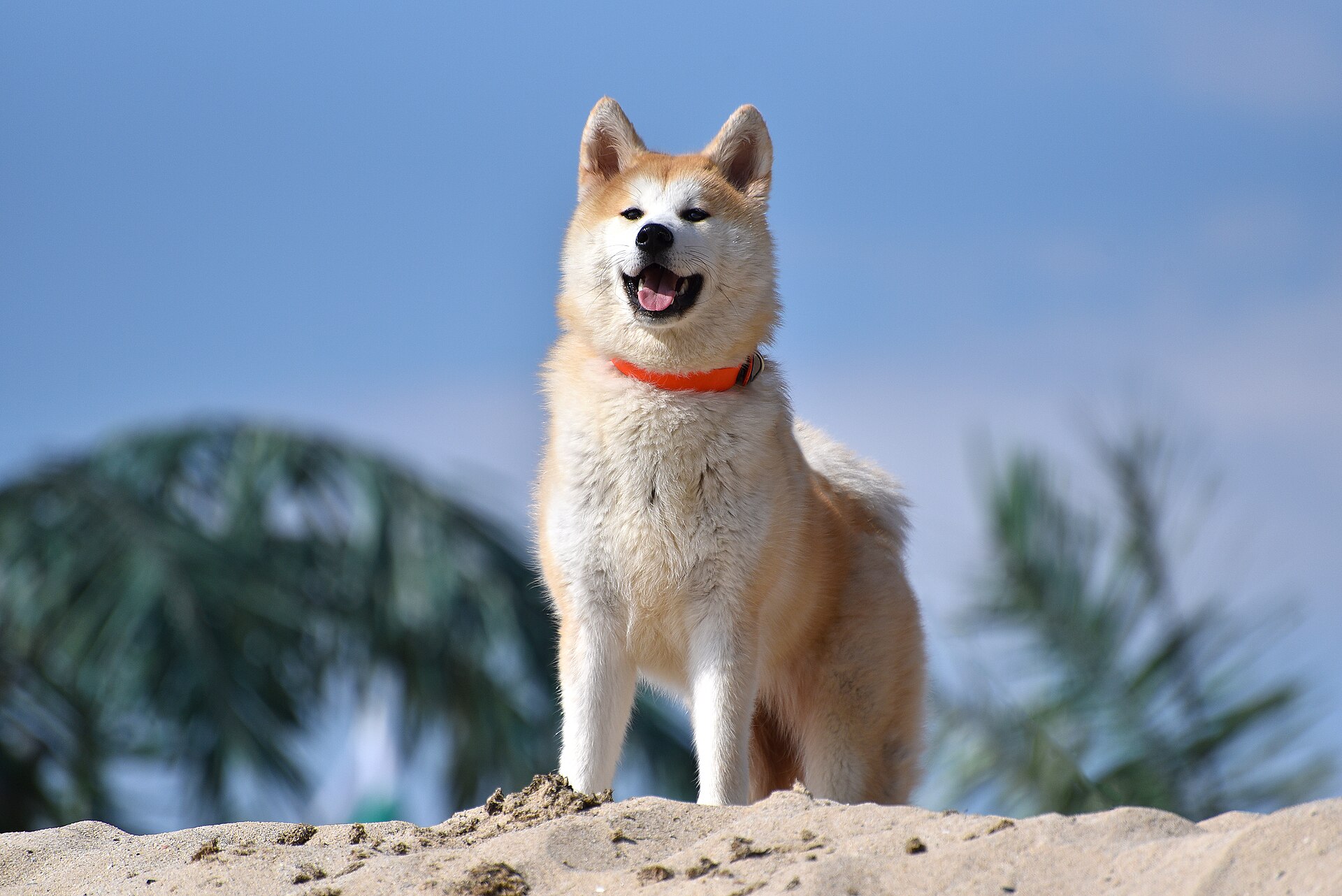
- The ginger coat: the classic sandy-reddish colour, often with white points on the feet, tail tip and chest
- Extreme adaptability: it lives in the red central deserts, grasslands, tropical forests and mountains
- The bond with Aboriginal culture: a human companion and a recurring figure in Dreaming stories
- The conservation paradox: threatened not by direct extinction but by hybridization with domestic dogs
IUCN status: Vulnerable (assessed as Canis lupus dingo), chiefly because crossbreeding with domestic dogs is eroding populations of "pure" dingoes. It is an ecologically crucial predator: by controlling kangaroos, rabbits and invasive mesopredators such as foxes and cats, it helps protect Australia's native wildlife.
Classification and category
Order Carnivora, family Canidae, genus Canis — the same as the grey wolf, the coyote and the domestic dog. Its exact taxonomy is still debated: depending on the author it is classed as its own species (Canis dingo), a wolf subspecies (Canis lupus dingo) or a variety of the domestic dog (Canis familiaris dingo). What is clear is its origin: the Dingo descends from East Asian domestic dogs, brought to Australia by sea by Southeast Asian seafaring peoples thousands of years ago, where they then went feral (a case of "re-wilding"). Its closest relative is the New Guinea singing dog. The earliest firm Australian remains are about 3,500 years old, though some estimates place the arrival earlier. Etymology: the name "dingo" comes from the language of the Eora Aboriginal people of the Sydney region, where Europeans first recorded it. Parameters: Body length 80-120 cm (including tail). Shoulder height 52-60 cm. Weight 13-20 kg (males larger than females; northern and desert animals tend to be lighter). Longevity 5-10 years in the wild, up to 18-20 in captivity. Unlike the domestic dog, the female has a single oestrus a year. Gestation ~63 days. Litters of 4-6 pups, raised in the pack; usually only the dominant (alpha) pair breeds.
Habitat and distribution
The Dingo ranges across much of mainland Australia, with populations also in Southeast Asia (where "dingo" identity is blurrier): present across almost the whole Australian continent, from the desert centre to the tropical northern coasts, with the important exception of the southeastern areas protected by the famous dingo barrier fence. Habitats — nearly all: deserts and arid outback (the "red" heart of Australia); grasslands and savanna; forest edges and northern tropical forests; mountain and woodland areas of the southeast; and islands (the relatively "pure" population of K'gari/Fraser Island is famous). The Dingo is territorial and lives in stable family packs, though it often hunts alone or in pairs. Its social structure resembles the wolf's, with a dominant pair leading the group. Communication is mainly through howls (contact, assembly, territorial) and scent-marking, rather than barking. IUCN: Vulnerable. Paradoxically the main threat is not direct persecution (intense in some areas to protect livestock) but genetic dilution: crossbreeding with domestic and stray dogs is making genetically "pure" dingoes ever rarer, especially near settled areas.
Diet
An opportunistic, flexible carnivore whose diet shifts with region and prey availability: mammals (from large kangaroos and wallabies, hunted in packs, to wombats, rabbits, rodents and bandicoots); introduced species (rabbits and other non-native mammals are an important resource in many areas); reptiles, birds and their eggs; insects, amphibians and carrion; and occasionally livestock (sheep and calves, the source of conflict with graziers). Hunting strategies: solitary hunting (for small to medium prey such as rabbits, rodents and reptiles, by stalking and chasing); coordinated pack hunting (to take large prey like kangaroos, with relay chases and encircling manoeuvres); and opportunism (carrion, seasonal resources and, near people, refuse). As an apex predator, the Dingo exerts top-down control on the ecosystem: by holding down abundant herbivores and, above all, suppressing invasive mesopredators such as the red fox and feral cat, it indirectly protects many small native marsupials and birds — an effect much studied by Australian ecologists.
Physical features
Looks like a slender, athletic, alert medium-sized dog. Coat: typically sandy-ginger, from yellowish-red to deep red; black-and-tan, cream and white variants also exist; often with white points on the feet, tail tip and chest; short-haired in hot areas, thicker and double-coated in cold regions. Body: slender, light build for endurance and agility; a wedge-shaped head with a pointed muzzle and erect, always-pricked ears; a bushy tail carried low; flexible wrists and a very mobile neck (it can turn its head nearly 180° and rotate its forepaws, letting it climb trees and rocks better than most dogs); and robust, predatory teeth and jaws. Performance: tireless endurance over long distances; agility and climbing (it scales fences, rocks and even leaning trees); acute senses (excellent hearing and smell); and a rich howling repertoire, with rare, poorly developed barking.
Behaviour and curiosities
A social, intelligent, territorial animal. It lives in family packs with a wolf-like hierarchy but can also live and hunt alone. It communicates with howls, scent-marking and body language. Pups can be tamed if taken very young, but the Dingo always keeps a wild, independent nature and is not considered a good pet.
The dog that howls instead of barking: the Dingo has the structures to bark but does so only rarely and in an "explosive" way, never in the long sequences typical of domestic dogs; its main means of communication is the howl — contact howls to regroup, choruses to assert territory and repel neighbours — one of the clearest behavioural differences from the house dog. The Dingo Fence: to protect the sheep flocks of the southeast, Australia built one of the world's most imposing structures, the Dingo (or Dog) Fence: a continuous barrier about 5,600 km long, among the longest ever built; it separates the "dingo-free" southeast from the rest of the continent and has visible ecological effects — where dingoes are excluded, foxes, cats and kangaroos tend to proliferate. The climber: thanks to unusually flexible wrists and a very mobile neck, the Dingo is a surprisingly able climber, scaling fences, rock piles and leaning trees to reach prey or escape danger — agility rare among dogs. The conservation paradox: protecting the Dingo is tricky precisely because it is genetically close to the domestic dog; the most insidious threat is not killing but hybridization, as every cross with domestic and stray dogs dilutes the "pure" Dingo's genome, which is why isolated populations such as K'gari (Fraser Island) are seen as especially valuable. The bond with Aboriginal peoples: the Dingo has held a deep place in Aboriginal Australian culture for thousands of years — a hunting companion, a "bed-warmer" on cold nights (hence "a three-dog night") and a recurring figure in Dreaming stories, often embodying cunning and survival. The Azaria case: in 1980, in one of Australia's most famous legal cases, baby Azaria Chamberlain vanished while camping near Uluru and her mother said "a dingo's got my baby"; disbelieved and convicted at first, she was later fully exonerated when a dingo was confirmed responsible — a case that entered world popular culture and showed that, however much dingoes usually avoid people, they remain wild predators not to be underestimated.
Pros
- Predatore apicale dell'Australia: regola erbivori e specie invasive
- Molto adattabile: deserti, praterie, foreste e montagne
- Profondo valore culturale per i popoli aborigeni
- Protegge indirettamente la fauna nativa sopprimendo volpi e gatti
Cons
- Non è un cane domestico: indole selvatica, non adatto come animale da compagnia
- IUCN Vulnerabile, minacciato dall'ibridazione con i cani domestici
- Conflitti con gli allevatori per la predazione di bestiame
- Predatore selvatico: rari ma reali rischi se abituato all'uomo