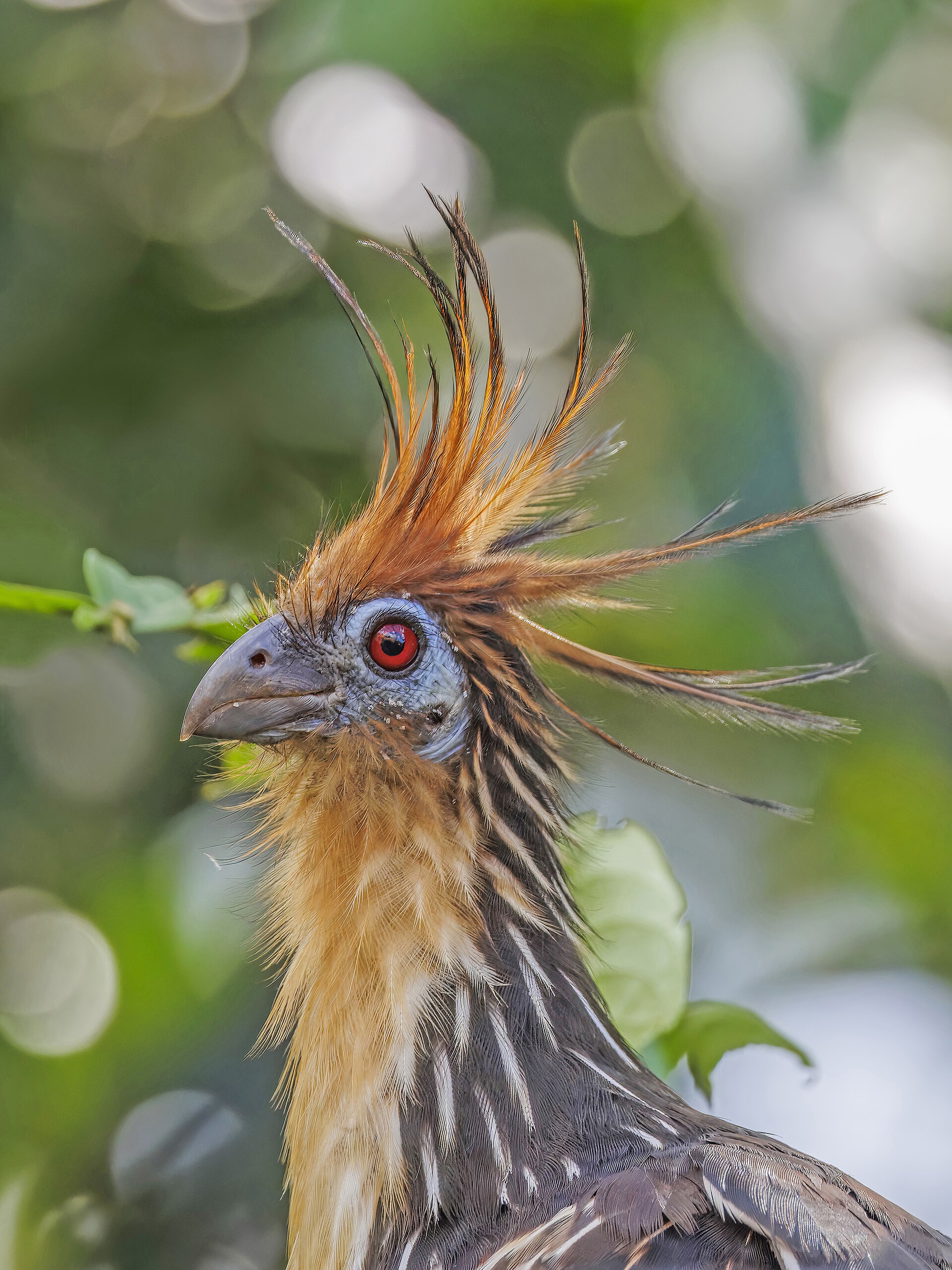
Hoatzin
Opisthocomus hoazin
Characteristics
Temperament
Social, gregarious, diurnal. MONOTYPIC ORDER Opisthocomiformes — living fossil isolated 75 Mya. ONLY bird with BOVINE-LIKE DIGESTION (foregut fermentation in CROP like cattle rumen!). CHICKS with FUNCTIONAL WING CLAWS (like Archaeopteryx — convergent evolution). Amphibious chicks (jump into water for escape). MANURE SMELL ("stinking turkey") protects from hunting. Cooperative breeding with helpers. Limited flight. Endemic Amazon/Orinoco.
Diet
ONLY bird in world with FOREGUT FERMENTATION (bovine-like digestion). Extreme folivore 82-95% leaves diet (mangrove, legumes, water figs), flowers 10%, buds 5%, NO insects. Technique: leaves into enormous CROP (1/3 body weight!), anaerobic bacteria (Bifidobacterium, Lactobacillus, Clostridium) ferment cellulose 1-3 days → volatile fatty acids absorbed. Transit 24-72 hours. Characteristic manure smell.
The Hoatzin (Opisthocomus hoazin), also known as Stinking Turkey, "chenchena" in Spanish, is one of the most UNIQUE and BIZARRE birds in the world. Endemic to the Amazon and Orinoco basins, famous for:
- MONOTYPIC ORDER: only living species of order Opisthocomiformes — no close living relatives! Genetically isolated.
- BOVINE-LIKE DIGESTION: ONLY bird in the world with anaerobic fermentation in the crop — like the rumen of cattle. 95% leaf-eating!
- CHICKS WITH WING CLAWS: chicks have functional claws on wings (lost in adults) — extraordinary similarity to Archaeopteryx fossil!
- MANURE SMELL: due to leaf fermentation in crop — "stinking turkey" nickname
- Amphibious chicks: at 2-3 weeks, chicks jump from nest into water to escape predators, swim perfectly
- National animal of Guyana
- Distinctive look: erectile curly crest, red eyes, bare blue facial skin, striped plumage
IUCN status: Least Concern (LC). Distribution: Amazon and Orinoco basins — Venezuela, Guyana, Suriname, French Guyana, Brazil, Colombia, Ecuador, Peru, Bolivia.
Classification and category
Order Opisthocomiformes (MONOTYPIC!), family Opisthocomidae, genus Opisthocomus. ONLY living species in its order, family, and genus. Genetically isolated from all other birds by ~75 million years (Late Cretaceous!). Closest relatives: uncertain — molecular analyses suggest possible relation to Mousebirds (Coliiformes) or Seriema (Cariamidae), but with high uncertainty. Historical hypotheses (cuckoos, galliforms, doves) all rejected. Fossils of relatives found in Brazil, Argentina, Colombia, USA, Namibia — order was historically distributed globally.
Etymology: "Opisthocomus" Greek "behind" + "hair" (nape crest). "Hoazin" from Nahuatl "uatzin" (smelly bird). Described by Müller 1776. Parameters: Weight 700-900 g. Length 60-70 cm. Wingspan 70-90 cm. Tail ~30 cm. Longevity 10-15 years natural, 20+ captive. Sexual maturity 1-2 years. 2-5 eggs/year. Incubation 28-31 days. Cooperative breeding with helpers from previous year.
Habitat and distribution
Endemic to South American tropical forests, exclusively in aquatic/wet habitats. Main populations: Venezuela (Orinoco, Llanos), Brazil (Amazonas), Colombia (Amazonia), Ecuador, Peru, Bolivia, Guyana, Suriname, French Guyana. Habitats: gallery forests along rivers (main), mangroves, varzea floodplain forests, igapó flooded forests, dense riparian scrub. Avoids dry forests, deforested areas, areas without adjacent water. IUCN: Least Concern. Naturally protected by smell: most indigenous people don't hunt Hoatzin because of bad-tasting meat — one of few tropical birds not pressured by hunting.
Diet
ONLY bird in world with FOREGUT FERMENTATION (bovine-like digestion). Diet: leaves 82-95%! (mangroves, legumes, water figs), flowers 10% (Eichhornia, Pistia, Ipomoea), buds 5%, rare fruit 5%, NO insects in adults. Digestion technique: leaves into CROP (jabot — UP TO 1/3 BODY WEIGHT!), anaerobic bacteria (Bifidobacterium, Lactobacillus, Clostridium) ferment cellulose for 1-3 days, produce volatile fatty acids absorbed as energy, then pass to stomach. Convergence with ruminants: same system as cattle/sheep but in DIFFERENT organ (crop vs stomach). Time transit 24-72 hours (vs normal birds 1-3 hours!). Limited flight ability due to heavy jabot.
Physical features
Unmistakable silhouette: large body, short beak, small wings, long tail, nape crest. Plumage: grey-brown body with lighter/darker streaks, brown wings with chestnut edges, long ~30 cm tail with white tip, white-cream belly. ERECTILE CURLY CREST on nape (10 cm) — diagnostic. Head: erectile crest, BLUE BARE FACIAL SKIN (cobalt brilliant), RED EYES, short robust black beak, powerful jaws. Body: stocky, "front-heavy" due to enormous jabot (up to 1/3 body weight!). Relatively small wings. Long tail. Strong climbing legs. REDUCED CARINATE STERNUM (partial loss of flight). Speed: clumsy flight 50-300 m, prefers branch-hopping. CHICKS swim and climb with wing claws.
Behaviour and curiosities
Social, gregarious, diurnal. Family groups of 2-8 individuals. Cooperative breeding with previous year's young helpers. Nest above water (crucial for chick escape). 2-5 eggs, 28-31 day incubation.
Famous: CHICKS WITH WING CLAWS. Functional claws on digits 1-2 of wings — lost in adults. Extraordinary similarity to Archaeopteryx (150 Mya fossil bird-dinosaur). Modern analysis: CONVERGENT EVOLUTION (not direct descent), claws re-evolved for climbing. Lost in adults at 2-3 months. BOVINE DIGESTION: only bird with foregut fermentation, 24-72h transit (vs 1-3h normal), bacterial flora similar to cattle rumen. AMPHIBIOUS CHICKS: 2-3 week chicks jump into water to escape predators, swim like ducks, climb back with wing claws. STINKING TURKEY: manure-like smell from fermentation protects from hunting. MONOTYPIC ORDER: separated 75 Mya, survived K-Pg extinction. Fossil relatives found globally (Brazil, Argentina, Colombia, USA, Namibia). COOPERATIVE BREEDING with helpers — nest success up to 75% with helpers (vs 40% without). National animal of Guyana since 1980. Reduced sternum: partial flight loss due to heavy jabot. Living fossil Archaeopteryx connection. Longevity: 22 years San Diego Zoo.
Pros
- Fossile vivente di 75 milioni di anni — fascino evolutivo unico
- Digestione bovina UNICA tra uccelli al mondo
- Pulcini con artigli alari (somiglianza Archaeopteryx)
- IUCN Least Concern, protetto naturalmente dall'odore
Cons
- Habitat strettamente dipendente da foreste umide neotropiche
- Volo limitato per peso del jabot enorme
- Famigliia/ordine monotipici — perderlo = perdere ramo evolutivo
- Deforestazione amazzonica minaccia popolazioni regionali