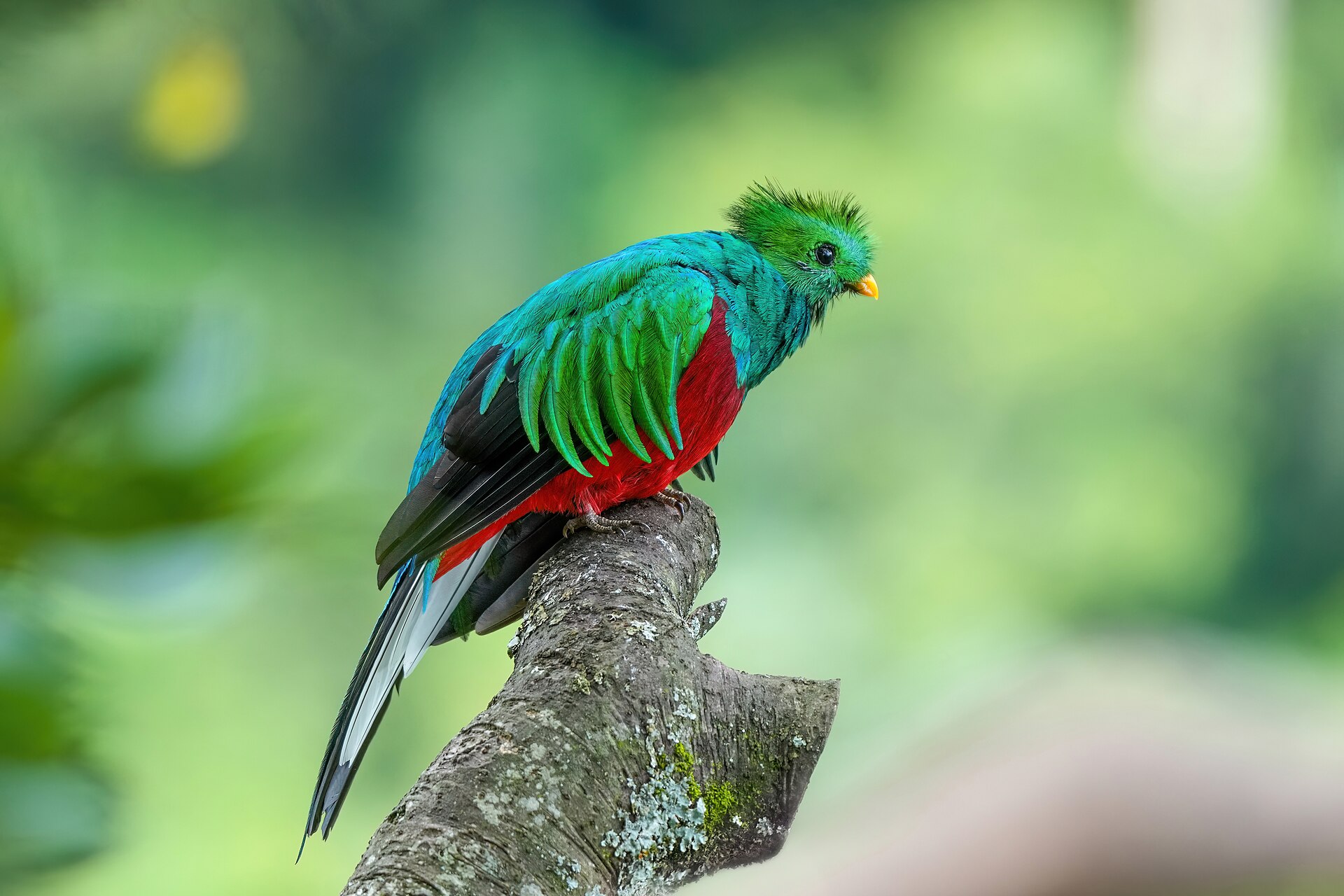
Resplendent Quetzal
Pharomachrus mocinno
Characteristics
Temperament
Solitary or paired, diurnal, arboreal. SACRED Mesoamerican bird (QUETZALCÓATL deity Maya/Aztec). GUATEMALA NATIONAL SYMBOL (currency = quetzal!). Male with ORNAMENTAL tail covert feathers up to 1 m (longest in proportion among birds). STRUCTURAL iridescent green + crimson breast. Frugivore dependent on wild avocado (key disperser). Lives only in cloud forests. "Bird of liberty". IUCN Near Threatened.
Diet
Predominantly specialized frugivore. Wild avocado (aguacatillo) main prey — Lauraceae fruits (Ocotea, Persea), swallowed WHOLE + seeds regurgitated = KEY DISPERSER. Other fruits, insects (in flight, for chicks), small vertebrates (lizards, frogs, snails). "Sally-gleaning" technique (flies from perch, grabs fruit in flight). Strictly dependent on aguacatillo. Species-specific mutualism.
The Resplendent Quetzal (Pharomachrus mocinno) is considered one of the most beautiful birds in the world and one of the most sacred in human history. Endemic to the montane cloud forests of Central America (southern Mexico-Panama), famous for:
- IRIDESCENT emerald-green plumage: shines green, blue, gold depending on light angle
- Crimson red breast: spectacular contrast with green
- ORNAMENTAL TAIL COVERT FEATHERS: males have feathers up to 65-100 cm (longest in proportion among birds) — NOT the true tail, but elongated tail coverts
- MESOAMERICAN DEITY: associated with Quetzalcóatl ("feathered serpent"), supreme Maya/Aztec god
- NATIONAL SYMBOL OF GUATEMALA: national currency is called "quetzal", appears on flag and coat of arms
- "Bird of liberty": belief it dies in captivity
- Wild avocado disperser: swallows whole fruits and regurgitates seeds
IUCN status: Near Threatened (NT) since 2004 due to cloud forest loss. Global population: ~50,000 mature individuals, declining.
Classification and category
Order Trogoniformes, family Trogonidae, genus Pharomachrus. Genus contains 5 quetzal species: P. mocinno (Resplendent, this entry), P. antisianus, P. fulgidus, P. auriceps, P. pavoninus. Two subspecies: P. m. mocinno (northern, longer feathers) and P. m. costaricensis (Costa Rica/Panama). Closest relatives: other trogons (heterodactyl feet — unique toe arrangement). Etymology: "Pharomachrus" Greek "long mantle". "Mocinno" honors José Mociño. "Quetzal" Nahuatl "quetzalli" (precious feather). Described by de la Llave 1832. Parameters: Body 36-40 cm. Ornamental feathers (male) 65-100 cm (longest in proportion among birds!). Weight 180-210 g. Longevity 3-10 years natural. 2 eggs/year, incubation 17-19 days (both parents). Nests in dead tree cavities.
Habitat and distribution
Endemic to Central American montane cloud forests: Mexico (Chiapas, Oaxaca), Guatemala (main — national symbol), Honduras, El Salvador, Nicaragua, Costa Rica (Monteverde — quetzal tourism), Panama. Habitat: cloud forest EXCLUSIVELY (1,000-3,000 m, constant mist), montane humid forest with Lauraceae (wild avocado). Altitudinal migration following avocado fruiting. IUCN: Near Threatened. Threats: cloud forest loss (main — deforestation for agriculture, coffee), climate change (rising mist belt), capture for trade, fragmentation. CITES: Appendix I. Conservation: national parks, "quetzal tourism" ecotourism.
Diet
Predominantly frugivore, specialized diet. Diet: wild avocado/aguacatillo (main — Lauraceae fruits Ocotea, Persea, Nectandra; swallows WHOLE and regurgitates large seeds), other fruits, insects (caught in flight, especially for chicks), small vertebrates (lizards, small frogs, snails). Technique: "sally-gleaning" (flies from perch to fruit, grabs in flight, returns), whole-fruit swallowing, seed regurgitation = KEY DISPERSER of wild avocados. Strictly dependent on aguacatillo — distribution and altitudinal migration follow its fruiting. Species-specific mutualism.
Physical features
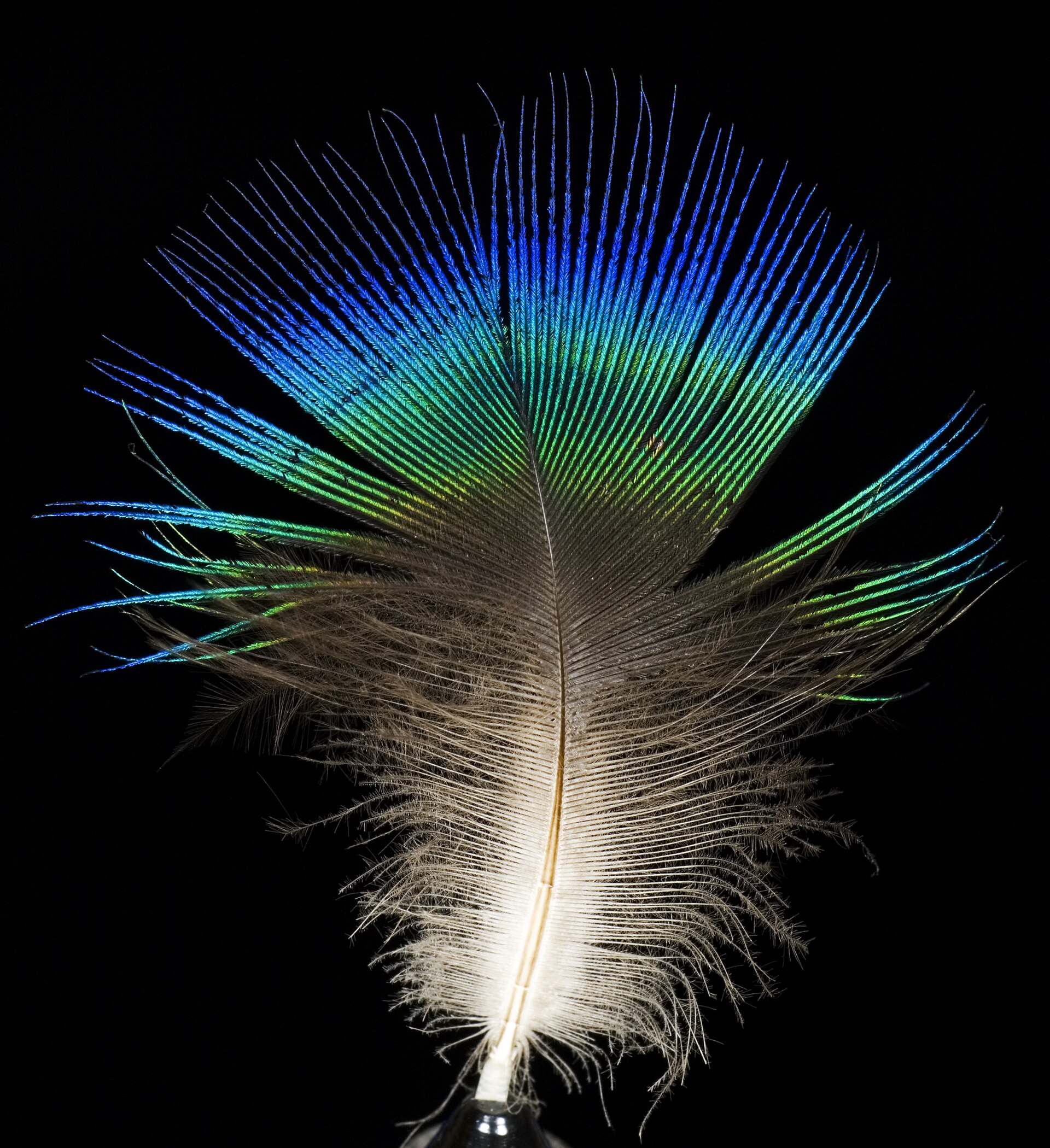
One of the most beautiful birds in the world. Male plumage: IRIDESCENT emerald-green body (structural iridescence — microstructures reflect light creating green/blue/gold), CRIMSON RED breast/belly, silky green head crest, 4 ORNAMENTAL TAIL COVERT FEATHERS 65-100 cm (sway during flight), true tail white below/black above (hidden), yellow beak. Female: less spectacular, duller green, grey-red breast, NO ornamental feathers, dark beak. Head: erectile silky green crest, dark large eyes, short weak beak (for swallowing fruit). Body: heterodactyl feet (unique toe arrangement — trogon diagnostic), weak legs (poor walker), delicate skin (feathers detach easily), short rounded wings. Undulating flight with swaying ornamental feathers ("flying serpent" — Quetzalcóatl origin?). STRUCTURAL iridescence.
Behaviour and curiosities
Solitary or paired, diurnal, arboreal. Lives in cloud forest canopy. Monogamous (seasonal) breeding March-June. Pair uses dead-tree cavity (weak beak — preexisting cavities or rotten wood). 2 pale-blue eggs, 17-19 day incubation (male by day, female by night). Male's ornamental feathers PROTRUDE FROM NEST and curve over his back! Altricial chicks. Independence ~3 weeks post-fledge. Defense: shy, delicate skin/detaching feathers may be anti-predator (predator grabs only feathers). Predators: hawks, eagles, owls, squirrels (eggs), toucanets, weasels.
Famous: QUETZALCÓATL DEITY — sacred to Maya/Aztec/Toltec, god of wind/wisdom/life. Feathers used only by kings/priests, more precious than gold. Killing a quetzal was punishable by death; hunters caught, took feathers (regrow!), released. "Quetzalcóatl" = quetzalli (feather) + cóatl (serpent). GUATEMALA NATIONAL SYMBOL: currency "quetzal" (GTQ!), flag, coat of arms — most deeply integrated national bird. "Bird of liberty": belief it dies in captivity. ORNAMENTAL FEATHERS: longest in proportion among birds, sexual display, regrow after molt. STRUCTURAL IRIDESCENCE: not green pigment (like Morpho butterflies, hummingbird necks). Avocado dependence: key disperser, species-specific mutualism. Awkward nest: feathers protrude during incubation. Cloud forest: exclusive habitat, threatened ecosystem. Quetzal tourism: Monteverde, generates conservation revenue. Longevity: 3-10 years natural.
Pros
- Uccello sacro mesoamericano (divinità Quetzalcóatl)
- Simbolo nazionale del Guatemala (valuta, bandiera, stemma)
- Penne ornamentali più lunghe in proporzione tra uccelli
- Disperditore chiave delle foreste nuvolose
Cons
- IUCN Near Threatened, popolazione in declino
- Dipende esclusivamente da foreste nuvolose minacciate
- Cambiamento climatico minaccia habitat (fascia di nebbia)
- Dipendenza stretta da avocado selvatico