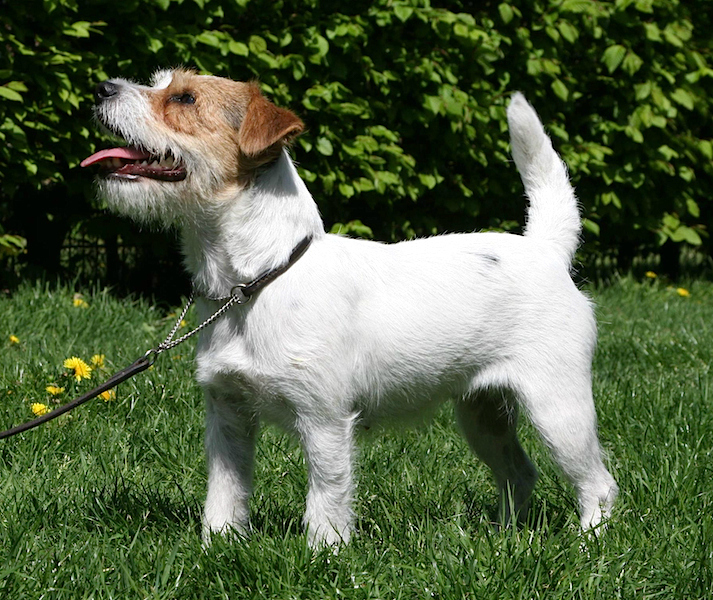
Jack Russell Terrier
Canis lupus familiaris
Characteristics
Temperament
A small dog with a huge character: very lively, bold, intelligent and tireless, deeply attached to its family and playful, but also stubborn, independent and with a very strong prey drive towards small animals. It tends to bark and is always ready for action. It is NOT a placid lapdog: it needs a great deal of exercise, mental stimulation and consistent, firm training from puppyhood. For those who lead an active life and love doing activities with their dog (agility, scent work, hikes) it is a thrilling, affectionate companion; for those seeking a quiet dog it can be too much.
Diet
An omnivore with a carnivorous bent, like all dogs: it needs a good-quality complete, balanced food suited to a small but very active dog, with fresh water always available. Rations should be small but nourishing and energetic, in line with its dynamism. Although very active, it is greedy and can gain weight if overfed or under-exercised: weight control is important, as is good dental care, as in many small dogs. The diet must always be paired with plenty of exercise, which for the Jack Russell is a necessity.
The Jack Russell Terrier is one of the most popular, lively and "explosive"-tempered small dogs there are: a working terrier of English origin, bred for hunting. Famous for:
- Inexhaustible energy: small in size but tireless, always on the move and ready for action
- Lively intelligence: sharp, clever and quick to learn (mischief included)
- The white body: mainly white with tan or black markings, often on the head
- Terrier courage: bold and tenacious, it faces prey and situations fearlessly, out of proportion to its size
- A very strong prey drive: it digs, chases and "goes to ground", a legacy of fox hunting
- Screen presence: one of the most sought-after dogs in films, TV series and advertising
The Jack Russell Terrier is a domestic dog and enters the portal in the terriers group, alongside the Yorkshire Terrier: two small terriers of great temperament, one bred as a fox hunter in the countryside, the other as a rat hunter and then a city companion.
Classification and category
The Jack Russell Terrier is a pedigree domestic dog (Canis lupus familiaris), and in the portal it is classified among the terriers — the group of dogs originally selected to flush out and hunt animals in their burrows and to fight "vermin". In the international canine classification (FCI) the Jack Russell belongs to Group 3 (terriers). An important point is the distinction between the similar "Russell" breeds, often confused: the Jack Russell Terrier is the smallest and most compact, with relatively short legs (generally 25-30 cm at the withers); the Parson Russell Terrier is taller and longer-legged, of a more "square" type; the Russell Terrier (or short "Russell") is even lower on the legs. All derive from the hunting dogs selected in the 19th century by the English Reverend John "Jack" Russell, hence the name. It should not be confused, finally, with the fox terriers (smooth or wire), relatives but distinct breeds. Etymology: the breed takes its name directly from its "creator", the Reverend Jack Russell, a keen hunter and dog enthusiast who, in the mid-19th century, selected these terriers for fox hunting. Parameters: Height at the withers about 25-30 cm. Weight about 5-8 kg. Appearance small, compact, sturdy and athletic. Longevity: remarkable — it is a robust and generally very long-lived dog, with an average lifespan of about 13-16 years. Reproduction: litters of a few puppies; given the breed's energy and instinct, early training and socialization are essential.
Habitat and distribution
As a domestic breed, the Jack Russell Terrier has no wild range: it lives everywhere alongside humans and is widespread and loved worldwide. It does, however, have a precise origin, the rural England of the 19th century, and a country-dog vocation. Ideal living environment: homes with space and outdoor access (it does best where it can run, explore and dig); active people and families (ideal for those who love sport, long walks, games and dog activities); and owners able to "keep up with it" (it needs clear rules, exercise and constant mental stimulation). Although it can live in a flat, the Jack Russell is not a "couch dog": its extraordinary energy and strong terrier instinct require a lot of physical and mental outlet. A bored or under-stimulated Jack Russell can become hyperactive, noisy or "destructive", digging and testing every boundary. It is instead a fantastic companion for those who lead an active life and love doing activities with their dog (agility, scent games, long hikes). Not being a wild animal, it has no IUCN conservation status.
Diet
Like all dogs, the Jack Russell Terrier is an omnivore with a carnivorous bent and needs a complete, balanced diet calibrated to its small size but high activity. As a domestic dog: good-quality complete dog foods suited to active small dogs; proportionate rations, small but energetic, in line with its dynamism; and fresh water always available. Particular care: weight control (despite its activity, it is greedy and can gain weight if overfed or under-exercised); energy to sustain (such a dynamic dog needs the right intake, especially if it does sport or lives outdoors); and dental health (as in many small dogs, the teeth need careful attention). Crucially, the Jack Russell's dietary challenge is balancing small size with great energy. Portions should be modest but nourishing, and the diet must always be paired with plenty of exercise, which for this breed is a real necessity, not an optional extra.
Physical features
A small but compact, sturdy, athletic dog, built for work. Coat and colours: the coat may be smooth, rough or "broken" (intermediate), always dense and weatherproof; mainly white in colour, with tan, black or tricolour markings, often concentrated on the head and at the base of the tail. The body: a small but muscular, well-proportioned build, with a not-too-wide chest (to be able to enter burrows); relatively short legs (more than the Parson Russell), agile and sturdy; a wedge-shaped head with "button" ears folded forward, a sharp, attentive expression. Performance: agility and speed surprising for its size (it jumps high and digs furiously); great stamina and tirelessness; and the courage and tenacity typical of the working terrier.
Behaviour and curiosities
The Jack Russell Terrier is a dog of lively, bold, affectionate and strongly characterful temperament. It is deeply attached to its family, playful and full of life, but also stubborn and independent, with a very marked prey drive towards small animals. It tends to bark and "have its say", and is always ready for action. It requires consistent, firm training from puppyhood, and a lot — a great deal — of activity.
The reverend's dog: the breed owes its name to the English Reverend John Russell, nicknamed "Jack", who lived in the 19th century and was a great fox-hunting enthusiast; he selected a line of white, brave, tireless terriers able to follow the hounds and flush foxes from their burrows; from those dogs descend the modern Jack Russell, Parson Russell and Russell Terriers. Why it is white: the Jack Russell's mainly white coat is not just an aesthetic matter but had a practical function in hunting; a white dog was easily distinguished from the fox (tan-coloured) in the confusion and poor light, reducing the risk of hunters or other dogs mistaking it for the prey; the coloured markings, often concentrated on the head, complete this functional "design". The "go to ground" terrier: the Jack Russell belongs to the so-called earth dogs, the "ground" terriers; bred to chase foxes right into their burrows, it has kept a very strong instinct to dig and to slip into tunnels; this is why, even today, a domestic Jack Russell may dig with great enthusiasm in the garden and show an irrepressible interest in burrows, holes and small animals: it is its deepest nature. The film star: the Jack Russell Terrier, with its sharp looks and intelligence, is one of the dogs most loved by film and television; among the most famous are "Eddie" from the series "Frasier", the dog from "The Mask" and "Uggie", star of the Oscar-winning film "The Artist"; its expressiveness and the ease with which it learns tricks make it a perfect "four-legged actor". Great energy in a small body: one of the most common misunderstandings is choosing a Jack Russell thinking that, being small, it is a placid companion dog; the opposite is true: it is one of the most energetic, dynamic dogs of all, with needs for exercise and stimulation comparable to those of much larger dogs; this is why it is perfect for sporty, active people, but can be hard to manage for those seeking a quiet dog. The tireless long-lived one: the Jack Russell is generally a very robust, healthy dog, and among small dogs is one of the longest-lived: it is not uncommon for it to exceed 15 years, staying lively and active into old age; this long life expectancy, combined with its youthful character, means a Jack Russell accompanies its family for very many years.
Pros
- Piccolo, robusto e longevo (spesso oltre i 15 anni)
- Intelligente, atletico e versatile: eccellente in agility, fiuto e sport cinofili
- Affettuoso, giocoso e pieno di vita: ottimo per persone e famiglie attive
- Coraggioso e simpaticissimo, una star di film e serie TV
Cons
- Energia altissima: NON è un placido cane da salotto, può sopraffare chi cerca tranquillità
- Forte istinto predatorio e a scavare: attenzione con piccoli animali e in giardino
- Testardo e vocale: richiede educazione coerente e tanti stimoli, o diventa "distruttivo"
- Poco adatto a proprietari sedentari, assenti o inesperti