Photo: Liam Quinn from Canada · CC BY-SA 2.0
King penguin
Aptenodytes patagonicus
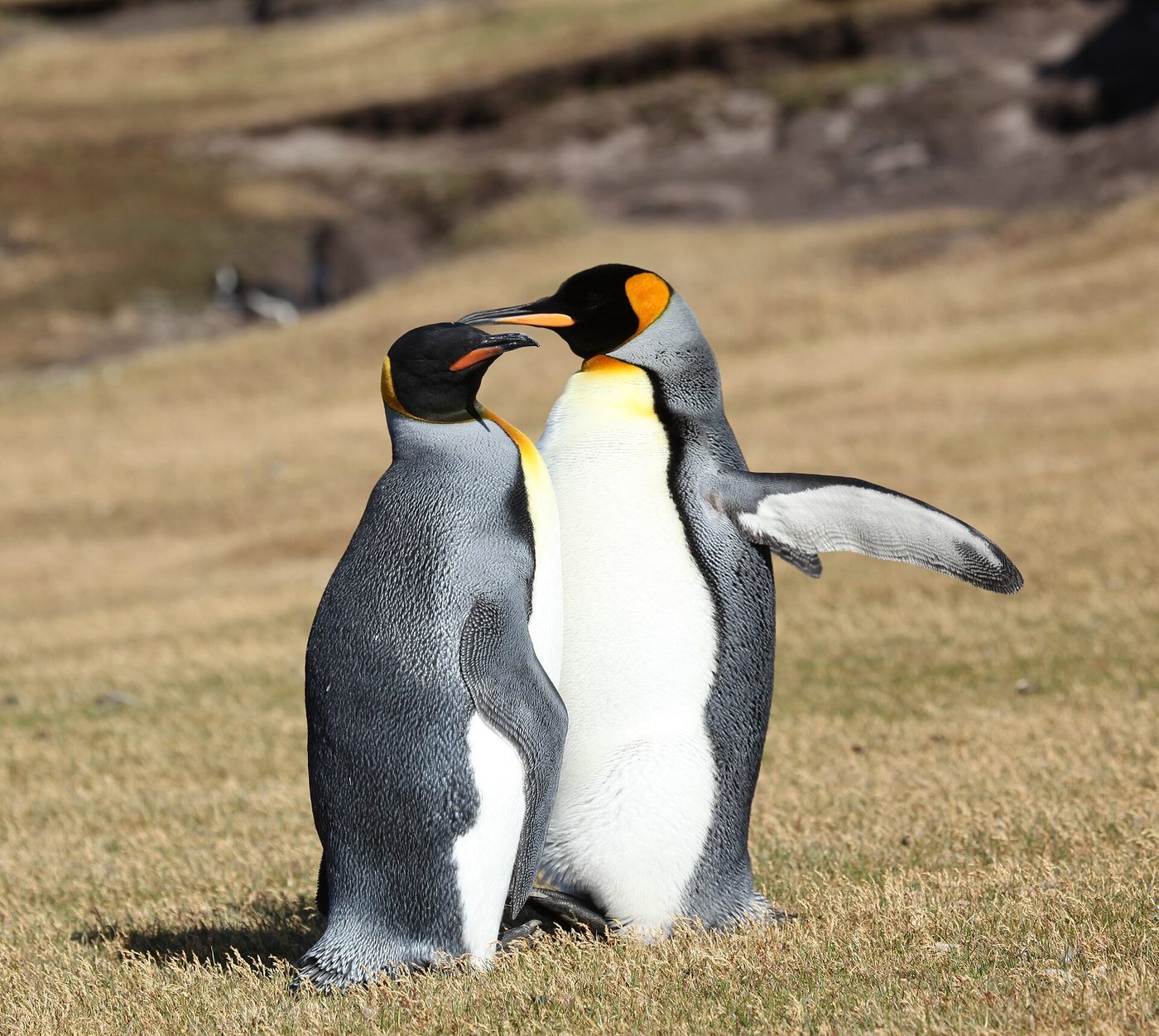
Elegant and majestic, with striking orange patches on the sides of its head, the king penguin is the second largest penguin in the world, an inhabitant of the sub-Antarctic islands.
Characteristics
Temperament
Social, colonial, an excellent swimmer
Diet
Carnivore: small fish and squid
An elegant, majestic penguin
The king penguin is the second largest penguin in the world, surpassed only by the emperor penguin, which it resembles. It has an upright, distinguished bearing, with a silvery-grey back, white belly and, above all, two striking patches of bright orange on the sides of the neck and at the base of the bill, which make it unmistakable. Its streamlined body and wings transformed into stiff flippers make it an extraordinary swimmer, perfectly adapted to life at sea.
Habitat and distribution
It lives in the cold waters of the Southern Ocean and breeds on the sub-Antarctic islands, forming colonies that can number tens of thousands of individuals. It spends much of its life at sea, returning to land on the coasts and beaches of these remote islands to breed and rear its young. It is an animal deeply tied to the southern marine ecosystems.
Behaviour and reproduction
The king penguin is a highly skilled swimmer and hunter: it dives to considerable depths to catch small fish and squid. Its reproduction is unusual and remarkably long: it does not build a nest, but incubates a single egg by holding it on its feet, covered by a fold of belly skin. Both parents take turns incubating and rearing the chick, which grows slowly and is covered with thick brown down, so different from the parents that it was once mistaken for another species.
Curiosities
The rearing of the chick is so long that it extends over much of the year, rare among birds. In the crowded colonies, parents manage to find their own chick among thousands of others thanks to their vocal call, unique and recognisable.
Conservation
The king penguin is classified as a species of least concern, with overall numerous populations. However, like all polar animals, it depends on the health of the southern oceans and can be affected by climate change, which alters the availability of food. Protecting the sub-Antarctic seas and breeding islands remains important for its future.
Pros
- Second largest penguin in the world
- Extraordinary swimmer and diver
- Unmistakable colours with orange patches
- Overall numerous populations
Cons
- Depends on the health of the southern oceans
- Sensitive to climate change
- Very long and demanding chick-rearing