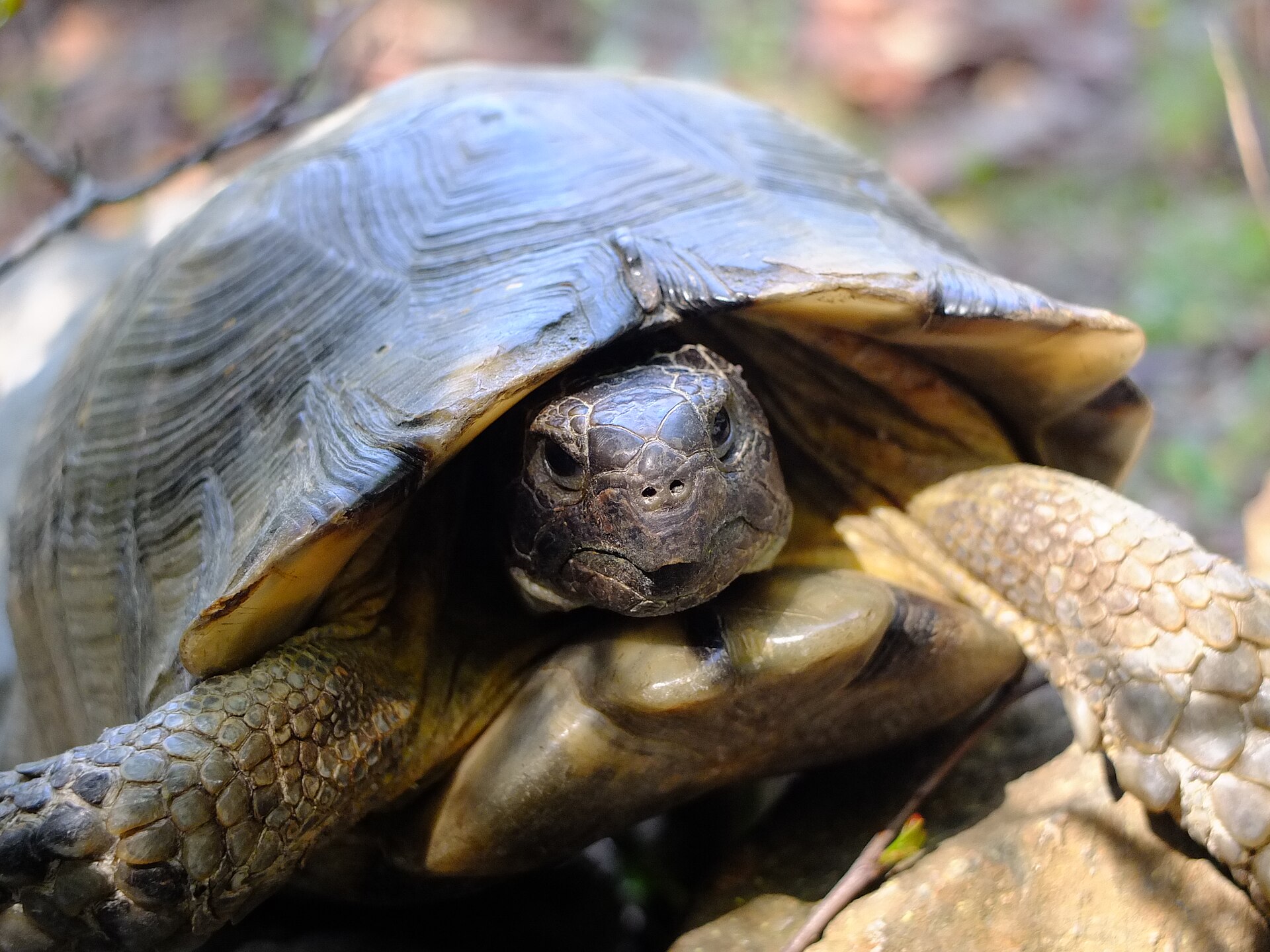
Marginated Tortoise
Testudo marginata
Characteristics
Temperament
A slow, calm, diurnal, heliothermic land tortoise, the largest in Europe. It warms up in the sun to be active and takes shelter in the shade in the hottest hours; in cold areas it hibernates in winter. It is a long-lived (many decades) and shy animal, a symbol of calm and patience. It is NOT an "easy" animal to take lightly: it requires ample outdoor space, sun, a correct diet of wild plants and calcium, and careful hibernation management. It is also a protected species (CITES/EU): it must be kept only with proper documentation and NEVER taken from the wild.
Diet
A herbivore adapted to a poor, fibrous diet, like the other Mediterranean tortoises: it feeds mainly on wild grasses, leaves and flowers (dandelion, clover, chicory, mallow) and scrub shoots, with only occasional, limited small fruits. In captivity it needs plenty of fibre and little protein, an adequate calcium supply (e.g. cuttlebone), and the exclusion of animal foods and excess fruit or rich vegetables, which cause abnormal shell growth ("pyramiding") and health problems. Reproducing the natural wild-plant diet is essential for its welfare.
The Marginated Tortoise (Testudo marginata) is the largest of the European land tortoises: a sturdy, long-lived Mediterranean tortoise, recognizable above all for the characteristic shape of its shell. Famous for:
- The "bell"-shaped carapace: the rear edge flares outward and is serrated, like a skirt or a bell
- The record size: it is the largest land tortoise in Europe
- The dark colouration: a blackish carapace with paler centres, darkening with age
- The Mediterranean kinship: a close relative of Hermann's and the spur-thighed tortoise
- The great longevity: it can live many decades
- The protected status: like the other Testudo, it is a protected species
IUCN status: Least Concern (LC). It enters the portal among the land tortoises, alongside the giant Galápagos tortoise and the spur-thighed tortoise, and ideally completes the trio of Mediterranean tortoises of the genus Testudo: together with Hermann's and the spur-thighed tortoise, already present, it represents the three land tortoises typical of Mediterranean Europe.
Classification and category
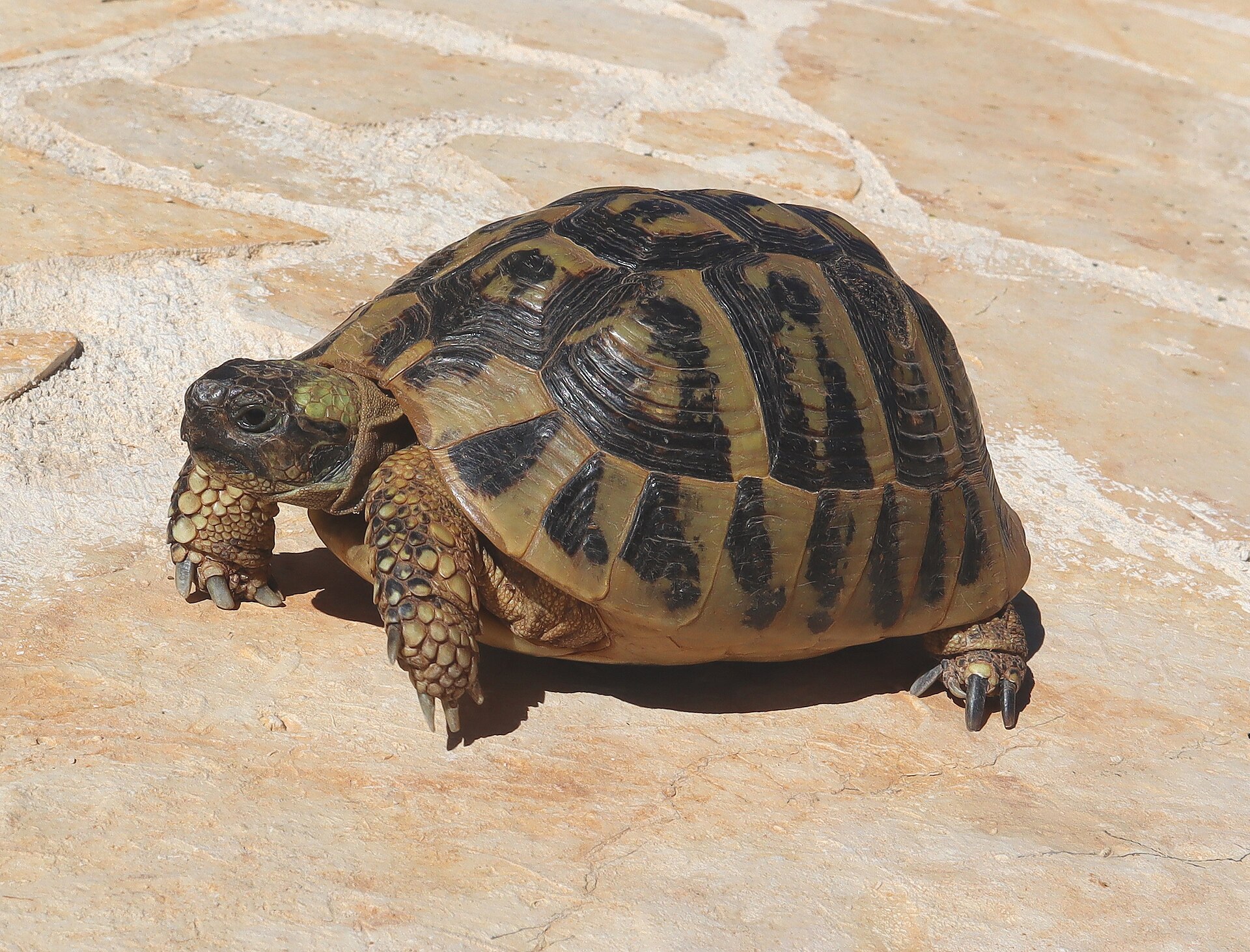
Order Testudines, family Testudinidae (the true land tortoises), genus Testudo — that of the Mediterranean tortoises. The species is Testudo marginata. In the portal it is placed among the land tortoises. It is useful to tell it apart from the other Mediterranean Testudo tortoises: Hermann's tortoise (Testudo hermanni) — smaller, with a divided scute above the tail and a horny tip on the tail; it lacks the showy rear flare; the spur-thighed tortoise (Testudo graeca), in the portal — recognizable by the spurs on its thighs; smaller and with a non-flared shell; the marginated tortoise differs from both by its larger size, darker colouration and above all by the flared, serrated, "bell"-shaped rear edge of the carapace. The combination of large size + dark carapace + flared bell-shaped rear edge is the marginated tortoise's "identity card". Etymology: "marginata" refers precisely to the flared margins of the carapace, the species' most distinctive trait. Parameters: Carapace length the largest among European tortoises, up to about 35-40 cm. Weight it can reach and exceed 4-5 kg. Shape a high, elongated carapace with the characteristic flared rear edge. Longevity: very remarkable, as with the other Mediterranean tortoises: it can live many decades, exceeding 50 years. Reproduction: it lays eggs in holes dug in the ground; the hatchlings' sex depends on the incubation temperature.
Habitat and distribution
The Marginated Tortoise is a typically Mediterranean tortoise, with a more restricted range than the spur-thighed: its range covers above all Greece (and neighbouring Balkan areas); it has also been introduced to Sardinia and some areas of Italy. Preferred habitats — warm, dry, rocky environments: rocky and hilly slopes of the Mediterranean scrub; garrigue, bushland and arid slopes; and dry mountainous areas, sometimes at slightly higher elevations than other tortoises. It is a terrestrial, diurnal, heliothermic animal: it warms up in the sun to become active and takes shelter in the shade or in refuges during the hottest hours. In the colder parts of its range it hibernates in winter, while in torrid summers it may reduce activity. Its is a slow life, marked by the seasons and the sun, typical of tortoises of the Mediterranean climate. IUCN status: Least Concern (LC), but like all Testudo tortoises it is an internationally protected species: it is included in CITES and in European legislation, and keeping it requires proper documentation. It is also locally threatened by habitat loss and, in the past, by collection for trade.
Diet
The Marginated Tortoise is herbivorous, like the other Mediterranean tortoises, and follows a poor, fibrous diet. It feeds on: wild grasses, leaves and flowers (dandelion, clover, chicory, mallow and many other wild plants); shoots and herbs of the Mediterranean scrub; and occasionally small fruits, but to a limited extent. Guidelines for a correct diet (in captivity): plenty of fibre, little protein (the basis must be wild grasses and weeds; excesses of fruit, "rich" vegetables and above all animal foods must be avoided); the right calcium supply (essential for shell and bones, often supplemented with cuttlebone); and mistakes to avoid (a too rich and protein-heavy diet causes abnormal shell growth — "pyramiding" — and serious health problems). Crucially, like the spur-thighed and Hermann's tortoise, the marginated tortoise too is adapted to a poor, fibrous diet, typical of arid Mediterranean environments. Reproducing this diet — made up above all of wild plants — is essential for its welfare in captivity.
Physical features
A large land tortoise with an unmistakable shell. The flared carapace — the distinguishing trait: a rear edge open "like a bell" (the rear marginal scutes widen outward, serrated, forming a kind of flared skirt, especially in adult males); a high, elongated carapace, blackish with paler patches/centres; a colouration that darkens with age. The size and structure: the largest land tortoise in Europe, sturdy and massive; strong, scaly legs, suited to walking on rocky ground; a sturdy head with a horny, toothless beak. The dimorphism: in males the rear flare is more marked and the plastron tends to be concave; a stocky, compact appearance, typical of land tortoises.
Curiosities, care and protection
The Marginated Tortoise is a slow, calm, diurnal animal, a symbol of calm and longevity like its Mediterranean relatives. Its most fascinating feature is the unique shape of its shell, which makes it unmistakable.
The "bell"-shaped shell: the trait that gives the species its name is the rear edge of the carapace, which in adults (especially males) opens and widens outward, serrated, like a flared skirt or a bell; no other European tortoise shows this shape so markedly: it is the quickest and surest way to recognize the marginated tortoise. The largest in Europe: the marginated tortoise holds the record as the largest land tortoise of the European continent, exceeding Hermann's and the spur-thighed in size; while not reaching the colossal sizes of the tropical giant tortoises (like the Galápagos one), it is a true "giant" in the European context. The Mediterranean trio: with Hermann's tortoise and the spur-thighed tortoise, the marginated tortoise forms the trio of land tortoises of the genus Testudo typical of Mediterranean Europe; knowing them together helps tell them apart: Hermann's has the horny tip on the tail and the divided tail scute, the spur-thighed the spurs on the thighs, the marginated the larger size and the flared shell. The truly Greek tortoise: unlike the "Greek tortoise" (Testudo graeca), whose name comes from the shell pattern and not from geography, the marginated tortoise really is native mainly to Greece; it is therefore, in a sense, the most authentically "Greek" of the Mediterranean tortoises, even though it has since been introduced to Sardinia and other areas. Hibernation and the slow life: like the other tortoises of temperate-Mediterranean climate, the marginated tortoise spends the cold months in hibernation, burying itself or hiding in refuges; its is a "slow" biology, of long periods of inactivity, gradual growth and great longevity: traits that make it fascinating but also delicate to manage correctly. Protection and responsible care: the marginated tortoise is a protected species; it is forbidden to take it from the wild, and specimens kept as pets must come from breeders and possess the documentation required by CITES and European regulations; it requires outdoor space, sun, a correct diet of wild plants and calcium, and careful hibernation management: those who wish to care for it must inform themselves thoroughly and turn to legal, responsible sources, thereby also contributing to the conservation of the species.
Pros
- La più grande testuggine terrestre d'Europa, dal guscio unico e inconfondibile
- Molto longeva: può vivere oltre 50 anni
- Erbivora e relativamente semplice nelle esigenze alimentari (erbe selvatiche)
- Completa il trio delle testuggini mediterranee (con Hermann e greca)
Cons
- Specie protetta (CITES/UE): solo con documenti regolari, MAI prelevata in natura
- Impegno lunghissimo (molti decenni) e gestione delicata del letargo
- Dieta scorretta (troppe proteine/frutta) causa gravi danni al guscio
- Minacciata localmente dalla perdita di habitat