Photo: Luc Viatour · CC BY-SA 3.0
Orchid mantis
Hymenopus coronatus
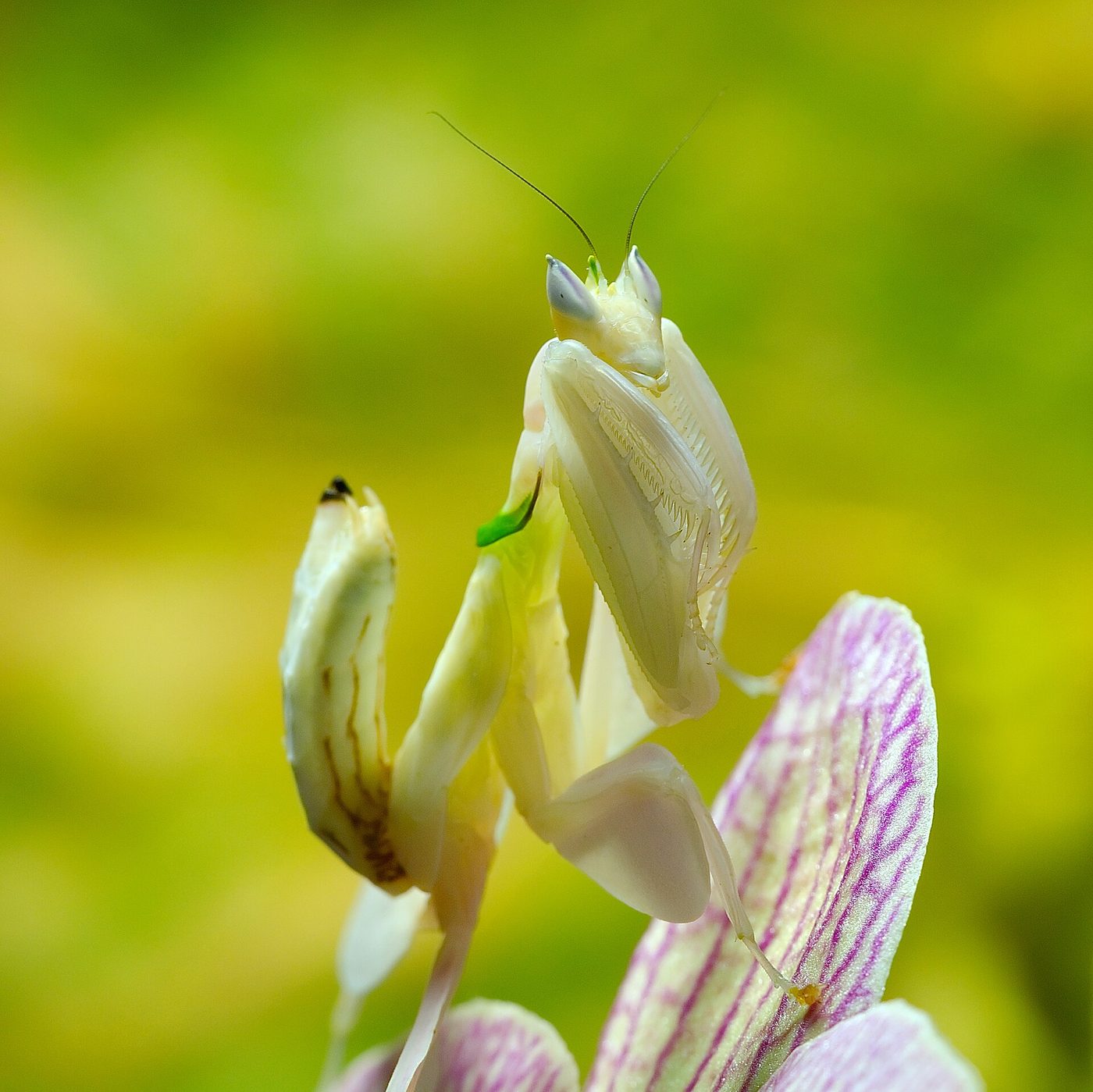
With its pinkish body and petal-shaped legs, the orchid mantis imitates a flower to perfection, deceiving the pollinating insects that become its prey.
Characteristics
Temperament
An ambush predator, motionless and camouflaged
Diet
Carnivore: insects, especially pollinators
An insect disguised as a flower
The orchid mantis is one of the most beautiful and surprising insects in the world, a masterpiece of camouflage. Its body, of a delicate white-pink colour that can vary with its surroundings, imitates the petals of a flower to perfection. In particular, its legs are broadened and lobed, like small petals, completing the illusion. At first sight, this insect looks to all intents and purposes like an orchid or another flower resting among the vegetation, so perfect is the resemblance.
Habitat and distribution
It lives in the rainforests and tropical environments of Southeast Asia, where it lies in wait among the flowering vegetation. It is an insect tied to warm, humid environments rich in flowers and insects, where its disguise proves particularly effective. The females are decidedly larger and more striking than the males.
A deceptive hunter
The orchid mantis's mimicry serves not only to hide but above all to hunt: it is an extraordinary example of 'aggressive mimicry'. Motionless and looking like a flower, the mantis actively attracts pollinating insects, such as bees and butterflies, which approach, deceived, in search of nectar. When the prey is within reach, the mantis strikes with its powerful, spined front legs, catching it with a lightning movement. Some studies suggest it may attract prey even better than a real flower.
Life cycle and curiosities
Like all mantises, it goes through several moults before reaching the adult stage. The newly hatched young often have a different colouring from the adults. The orchid mantis is much sought after by terrarium enthusiasts, who appreciate its beauty, but it requires specific care and a suitable environment to thrive.
Role and conservation
The orchid mantis is a fascinating example of the ingenuity of evolution. Although it is not among the species considered threatened, like all insects of the tropical forests it depends on the health of its habitat, threatened by deforestation. Conserving the forests of Southeast Asia is important to protect this insect and the immense variety of life that surrounds it.
Pros
- Extraordinary camouflage, imitates a flower
- A unique example of aggressive mimicry
- Fascinating and sought after by enthusiasts
- A masterpiece of evolution
Cons
- Requires specific care and environments in captivity
- Depends on the health of the tropical forests
- Strong difference between males and females