Paca
Cuniculus paca
Characteristics
Temperament
Solitary, nocturnal, territorial, semi-aquatic. SECOND-LARGEST RODENT of South America (after capybara). BONY RESONANCE CHAMBERS in cheeks (expanded hollow zygomatic bones) — ONLY mammal in world! Amplify sounds. Rows of white spots on flanks. Seed disperser COMPLEMENTARY to Agouti (nocturnal vs diurnal = 24/7). Swims and dives to escape. Monogamous. "1 cub" K-selected strategy.
Diet
Nocturnal herbivore/frugivore. Fallen fruit (main: wild mango, avocado, palm fruits, figs), seeds (disperses via scatter-hoarding like Agouti), tubers/roots, tender leaves, flowers, mushrooms. Seed disperser COMPLEMENTARY to Agouti (Paca nocturnal + Agouti diurnal = 24/7 dispersal). 500-800 g food/day. Fixed latrines (often in water).
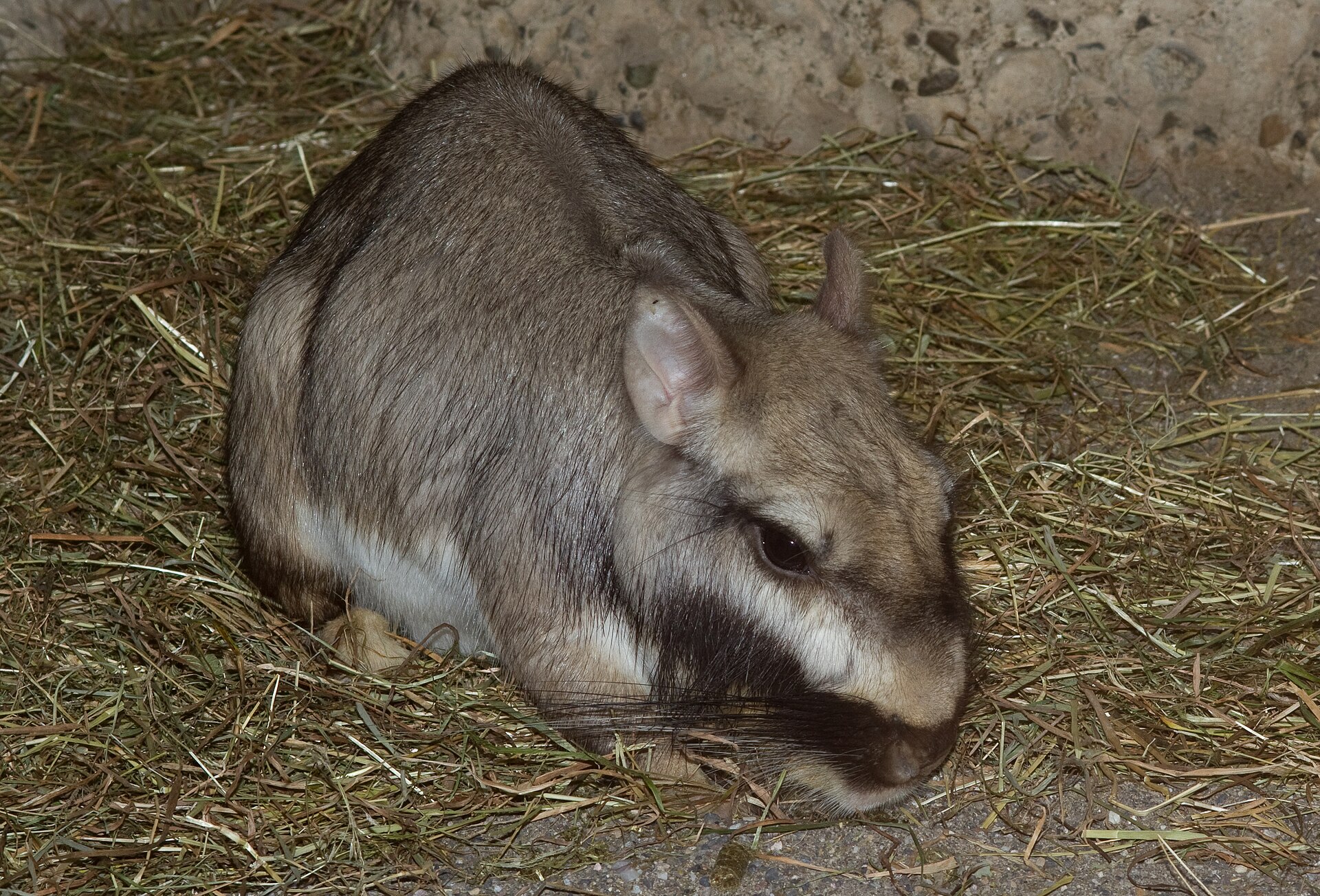
The Paca (Cuniculus paca), known in Spanish as Tepezcuintle, Lapa, Guartinaja, is the second-largest rodent of South America (after the capybara, in catalogue). Endemic to Neotropical forests (Mexico-Argentina), famous for:
- BONY RESONANCE CHAMBERS: cheekbones (zygomatic bones) enormously expanded forming resonance chambers in cheeks — feature UNIQUE among all mammals! Amplify sounds for communication
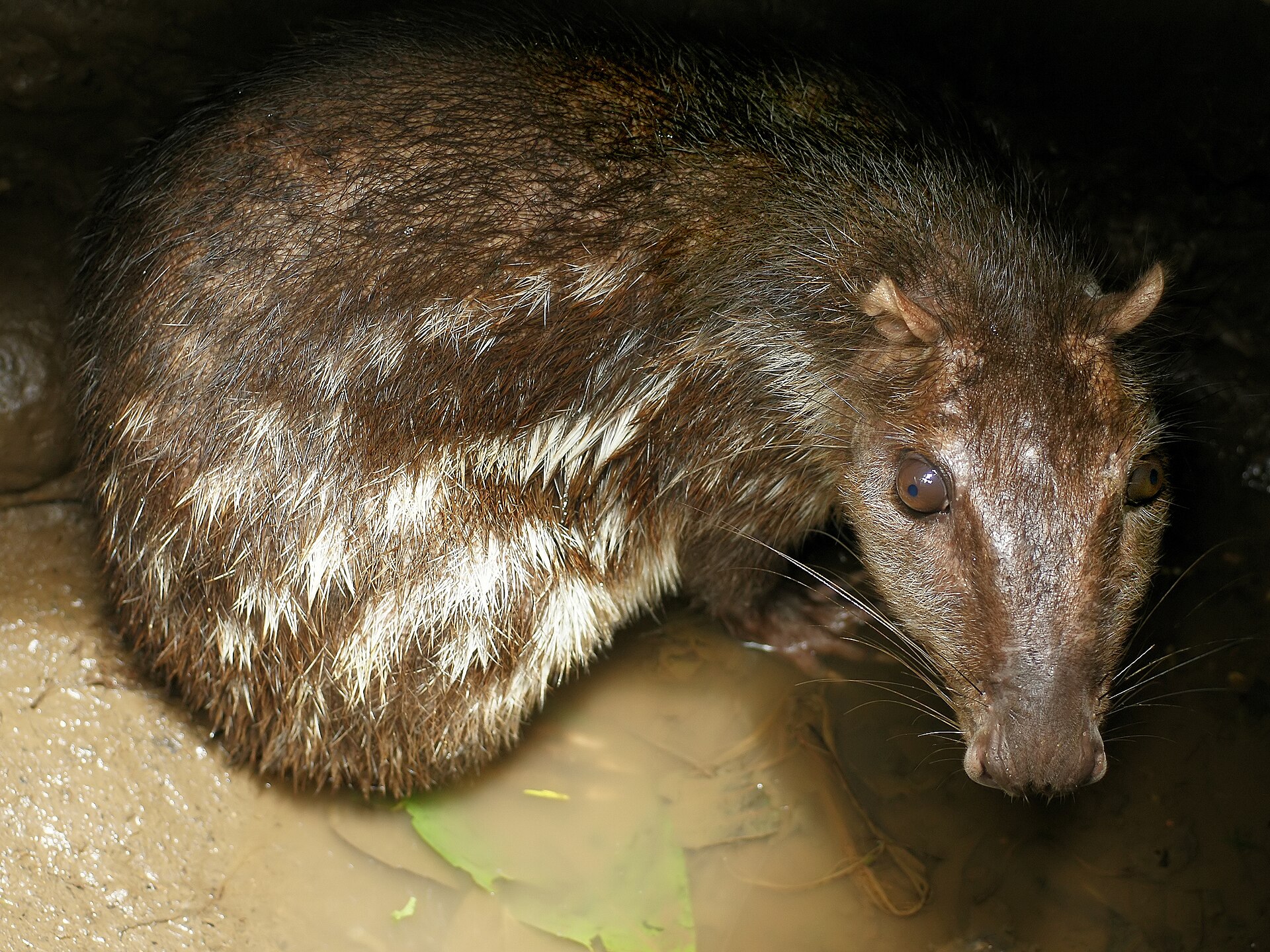
- Rows of white spots: 4-7 longitudinal rows of white spots on dark brown flanks — diagnostic
- Second-largest rodent of South America: 6-12 kg (record 14 kg)
- Nocturnal and solitary
- Semi-aquatic: excellent swimmer, dives to escape predators
- Seed disperser: like Agouti (in catalogue), buries seeds that germinate (scatter-hoarding)
- Main prey of jaguar, ocelot (in catalogue!), puma, bush dog (in catalogue!), caimans
IUCN status: Least Concern (LC). Global population: millions but under hunting pressure (prized meat). Distribution: from eastern Mexico to northern Argentina.
Classification and category
Order Rodentia, suborder Hystricomorpha, infraorder Caviomorpha, family Cuniculidae, genus Cuniculus. Genus contains 2 living species: C. paca (lowland paca, this entry) and C. taczanowskii (mountain paca, Andes 2,000-3,500 m). Closest relatives: Agoutis (genus Dasyprocta, in catalogue!). Paca larger and stockier than agouti, and nocturnal (agouti diurnal) — temporal niche division. Etymology: "Cuniculus" Latin "tunnel/rabbit". "Paca" from Tupi-Guaraní. "Tepezcuintle" Nahuatl "mountain dog". Described by Linnaeus 1766. Parameters: Weight 6-12 kg (record 14 kg). Length 60-80 cm. Tail vestigial (1-3 cm). Longevity 12-16 years natural, 16-20 captive. Gestation 114-119 days (long!). Litter 1 cub (rarely 2).
Habitat and distribution
Distributed throughout the Neotropics: Mexico, all Central America, northern/central South America to N. Argentina, Trinidad/Cuba (introduced). Habitats: tropical rainforest (main), gallery forest near rivers (prefers water proximity), varzea, mangroves, secondary forest, crop margins. Avoids open areas, deserts, urban, high mountains (except C. taczanowskii). IUCN: Least Concern. Threats: hunting for meat (main — best neotropical game meat!), deforestation, dog hunting, natural predation. CITES: not included (except Honduras Appendix III). Conservation: sustainable captive farming.
Diet
Nocturnal herbivore/frugivore. Diet: fallen fruit (main — wild mango, avocado, palm fruits, figs), seeds (legumes, palms — disperses via scatter-hoarding like Agouti), tubers and roots (digs), tender leaves, flowers, mushrooms, crops (conflict). Technique: nocturnal emergence + fruit search + scatter-hoarding + extreme vigilance. Important seed disperser COMPLEMENTARY to Agouti (Paca nocturnal, Agouti diurnal = 24/7 dispersal). 500-800 g food/day.
Physical features
Stocky robust body like giant agouti. Coat: dark brown/reddish-brown/black-brown base, 4-7 LONGITUDINAL ROWS OF WHITE SPOTS on flanks (diagnostic), cream-white belly, short coarse hair. Head: BONY RESONANCE CHAMBERS (zygomatic bones enormously expanded and hollow forming cheek resonators — UNIQUE among mammals!), short robust muzzle, large black eyes (night vision), medium rounded ears, orange incisors. Body: stocky, hind legs longer (4 toes), front shorter (5 toes), vestigial tail (1-3 cm), strong claws. Speed 30-40 km/h, excellent swimmer (dives 10-15 sec), AMPLIFIED vocalizations via bony resonance chambers.
Behaviour and curiosities
Solitary, nocturnal, territorial. Territory 2-4 ha. Monogamous (rare among rodents). Male courts female with urine spray (Caviomorph behavior). Gestation 114-119 days. 1 cub (rarely 2) — exceptionally low. Precocial cub (600-700 g). Defense: flight into water (dives, swims underwater). Multi-exit burrows. Predators: jaguar, ocelot, puma, bush dog, caimans, anaconda, harpy eagle (all in catalogue!).
Famous: BONY RESONANCE CHAMBERS — ONLY mammal with bony cheek resonators! Zygomatic bones enormously expanded and hollow, amplify grunts/teeth-chattering for communication, intimidation. Unique "anatomical musical instrument". "Tepezcuintle": best neotropical game meat, prized in Central America fine dining, sustainable farming developed. Agouti complementarity: Paca nocturnal + Agouti diurnal = 24/7 seed dispersal. Second-largest SA rodent after capybara. Semi-aquatic: dives/swims to escape. "One cub" K-selected strategy. Fixed latrines (often in water). Mountain paca (C. taczanowskii) Andes Near Threatened. Mesoamerican culture: Maya/Aztec food. Longevity: 20 years captive.
Pros
- Camere di risonanza ossee — UNICO mammifero al mondo
- Disperditrice di semi chiave per foreste neotropicali
- Allevamento sostenibile riduce pressione su selvatici
- Longevità eccezionale per roditore (20 anni)
Cons
- Caccia intensiva per carne pregiata (tepezcuintle)
- Riproduzione lentissima (1 cucciolo/nidiata)
- Predata da numerosi predatori neotropicali
- Vulnerabile a deforestazione amazzonica