Edible Dormouse
Glis glis
Characteristics
Temperament
Nocturnal, arboreal, social during hibernation. Hibernates 6-11 months (absolute mammalian record). Body temperature during hibernation: 1-2 °C. Heart: 4-5 bpm. Record longevity for a rodent (up to 14 years).
Diet
Omnivore with herbivorous tendency: beech nuts, acorns, chestnuts, fruit. Autumn hyperphagia (doubles weight). Winter mortality 80% in "masting failure" years. Delayed breeding if food is scarce.
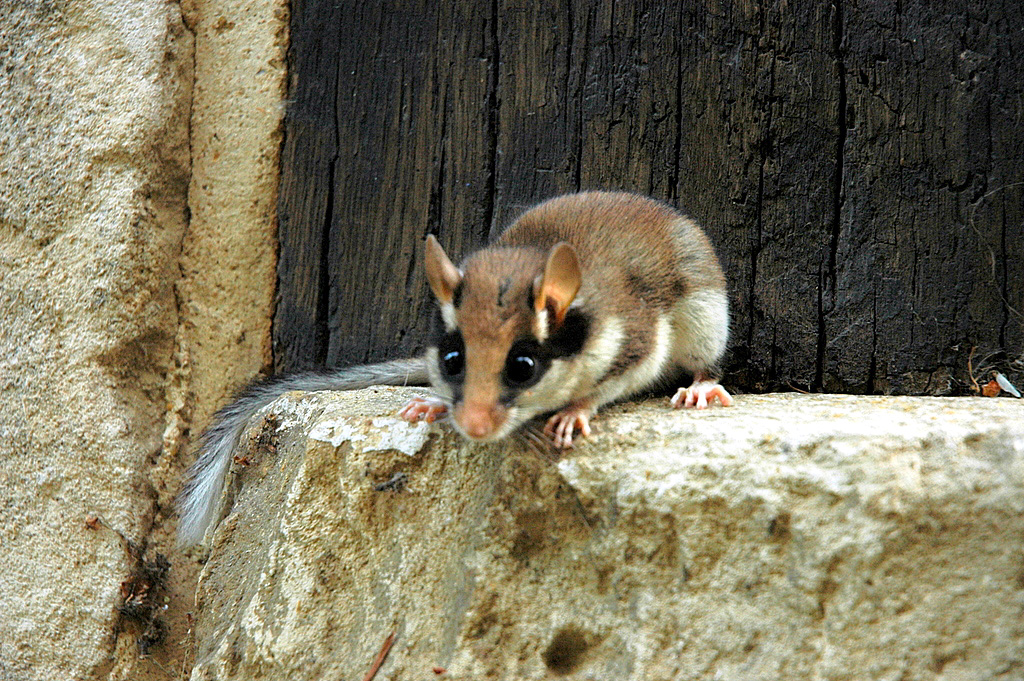
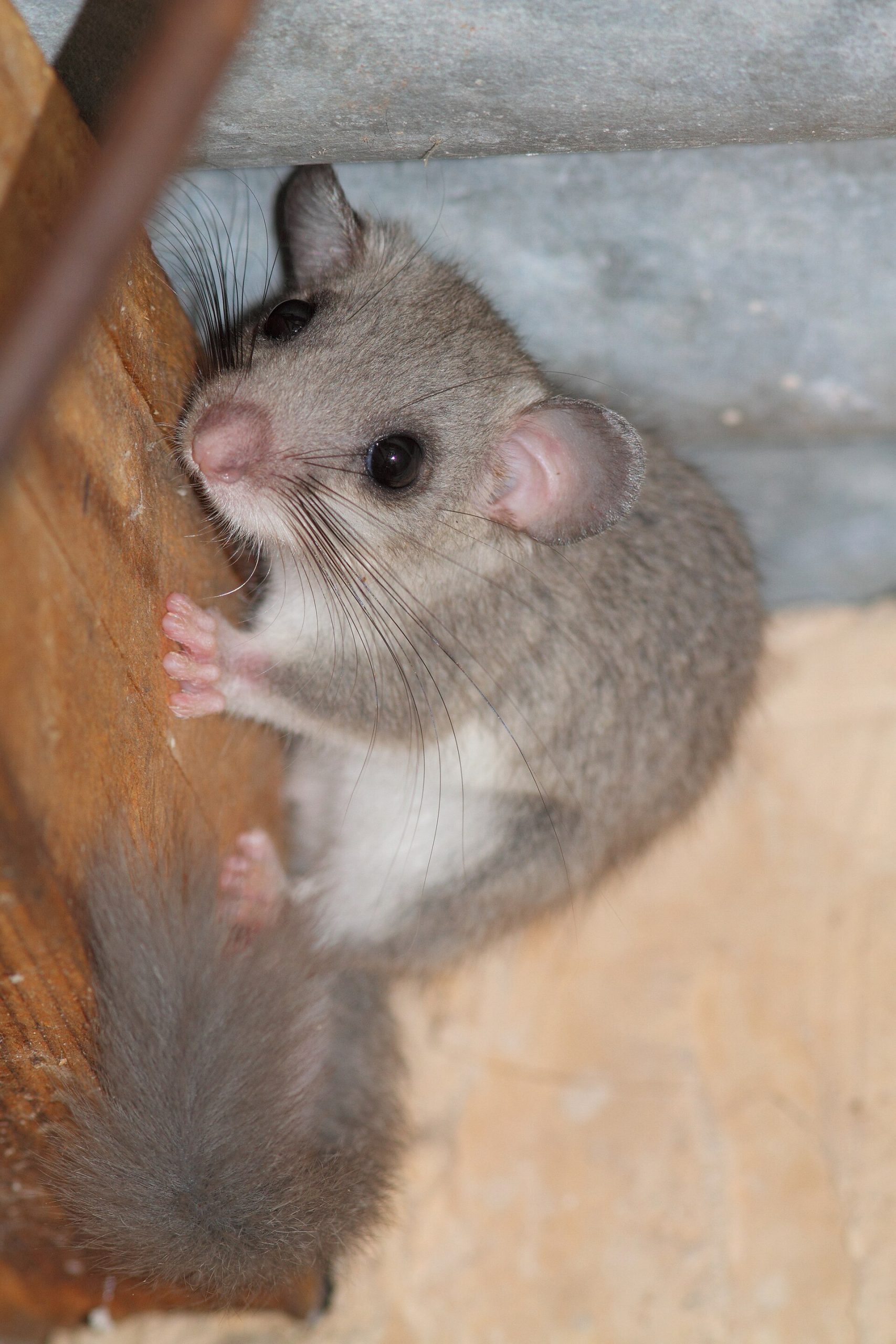
The Edible Dormouse (Glis glis), also known as the Fat Dormouse or simply Dormouse, is a medium-sized rodent widespread in the deciduous forests of Europe, famous for being the absolute champion of hibernation among mammals: in high altitude it can hibernate up to 11 months a year, remaining active only for 4-6 weeks in midsummer. Its longevity is equally surprising: it lives up to 12 years, a record for a rodent of only 100-300 g (a mouse of the same size lives 1-2 years). Charismatic, with large black eyes, grey-brown fur and a very bushy brush tail, it was made famous by Lewis Carroll's novel "Alice in Wonderland" (1865), where the Dormouse character sleeps at the Mad Hatter's tea table and dialogues sleepily with Alice. Considered a delicacy in ancient Rome and still today a traditional dish in some areas of Slovenia and Karst, it is a protected species in almost all of Europe.
Classification and category
The Edible Dormouse belongs to the order Rodentia, suborder Sciuromorpha, family Gliridae (the "dormice" in the broad sense, which also include hazel dormouse and dwarf dormice), genus Glis. It is the only species of the genus, distinct from other Gliridae by larger size and very bushy tail. Body length is 13-19 cm, to which is added a tail of 11-16 cm (in proportion, the tail is about 80% of body length). Average adult weight is 100-300 g, with extreme seasonal variations: in autumn, before hibernation, it accumulates fat reserves up to doubling its weight (even 400 g), to halve it during hibernation. There are several geographic subspecies: G. g. glis (Central Europe), G. g. italicus (Italy, described in 2018), G. g. orientalis (Caucasus, Anatolia). The scientific name Glis glis is a tautology: glis in Latin means exactly "dormouse" (Pliny the Elder described the "glires" as a Roman delicacy).
Habitat and distribution
The habitat of the Edible Dormouse consists of mature deciduous forests, particularly of beech (Fagus sylvatica) and oak (Quercus), with dense undergrowth vegetation and abundance of hollow trees for shelter. It prefers hilly and mountainous areas (300-1,800 m above sea level), where seasonality is marked and food abundant in autumn (acorns, beech nuts, chestnuts). It is strictly arboreal: it spends most of its time in trees, rarely descending to the ground. It builds spherical nests of leaves, moss and twigs inside tree cavities or old bird nests.
The geographic distribution covers central and southern Europe: from northern Portugal to European Russia, from southern Poland to Sicily, including Caucasus and northern Anatolia. Absent from Scandinavia, Great Britain (introduced in 1902 at Tring Park estate, where it is still present in a population of 30,000 specimens), Ireland, Iceland. In Italy it is widely distributed along the Apennines and Alps below 1,500 m. Conservation status is listed as Least Concern (LC) by the IUCN globally, but some national populations are in decline due to fragmentation of mature deciduous forests. It is protected in many European countries (Appendix III of the Bern Convention). Hunting is prohibited in almost all of Europe except in some areas of Slovenia, Croatia (Karst) and central-southern Italy, where it is still the subject of traditional hunting practice for meat, considered a local delicacy.
Diet
The Edible Dormouse is an omnivore with herbivorous tendency. The autumn diet (the most important because it determines the reserves for hibernation) is composed mainly of: beech nuts (fruits of beech), acorns, chestnuts, hazelnuts, walnuts, fleshy fruits (blackberries, raspberries, figs, grapes, apples). In spring and summer it supplements with: flowers (azaleas, rhododendrons), tender leaves, shoots, insects, eggs and chicks of small birds (occasionally). The predation on eggs makes the Edible Dormouse locally unpopular with ornithologists and bird breeders.
The feeding has an extreme seasonal rhythm: in spring (waking up from hibernation) the Edible Dormouse is skeletal (50-100 g); in summer it feeds intensely to recover weight; in autumn it enters "hyperphagia", eating up to 30 g of food a day (one third of its own weight) to accumulate the fat necessary for hibernation. Brown fat reserves (BAT) constitute 40% of pre-hibernation weight. The presence of abundant beech nuts and acorns in autumn is crucial for winter survival: in years of "poor fruiting" of the forest (masting failure), winter mortality can reach 80%, and the female does not reproduce the following year (unique capacity of "annual reproductive delay"). A population of dormice can therefore be absent for 1-2 consecutive years and then explode in years of abundant "mast".
Physical features
The Edible Dormouse has a stocky, compact body, covered with soft and thick fur. The coat colour is uniform grey-brown on the back, with darker shades around the eyes (characteristic "mask"), and cream white belly. Juveniles are greyer than adults. The head is large in proportion to the body, rounded, with short and rounded muzzle. The eyes are enormous, black, prominent — adaptation to crepuscular-nocturnal life. The ears are small, rounded, slightly protruding. Facial whiskers are long and sensitive.
The most recognisable characteristic is the tail: almost as long as the body, covered with soft and thick "brush" fur (never "whip" like the mouse or rat), used as a counterbalance in jumps between branches, as body covering during rest, and as a seasonal fat reserve. The tail has the singular capacity of "caudal autotomy" (like lizards): if grabbed by a predator, the skin of the tail easily detaches leaving the vertebrate intact to the dormouse that escapes. The tail does not regrow. The legs are short but muscular, with sharp claws suitable for climbing. The plantar pads are soft and sensitive. The heart rate is highly variable: 300-400 bpm in activity, drops to 4-5 bpm during deep hibernation (99% reduction). Body temperature during hibernation drops from 38 °C to 1-2 °C, close to freezing.
Behaviour and curiosities
The Edible Dormouse is a nocturnal, arboreal, social during hibernation animal. It lives solitary or in small families during summer, but hibernates in groups of 5-15 individuals sharing the same nest to maximise energy savings. It communicates through a repertoire of vocalisations: contact clucks, alarm whistles, real whispered "quarrels" when they contend for shelters.
The hibernation of the Edible Dormouse is one of the most extreme in the animal kingdom: at high altitude (Alps, Carpathians) it can last 6-11 months, with a single summer activity period of 4-6 weeks (June-August). In the plains hibernation lasts "only" 4-6 months (October-April). During hibernation body temperature drops to 1-2 °C, heart rate to 4-5 bpm, breathing to 1-2 acts per minute, metabolism collapses by 98%. The exceptional longevity (up to 12 years in nature, record 14) is precisely due to prolonged hibernation: "biological time" slows down during hibernation, reducing oxidative stress and cellular wear. The Edible Dormouse is today a fundamental scientific model for studies on longevity, induced hypothermia, cryopreservation and space medicine (for hypothetical future interplanetary travel with crew in hibernation).
Reproduction occurs exclusively after a summer with abundant forest fruiting: the female gives birth to 4-7 young in August-September, and the young must grow rapidly to reach the minimum weight (80 g) before hibernation. Sexual maturity is reached at 2 years, and females do not reproduce every year. Historical and cultural curiosities: in Ancient Rome the Edible Dormouse was considered a culinary delicacy: the patricians raised dormice in special terracotta vats called "gliraria", fattening them with nuts and acorns before consumption. Apicius (1st century AD) collects recipes in the "De Re Coquinaria". The tradition has been preserved in Slovenia (Karst region), where the "polh" (dormouse in Slovenian) is still today hunted and consumed in traditional dishes (annual festival of Cerknica). The character of the Dormouse at the Mad Hatter's tea table in Lewis Carroll's "Alice in Wonderland" (1865) is one of the most famous in world literature: in every scene it is always half-asleep, a perfect representation of the real Edible Dormouse, and is stuffed into a teapot by the Mad Hatter and the March Hare.
Pros
- Letargo più lungo del mondo per un mammifero (6-11 mesi)
- Longevità eccezionale (fino 14 anni per 200 g)
- Modello scientifico per geroscienze e medicina spaziale
- Protetto in quasi tutta Europa (Convenzione di Berna)
Cons
- Vietato come pet in molti paesi UE
- In natura preda uova/pulcini di uccelli (impopolare con ornitologi)
- Mortalità invernale 80% in anni di scarsa fruttificazione
- Cacciato ancora in Slovenia, Croazia, Italia centro-sud (specialità locale)