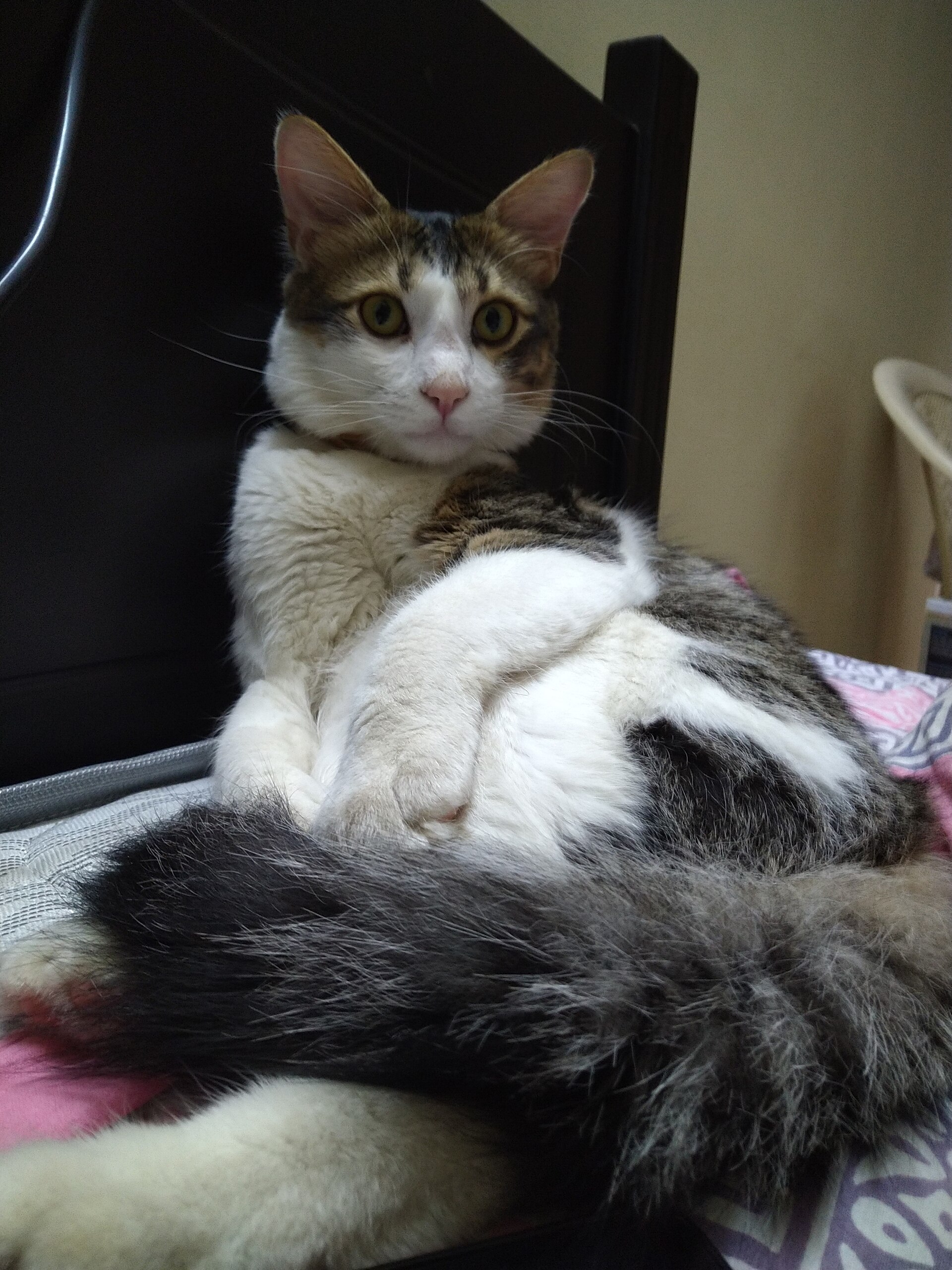
Turkish Angora
Felis catus
Characteristics
Temperament
A lively, intelligent, athletic and very sociable cat, deeply attached to people. It loves company and interaction, "takes part" in household life by following its humans and seeking attention, and tolerates boredom and solitude poorly. Curious and dynamic, it adores climbing, jumping and dominating the highest spots; it may show a firm, almost "head-of-the-family" character towards other animals. It is an interactive, affectionate companion, ideal for those seeking an active, engaging cat rather than a placid lap cat.
Diet
A strict carnivore, like every cat: it needs good-quality complete foods (wet and/or dry), rich in animal protein and suited to age and lifestyle, with fresh water always available. Being an athletic, slender, lively cat, it needs a good protein and energy intake to support its musculature; portions should still be measured, especially if neutered, to keep its naturally elegant line. A balanced diet also helps keep the characteristic long silky coat shiny and healthy and reduces hairballs.
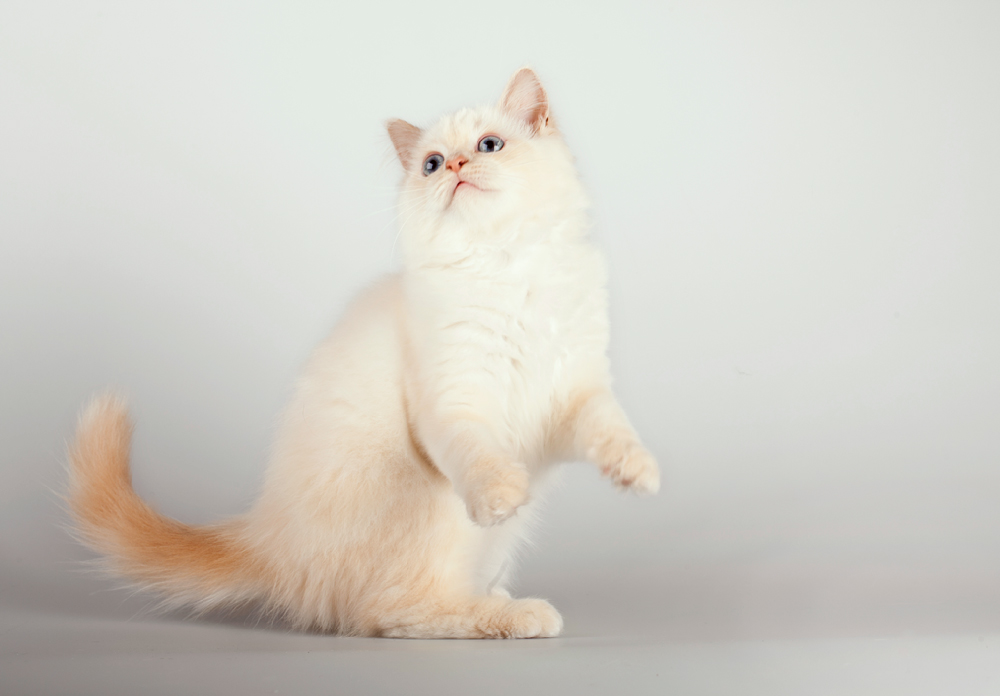
The Turkish Angora is one of the most ancient, elegant and fascinating cat breeds in the world: a long-haired cat of slender lines and aristocratic bearing. Famous for:
- Slender elegance: a fine, agile, muscular body, far from the "stocky" look of other long-haired cats
- The silky coat: long, fine and silky, without a thick undercoat, that flows with every movement
- The classic white: the historic colour is pure white, though many colours are now allowed
- Odd eyes: it often has eyes of two different colours (one blue and one amber), a striking trait especially in whites
- Antiquity: a very ancient natural breed, native to Anatolia
- A lively character: intelligent, athletic, playful and very attached to people
The Turkish Angora is a domestic cat and enters the portal among the long-haired cats, alongside the Maine Coon, Persian and Ragdoll: among these it is the most slender and "athletic", the exact opposite, by build, of the massive flat-faced Persian.
Classification and category
The Turkish Angora is a pedigree domestic cat (Felis catus), and in the portal it is classified among the long-haired cats. It is a very ancient natural breed, that is, one formed spontaneously in its place of origin before being recognized and selected by humans. It is useful to tell it apart from other breeds it can be confused with: the Persian, also long-haired, is massive, with a stocky body and a flat face; the Angora is instead slender, rangy and with a normal, tapered muzzle; the Turkish Van is another Turkish breed, sturdier, with the typical "Van pattern" (white with coloured patches only on the head and tail) and famous for loving water; "ordinary" long-haired cats lack the fine, elegant build and silky coat typical of the Angora. Etymology: the name comes from Angora, the old name of the city of Ankara, in Turkey, the breed's region of origin; the same name is also behind other "angora" animals (such as the angora rabbit and goat), because of the long, prized fur. Parameters: Weight generally 2.5-5 kg (a medium-small, light cat). Size medium, with a slender, fine build. Coat long, fine and silky, without a thick undercoat. Longevity: excellent, generally 12-18 years, often long-lived with proper care. Reproduction: a lively, precocious breed; as for all cats, neutering and good management are important.
Habitat and distribution
As a domestic breed, the Turkish Angora has no wild range: it lives alongside humans and is loved all over the world. It does, however, have a precise, glorious homeland, Turkey, in particular the Anatolian plateau around Ankara. Ideal living environment: the home, with room to move (being athletic and curious, it loves to climb, jump and reach the highest spots); families and present people (a very sociable cat that seeks company and interaction and tolerates boredom poorly); and stimulating environments (it appreciates scratching posts, shelves, toys and climbing opportunities). Historical notes: the Turkish Angora is considered the ancestor of many Western long-haired cats, including the Persian. Over the 20th century the pure breed risked being lost, "diluted" in crossbreeding; it was saved thanks to a conservation programme run by the Ankara Zoo, which guarded especially the prized white and odd-eyed specimens, considered a true Turkish national treasure. From there the breed was reintroduced and spread in the West. Not being a wild animal, it has no IUCN conservation status.
Diet
Like all cats, the Turkish Angora is a strict carnivore and needs a diet rich in quality animal protein. As an active domestic cat: good-quality complete cat foods (wet and/or dry), suited to age and lifestyle; a good protein intake to support its slender, muscular build; and fresh water always available. Particular care: energy to sustain (being an athletic, lively cat, it needs the right fuel); weight control (although naturally slender, the Angora too should be monitored, especially if neutered and inactive); and coat care from within (a balanced diet helps keep the characteristic silky coat shiny and healthy and limits hairballs). Crucially, the Angora is a naturally slender, active cat; its diet should support this athletic physique without excess, while keeping the beauty of the long coat.
Physical features
A cat of elegant, fine, graceful appearance. The coat — the most admired trait: long, fine and silky fur, of a silken texture, without a thick undercoat, which makes it look flowing and light; longer feathering on the neck ("ruff"), belly and tail, the latter often carried like a "plume"; the classic colour is pure white, but many other colours and patterns are now allowed. The body and eyes: a slender, rangy, muscular body, with long, fine legs; a fine, wedge-shaped head, with large ears and a tapered muzzle (never flat); large almond-shaped eyes, amber, blue or green, often odd (heterochromia) in white individuals. Performance: agility and athleticism (it jumps and climbs with great ease); elegant, fluid movements; and relatively low-maintenance fur (without a thick undercoat, it mats less than other long-haired cats).
Behaviour and curiosities
The Turkish Angora is a cat of lively, intelligent, sociable and affectionate temperament. It is very attached to its family, loves company and interaction and tends to "take part" in household life, following its humans and seeking attention. Curious and athletic, it loves to explore and reach the highest spots; it sometimes shows a firm, almost "head-of-the-family" character towards other animals.
The oldest cat (or nearly): the Turkish Angora is one of the oldest known long-haired cat breeds, native to Anatolia and known in Europe for centuries, when these elegant white cats were brought from Turkey as a precious gift to European courts; it is considered one of the ancestors of many long-haired cats, including the Persian, which later "overshadowed" its fame, however. Odd eyes: one of the Angora's most fascinating traits, especially in white individuals, is heterochromia: the two eyes can have different colours, typically one blue and one amber; these "odd-eyed" cats are particularly sought after and, in Turkey, considered auspicious; it is the same phenomenon that makes some Turkish Van specimens famous. White and deafness: as in other white cats, in white Angoras with blue eyes there is a higher probability of congenital deafness, linked to the genes controlling coat and eye colour; deafness may affect both ears or, in odd-eyed individuals, sometimes only the ear on the side of the blue eye; a deaf cat can still live very well, but should be kept safe (for example by not letting it roam outdoors). The national treasure: in the 20th century the pure breed risked disappearing, absorbed by crossbreeding; to save it, the Ankara Zoo started a dedicated breeding programme, jealously guarding the most typical specimens, especially the white odd-eyed ones; this is why the Turkish Angora is considered a true national treasure in Turkey, a symbol of the country, and it is thanks to that programme that the breed survived and then spread again in the world. The coat that doesn't mat (much): unlike the Persian, whose thick undercoat requires daily brushing to avoid mats, the Turkish Angora has long but fine fur without an abundant undercoat; this makes its silky coat relatively easier to care for: although it needs regular brushing, it tends to mat much less than other long-haired cats, keeping a flowing, light look. The home athlete: behind the delicate, aristocratic look, the Turkish Angora is a surprisingly athletic, lively cat; it loves to climb, jump and dominate the highest spots of the house, and is often described as intelligent, enterprising and even a little "bossy"; it is a dynamic companion, suited to those seeking an interactive, involved cat rather than a placid lap cat.
Pros
- Elegante e affascinante: una delle razze più antiche, dal pelo serico
- Vivace, intelligente e socievole: ottimo compagno interattivo
- Pelo lungo ma senza folto sottopelo: si annoda meno e richiede meno cure del Persiano
- In genere robusto e longevo (12-18 anni)
Cons
- Molto attivo e bisognoso di stimoli e compagnia: soffre noia e solitudine
- Gli esemplari bianchi con occhi azzurri possono essere soggetti a sordità congenita
- Richiede comunque spazzolature regolari del pelo lungo
- Il carattere deciso può renderlo un po' "prepotente" con altri animali se non gestito