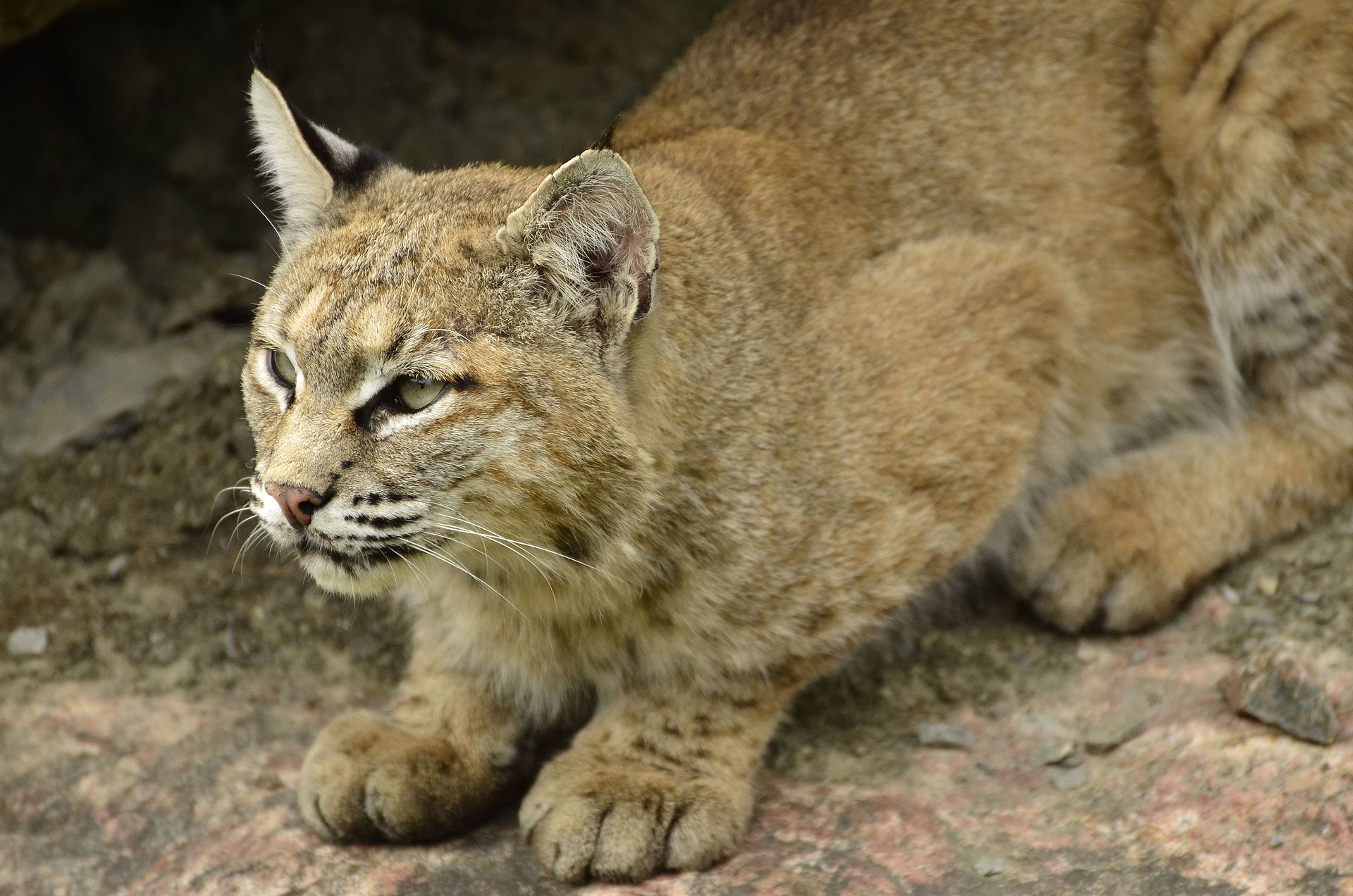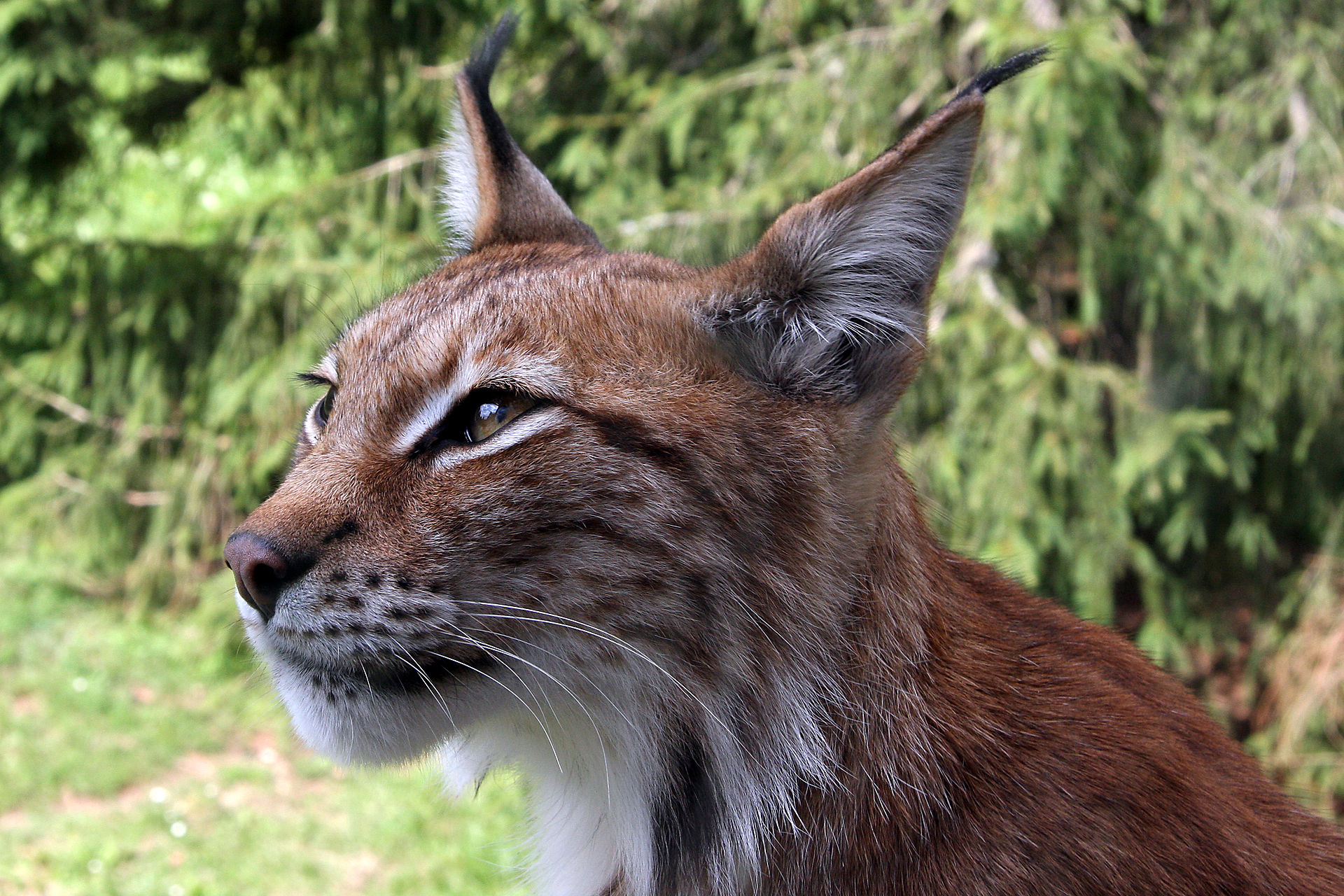
Eurasian Lynx
Lynx lynx
Characteristics
Temperament
Solitary, territorial, nocturnal. Ambush predator. Defends territories up to 1,000 km². Elusive species, rarely seen in the wild.
Diet
Strict carnivore: roe deer (main European prey), young chamois, hares, marmots, medium birds. Daily requirement: 1-2 kg of meat.
The Eurasian Lynx (Lynx lynx) is the largest of the four cats of the genus Lynx and the biggest spontaneously occurring feline predator on the European continent. Recognisable by the characteristic black tufts of fur at the tips of its ears, large paws and spotted coat, it is an elusive and rarely seen species, today the subject of major conservation and reintroduction programmes along the Alpine arc.
Classification and category
The Eurasian Lynx belongs to the order Carnivora, family Felidae, subfamily Felinae. The genus Lynx comprises four living species: the Eurasian Lynx, the Canada Lynx (Lynx canadensis), the Bobcat (Lynx rufus) and the Iberian Lynx (Lynx pardinus), the latter Endangered. It is a large felid among the genus: body length is 80-130 cm with a short tail of 10-25 cm; shoulder height is 60-75 cm and average adult weight 18-30 kg, with males distinctly larger than females.
Habitat and distribution
The natural habitat of the Eurasian Lynx consists of boreal forests, mixed coniferous and broadleaf forests, taiga, mountainous areas and wooded steppes. It prefers environments with dense, prey-rich vegetation, interspersed with open areas suitable for hunting. Human presence is poorly tolerated: the species tends to avoid inhabited valley bottoms and can be found up to 5,500 metres altitude in the mountain ranges of Central Asia.
Its distribution is vast and covers almost all of boreal Eurasia: from Scandinavia (Norway, Sweden, Finland) across Siberian Russia to the Kamchatka peninsula, through the Baltic states, Poland, Belarus, the Carpathians, the Balkans, and as far as the Caucasus, northern Iran, the Himalayas and Mongolia. In central Europe it has been successfully reintroduced into the Alps from the 1970s onwards (programmes in Switzerland, Slovenia, Austria); in Italy it is present with small populations in the eastern Alps (Tarvisiano, Cansiglio). The Balkan subspecies (Lynx lynx balcanicus) is classified as Critically Endangered with fewer than 50 individuals remaining, while globally the species is considered Least Concern (LC) by the IUCN. It is strictly protected by the Bern Convention and the EU Habitats Directive (Annex II and IV).
Diet
The Eurasian Lynx is a strict carnivore and a solitary ambush predator. Its main prey in European environments is the roe deer, but the diet varies considerably with local availability: it includes young chamois, young deer, hares, marmots, squirrels, medium-sized birds (black grouse, pheasants, wild ducks) and occasionally larger prey such as young ibex.
Its hunting technique is typical of felids: silent stalking and a lightning-fast attack from close range, generally under 20 metres. An adult lynx catches on average a roe-deer-sized prey every 5-8 days; the meal is consumed over several visits, and parts of the carcass are covered with leaves and snow to be retrieved over the following days. Daily energy requirement is about 1-2 kg of meat.
Physical features
The Eurasian Lynx has a slender but sturdy body with long, powerful legs. The hind legs are longer than the front ones: this trait gives it a distinctive gait and a great jumping ability, up to 7 metres in length and 2 metres in height. The large paws act as natural "snowshoes" thanks to inter-digital fur, allowing it to move agilely over fresh snow.
The coat is thick, with long guard hairs, varying from greyish-tawny to reddish, with more or less prominent black spots and rosettes — less marked in northern populations, more contrasting in southern ones. The head is triangular with a collar of long hairs ("whiskers") framing the muzzle, two characteristic black tufts of 4-5 cm on the ear tips (whose function is still debated: probably improving directional hearing) and yellow or amber eyes with a vertical pupil. The tail is short and ends in a black tip, as if cut off cleanly.
Behaviour and curiosities
The Eurasian Lynx is a solitary, territorial and mainly nocturnal animal. Adult males defend very large territories (from 100 to over 1,000 km² depending on prey availability), which often partially overlap with those of 2-3 females. Territorial marking is done with urine, droppings and claw marks on tree trunks.
Sexual maturity is reached at 2-3 years; the mating season is February-March, with the famous powerful and prolonged "caterwauls" that travel for kilometres through the snowy forest. Gestation lasts about 70 days and the female gives birth on average to 2-3 cubs in a well-hidden den among rocks or under the roots of a large tree. The young stay with the mother for the first year of life, during which they learn hunting techniques. Lifespan is 10-17 years in the wild, up to 24 in captivity. The Eurasian Lynx has a fundamental ecological value as an apex predator: its presence helps regulate ungulate populations and maintain the balance of forest ecosystems.
Pros
- Specie iconica e simbolica
- Predatore apicale fondamentale per gli ecosistemi
- Reintroduzione nelle Alpi un successo conservazionistico
- Longeva (fino a 24 anni in cattività)
Cons
- Specie selvatica, NON è un animale da compagnia
- Sensibile al disturbo e alla frammentazione dell'habitat
- Popolazione balcanica in pericolo critico
- Minacciata da bracconaggio e investimenti stradali