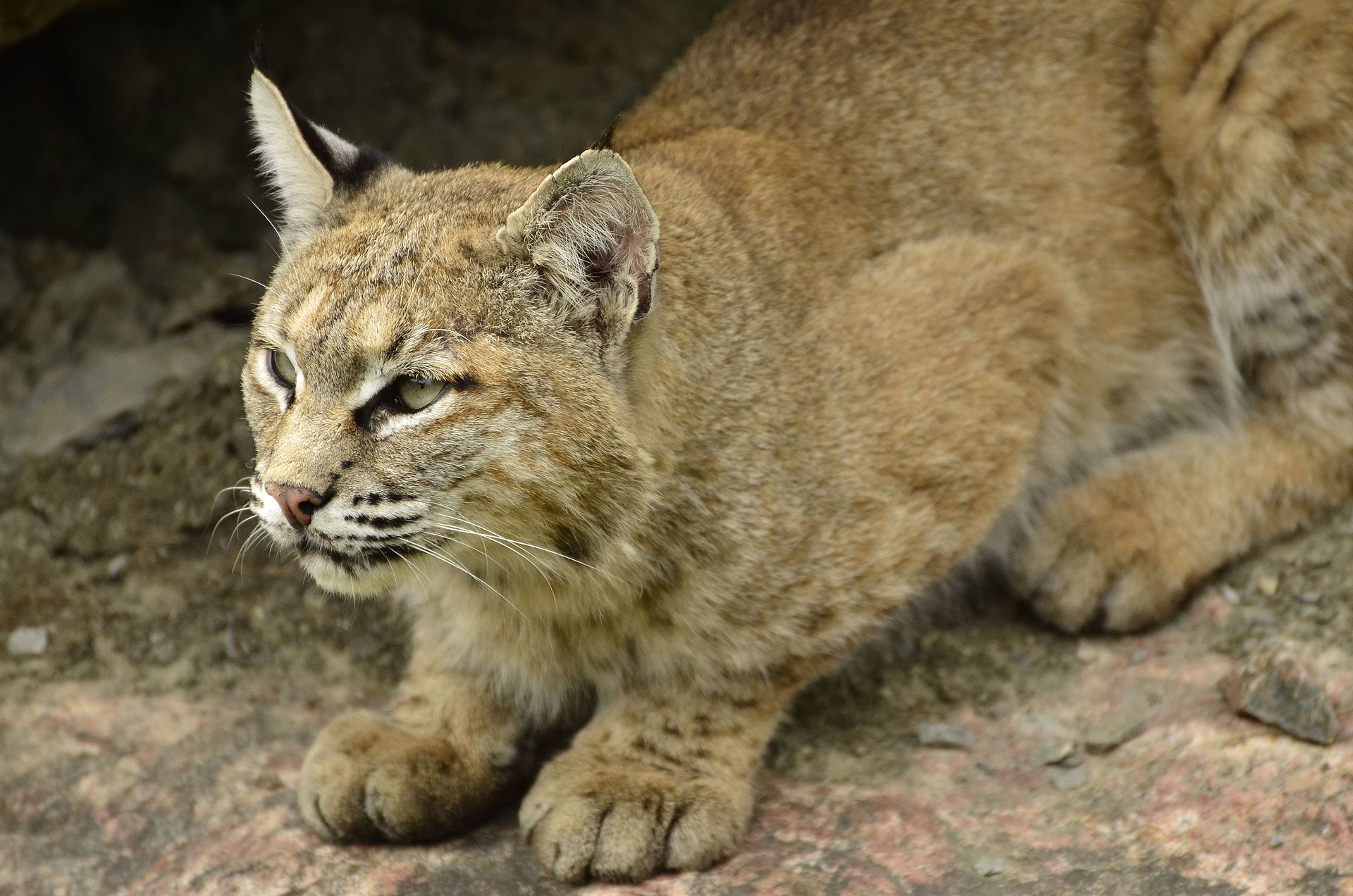
Bobcat
Lynx rufus
Characteristics
Temperament
Solitary, territorial and shy. A crepuscular and nocturnal hunter and extremely adaptable, it lives from deserts to snowy forests to city edges while staying almost invisible. Marks territory with urine, scat and scratches. The female raises the kittens alone. A rabbit specialist but opportunistic. Not a pet: a true wild cat.
Diet
Strict carnivore with a flexible diet. Staple: rabbits and hares (cottontails, jackrabbits). When scarce it switches to rodents (mice, voles, squirrels), birds, reptiles, amphibians, fish and insects. In winter or when the chance arises it takes large prey such as deer (especially fawns), far heavier than itself. Hunts by ambush with a final leap of up to 3 m; caches the remains of large kills under leaves and snow.
The Bobcat (Lynx rufus) is the most widespread, common and adaptable wild cat in North America. Famous for:
- Its short, "bobbed" tail: the name "bobcat" comes from the stubby 10-18 cm tail with a black tip — its most recognizable trait
- The most widespread cat on the continent: from southern Canada to central Mexico, in almost every habitat
- Extremely adaptable: forests, deserts, swamps, scrub, mountains and even the edges of cities
- A rabbit and hare specialist, yet an opportunistic hunter able to take prey as large as deer
- Shy and almost invisible: very common yet rarely seen, living beside people unnoticed
- Black ear tufts and facial ruff: the classic lynx features, in a smaller, slimmer form
- A success story: after heavy fur hunting, populations recovered and it is now abundant
IUCN status: Least Concern (LC), with an estimated 2-3 million individuals, stable or increasing. It is one of North America's best examples of a wild predator coexisting with human-shaped landscapes — it often shares the same ground as the Coyote.
Classification and category
Order Carnivora, family Felidae, genus Lynx — the same as the Eurasian lynx (Lynx lynx), the Iberian lynx (Lynx pardinus) and the Canada lynx (Lynx canadensis). It is the smallest of the four lynxes and the only one found across most of the USA. About 13 subspecies (traditionally an eastern and a western group) vary in size and colour across the huge range. The species it is most easily confused with is the Canada lynx: the bobcat is smaller, with smaller feet, shorter ear tufts and a more spotted coat; its tail tip is black only on top (white below), whereas the Canada lynx's is fully black all around; the Canada lynx has huge "snowshoe" paws and is a snow-and-snowshoe-hare specialist, while the bobcat is far more generalist. Etymology: "Lynx" from Greek, linked to keen sight; "rufus" Latin for "reddish", for the warm tone of the summer coat. Parameters: Body 60-105 cm. Tail 10-18 cm (short, bobbed, black-tipped). Shoulder height 30-60 cm. Weight 6-14 kg (males larger, exceptionally to 18 kg) — about twice a house cat. Longevity 7-10 years in the wild (up to 13), over 20 in captivity. Solitary; mating in late winter, gestation ~60-70 days, litters of 2-4 raised by the female alone in a den among rocks or hollow logs.
Habitat and distribution
The Bobcat has one of the largest ranges of any American cat: from southern Canada through almost all of the contiguous USA to central-southern Mexico (Oaxaca). It is the only wild cat continuously present across much of US territory. Habitats — nearly all: forests (coniferous, deciduous and mixed, lowland and montane), deserts and chaparral (from the American southwest to Mexico), wetlands and swamps (such as the Florida Everglades), mountains (above 3,000 m), and rural areas and suburban edges (fields, woodlots and outskirts where it hunts undisturbed at night). The key to its success is ecological plasticity: it tunes diet, territory and activity to its surroundings. It is solitary and territorial; males hold large territories overlapping those of several females, marked with urine, scat and tree scratches. IUCN: Least Concern. After heavy 20th-century fur harvest, regulation and adaptability let populations rebound; today it is abundant and in many areas expanding, reclaiming parts of its historic range.
Diet
A strict carnivore with a surprisingly flexible diet that shifts with season and region: rabbits and hares (the staple across much of its range — cottontails, jackrabbits, its "favourite prey"); rodents (mice, voles, squirrels, cotton rats) when lagomorphs are scarce; birds (ground and water); large prey (in winter or when the chance arises it can kill deer, especially fawns, far heavier than itself); and reptiles, amphibians, fish and insects. Hunting strategies: stalk-and-ambush (creeps in silently or waits motionless, then a powerful final pounce — it can leap up to 3 m); crepuscular and nocturnal hunting (most active at dawn and dusk when prey moves); and caching (after a large kill it eats part and hides the rest under leaves or snow, returning over following days). Although a rabbit "specialist", the bobcat is versatile enough to survive anywhere, switching to rodents or large prey as needed — exactly this flexibility makes it so widespread.
Physical features
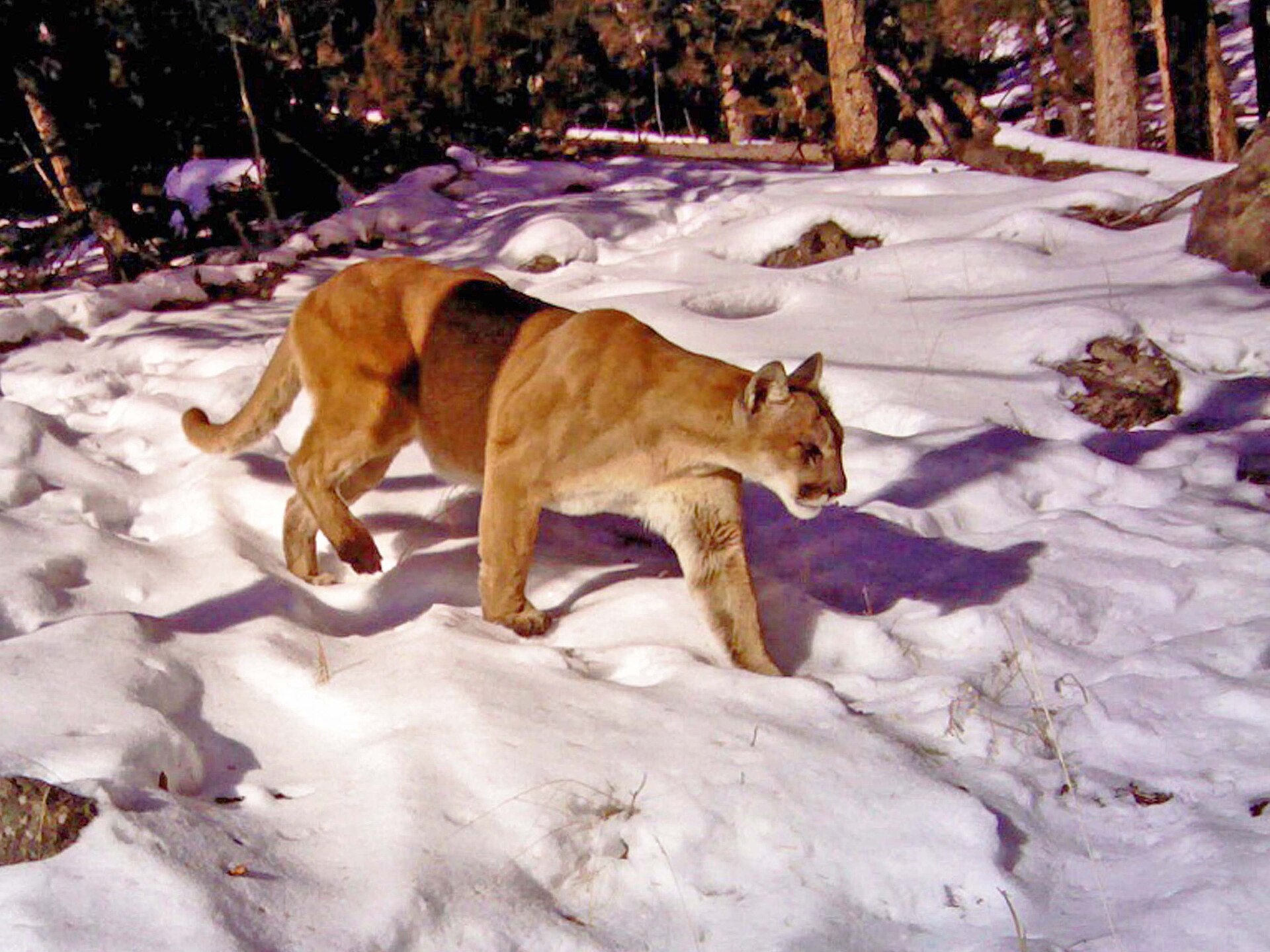
Looks like a sturdy, muscular, long-legged cat, about twice the size of a house cat. Coat: from fulvous-reddish (summer) to grey-brown (winter) over a paler base, spotted and barred with dark markings most obvious on the legs and (white) belly; rare melanistic (black) individuals occur, mostly in Florida; thick soft fur, once highly prized. Body: short "bobbed" tail (10-18 cm) black on top and white below — the trademark; black ear tufts (shorter than the Canada lynx's); facial ruff (a "collar" of fur at the sides of the face) giving the typical lynx look; long hind legs (distinctive gait and great jumping power); amber-yellow eyes with vertical pupils, excellent sight and hearing. Performance: leaps up to about 3 m, an excellent climber that rests in trees, a good swimmer when needed, very acute senses (hearing enhanced by the ear tufts, excellent night vision) and a silent, padded stalk.
Behaviour and curiosities
Solitary, territorial and shy. Each animal defends a territory marked with urine, conspicuous scat and tree scratches; males' ranges are larger and overlap several females'. Encounters are rare outside the breeding season, and the female raises the kittens alone, keeping them until 8-12 months while they learn to hunt.
The "common invisible": though by far the most numerous wild cat in North America, very few people have ever seen one in the wild — it is so discreet, silent and crepuscular/nocturnal that it can live permanently near homes and cities while staying practically unseen. The tail that names it: "bobcat" means a cat with a bobbed tail; the white underside of the tip, when raised, acts as a visual signal for kittens following the mother through dense cover. The "out-of-its-weight" hunter: averaging 8-11 kg, it can kill prey far larger than itself, such as adult deer, especially in winter when snow slows ungulates — one of the most impressive prey-to-weight ratios among mid-sized cats. Coexisting with the Coyote: bobcat and Coyote share much of their range and prey (rabbits and rodents) and are at once competitors and, occasionally, predators of each other's young — a classic, much-studied case of two mesopredators partitioning space and resources. Recovery after the fur trade: when the trade in spotted big-cat furs was banned in the 1970s-80s, demand shifted to the bobcat, which was heavily hunted; thanks to regulated quotas and its adaptability it not only held on but became abundant again — one of the continent's best wildlife-management stories. Tufted ears: the black ear tufts are thought to work as "antennae", helping pinpoint prey sounds, and to aid visual communication between individuals. The relative that barely mixes: where ranges meet (southern Canada), bobcat and Canada lynx can even hybridize ("blynx" or "lynxcat"), yet they stay adapted to different worlds — the Canada lynx to snowy boreal forest, the bobcat to almost everything else.
Pros
- Felino selvatico più diffuso e adattabile del Nord America
- IUCN Least Concern: 2-3 milioni di individui, popolazione stabile
- Controlla naturalmente conigli e roditori
- Storia di successo: ripresa dopo la caccia per la pelliccia
Cons
- Non è un animale domestico (felino selvatico protetto)
- Schiva e solitaria: quasi impossibile da avvistare
- Occasionali conflitti con allevatori di pollame e piccolo bestiame
- In alcune aree ancora soggetta a caccia e trappolaggio regolamentati