Photo: Rhododendrites · CC BY-SA 4.0
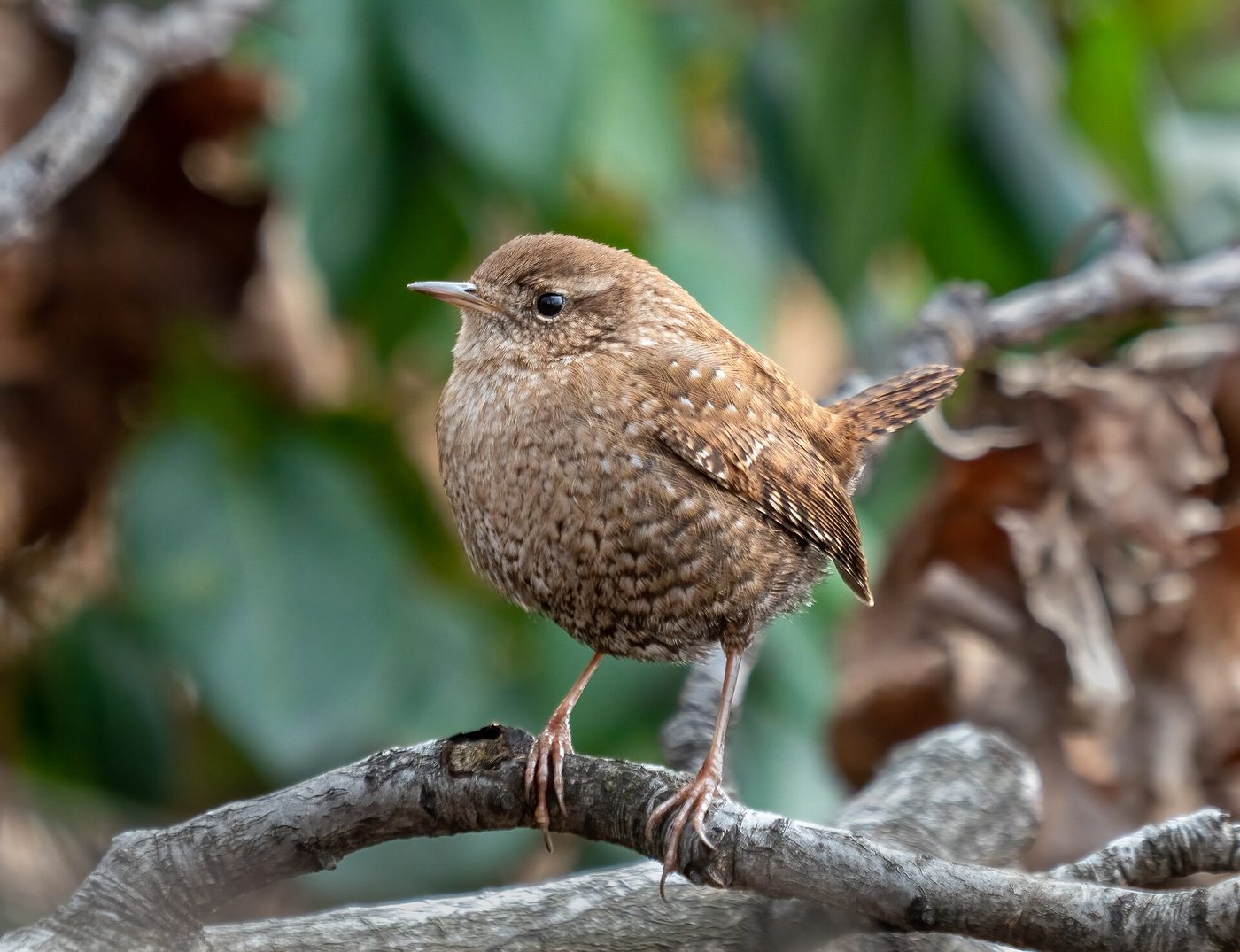
Winter wren
Troglodytes hiemalis
The winter wren is a tiny North American bird with a stubby body and cocked tail, famous for a long, crystalline song.
Characteristics
Temperament
Shy, hyperactive, great singer
Diet
Insectivore: small insects and spiders
Description
The winter wren is one of North America's smallest birds, a tiny passerine with a stubby, rounded body, dark brown and finely barred, with the characteristic short tail often held cocked upward. Its bill is slender and slightly curved. Despite its small size, it has a surprisingly powerful voice.
Habitat and distribution
It is native to eastern North America, where it breeds in dense, damp coniferous and broadleaf forests, often near watercourses. It favours habitats rich in undergrowth, fallen logs and brush piles, through which it moves furtively. In winter many populations migrate south.
Behaviour
It is a shy, hyperactive bird that spends much of its time rummaging through leaf litter and rotting wood in search of small insects and spiders. Until 2010 it was considered the same species as the Eurasian and Pacific wrens, from which it was later split on the basis of song and genetics.
The song
Its song is its most extraordinary feature: a long, rapid, complex series of silvery notes and trills that can last several seconds. For its size, it produces one of the highest sound volumes relative to body weight of any bird.
Conservation
It is classed as least concern. It does, however, depend on mature forests with abundant dead wood and dense undergrowth: forestry that retains these features favours its populations.
Pros
- Long, crystalline song, surprisingly powerful
- Useful predator of small insects
- Lively and fascinating to watch
Cons
- Very shy, often hidden in undergrowth
- Depends on forests with abundant dead wood
- Hard to tell apart from related species