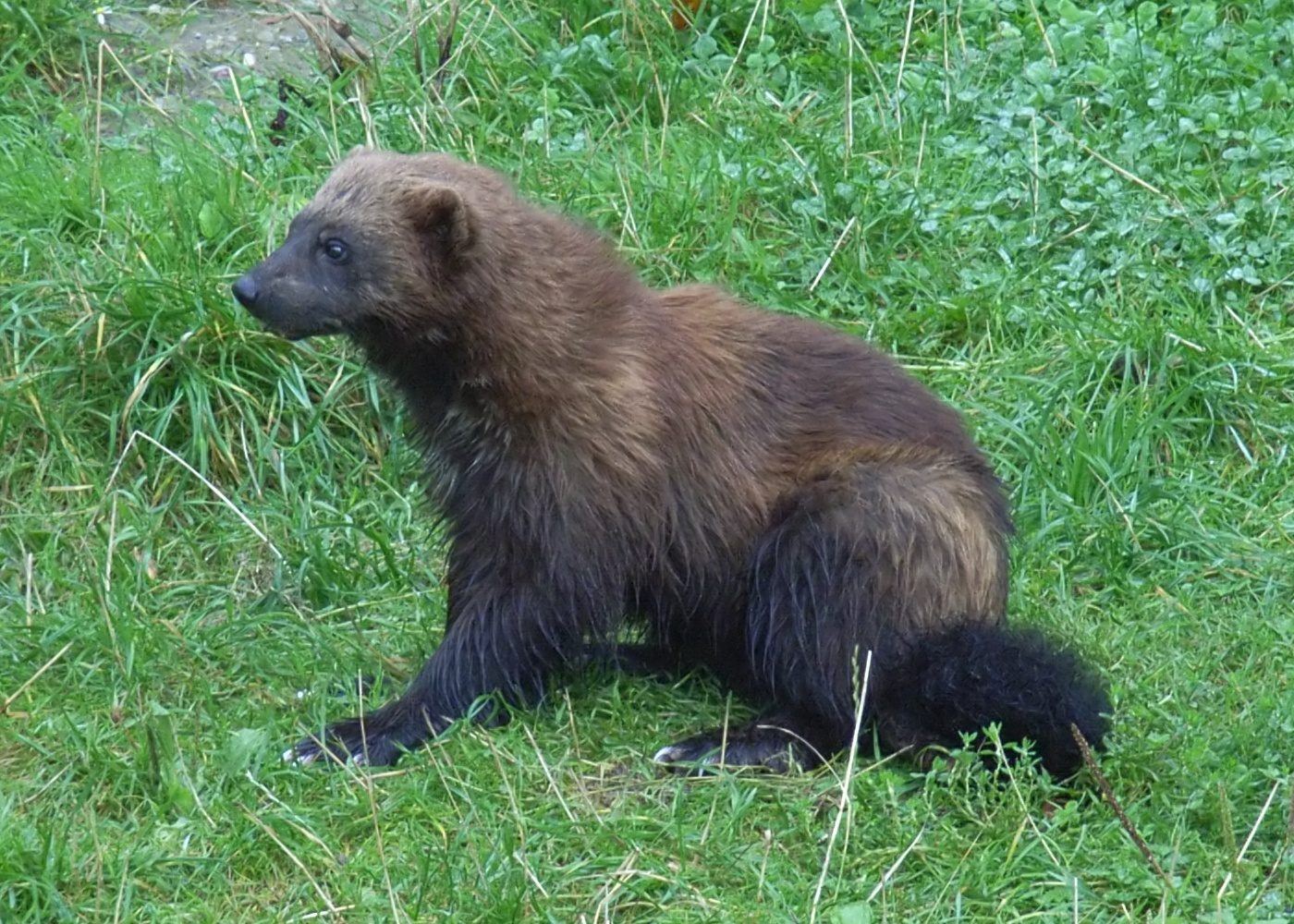
Wolverine
Gulo gulo
Small but incredibly strong and tenacious, the wolverine is the largest land-dwelling mustelid, a tireless wanderer of the cold forests and tundras of the North.
Characteristics
Temperament
Solitary, shy, tenacious and tireless
Diet
Omnivore and carnivore: carrion and prey
A small giant among mustelids
The wolverine is the largest land-dwelling member of the mustelid family, the same as weasels, badgers and otters. Despite its modest size, it vaguely recalls a small bear, with its stocky, muscular body, sturdy legs and broad muzzle. Its coat is thick, dark brown with a characteristic paler band running along its flanks. It possesses surprising strength for its size and powerful claws and jaws, which allow it to take on prey much larger than itself.
Habitat and distribution
It lives in the cold regions of the northern hemisphere, among the boreal forests, taigas and tundras of Europe, Asia and North America. It is a solitary animal tied to great wild spaces, which it roams far and wide over vast territories in search of food. It is perfectly adapted to harsh climates, thanks to its thick fur and broad paws that let it move easily over the snow.
Behaviour and diet
The wolverine is an opportunistic omnivore, but above all a carnivore and a tireless scavenger. It feeds on carrion, which it locates by scent at a great distance, but it is also a capable hunter: thanks to its strength and tenacity, in winter it can bring down even much larger prey, exploiting the deep snow that slows them down. It travels enormous distances and is famous for its endurance and for the habit of hiding food stores for lean times.
Curiosities
The wolverine has become almost legendary for its ferocity and its strength out of all proportion to its size: it is said to be able to defend a carcass even from much larger predators, such as wolves and bears. Its shy nature and its life in remote territories make it one of the most difficult animals to observe in the wild.
Conservation
The wolverine is classified as a species of least concern on a global scale, but it is naturally rare and sensitive. It needs vast intact territories and suffers from habitat fragmentation, human disturbance and climate change, which reduces the snow cover fundamental to its ecology. Protecting the great wild spaces of the North is essential for its survival.
Pros
- The largest land-dwelling mustelid
- Extraordinary strength and endurance for its size
- Perfectly adapted to cold climates
- Valuable scavenger of northern environments
Cons
- Naturally rare and hard to observe
- Needs vast intact territories
- Sensitive to climate change and human disturbance