Photo: Ninahale · CC BY-SA 4.0
Tayra
Eira barbara
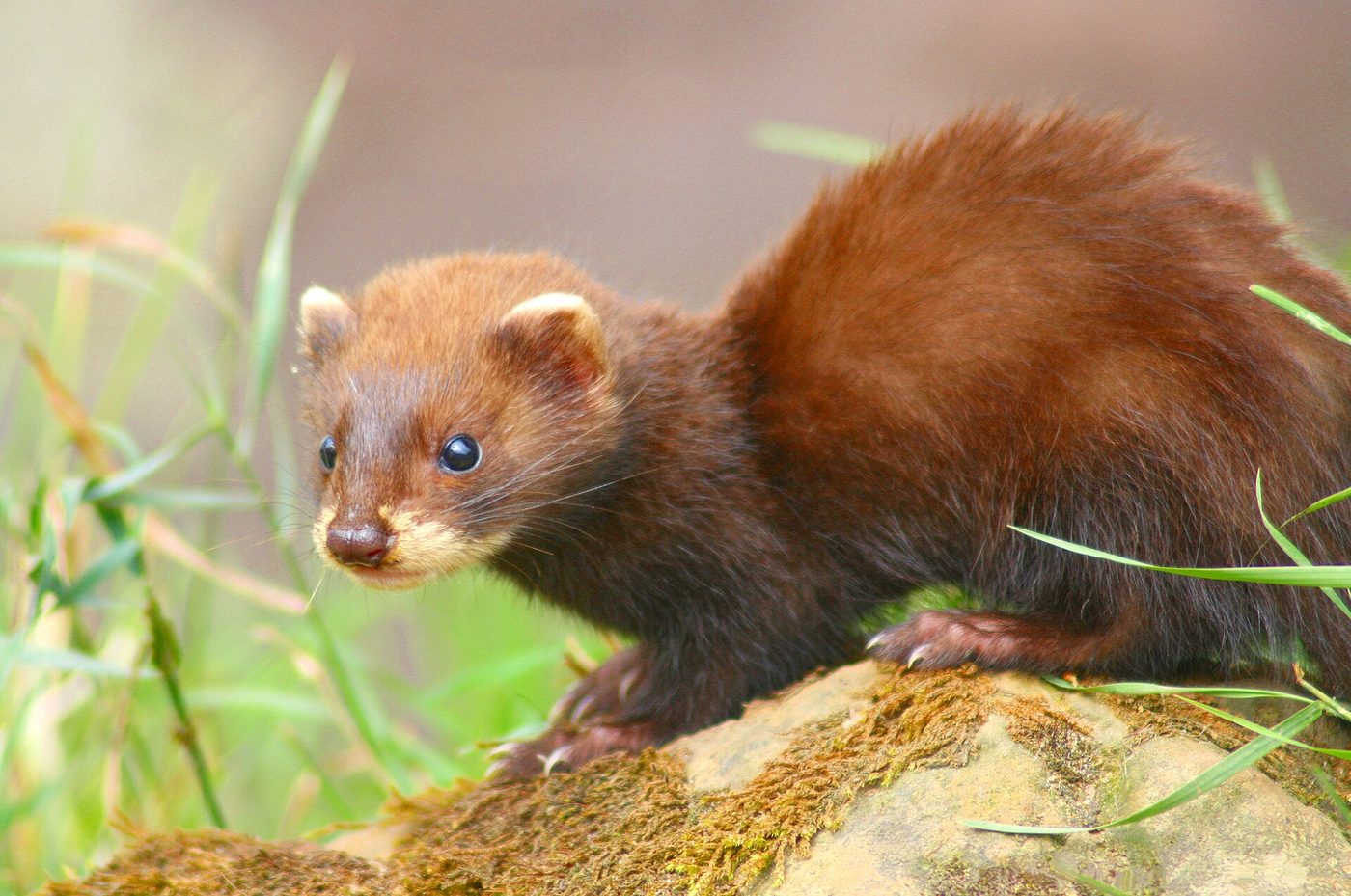
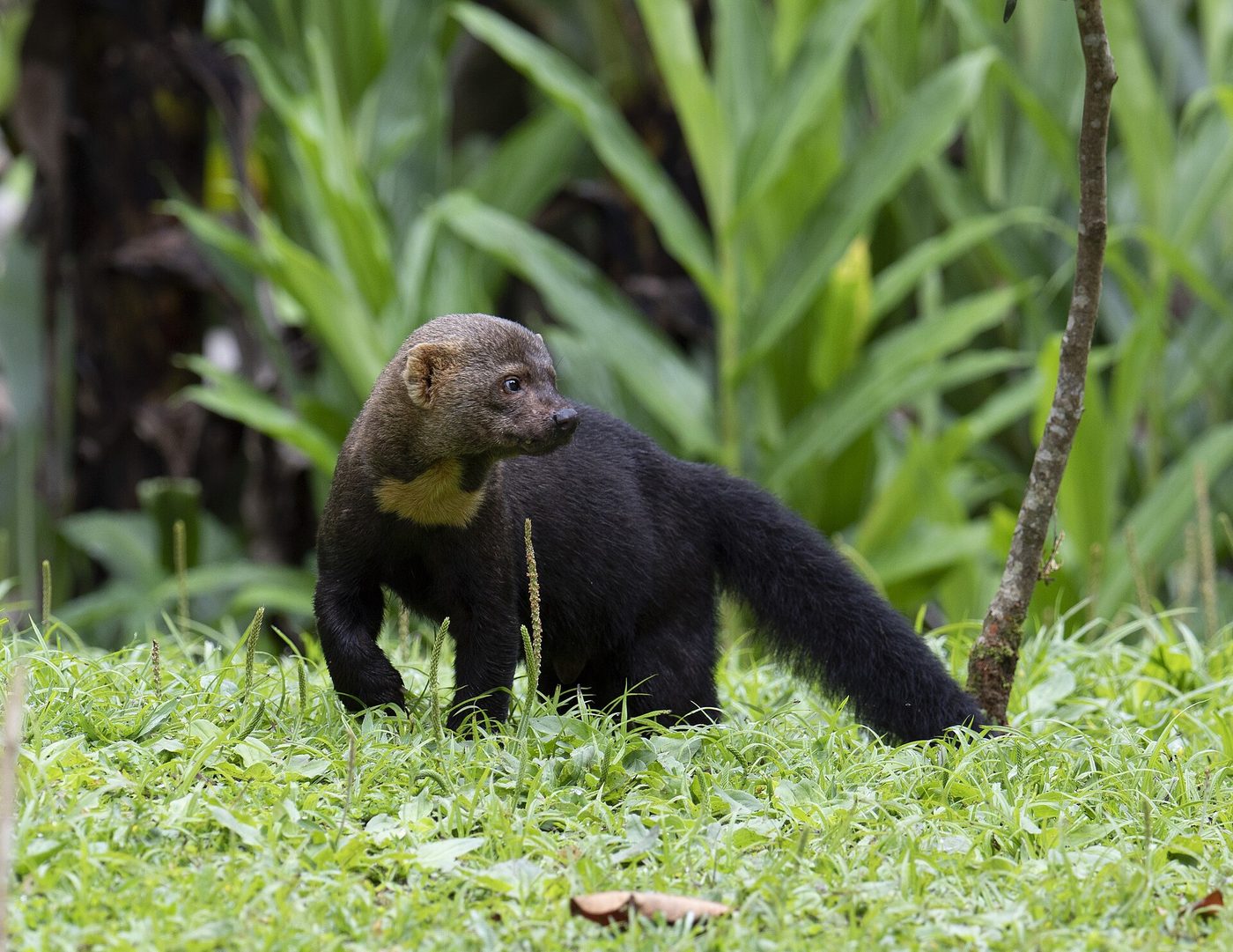
The tayra is an agile, curious mustelid of American forests, with a dark elongated body and a paler head, an excellent climber and runner.
Characteristics
Temperament
Diurnal, agile and curious; an excellent climber and runner.
Diet
Omnivorous: fruit, insects, small vertebrates, eggs and carrion.
An agile, intelligent mustelid
The tayra (Eira barbara), also known as the tolomuco, is a carnivore of the weasel family Mustelidae, the only species of the genus Eira, related to the martens. It has a long, slender body with short, dark fur ranging from brown to black, while its head and neck are often paler, greyish or brown — hence the old name "grey-headed tayra". It can reach about 70 cm in length, plus a bushy tail of nearly half a metre. It usually weighs between 4 and 7 kg. (Note: the body-mass value listed on Wikidata, 100 kg, is clearly an error — the tayra weighs only a few kilograms.) Its feet have short, curved claws, suited to both running and climbing.
Habitat and range
It lives in the tropical forests and woodlands of Central and South America, from Mexico to northern Argentina, including the island of Trinidad. It is at home both on the ground and in the trees.
Behaviour and diet
It is omnivorous and opportunistic: it feeds on fruit, insects, small vertebrates, eggs and carrion. It is diurnal, very active and fast, able to run, leap between branches and swim. It is known for its intelligence: it has been observed gathering unripe bananas and hiding them, returning to eat them once ripe — a rare example of planning among mammals.
Did you know?
The tayra is generally solitary but may move in pairs or small groups. It makes a range of calls — grunts, chirps and barks — to communicate with its own kind.
Conservation
The IUCN lists it as Least Concern, but deforestation locally reduces populations; in some countries, such as Mexico, it is considered threatened at the national level.
Pros
- Extremely agile in trees and on the ground
- Intelligent: hides and retrieves food
- Least Concern, widespread
Cons
- Locally threatened by deforestation
- A wild animal, unsuited to captivity
- May raid orchards and poultry