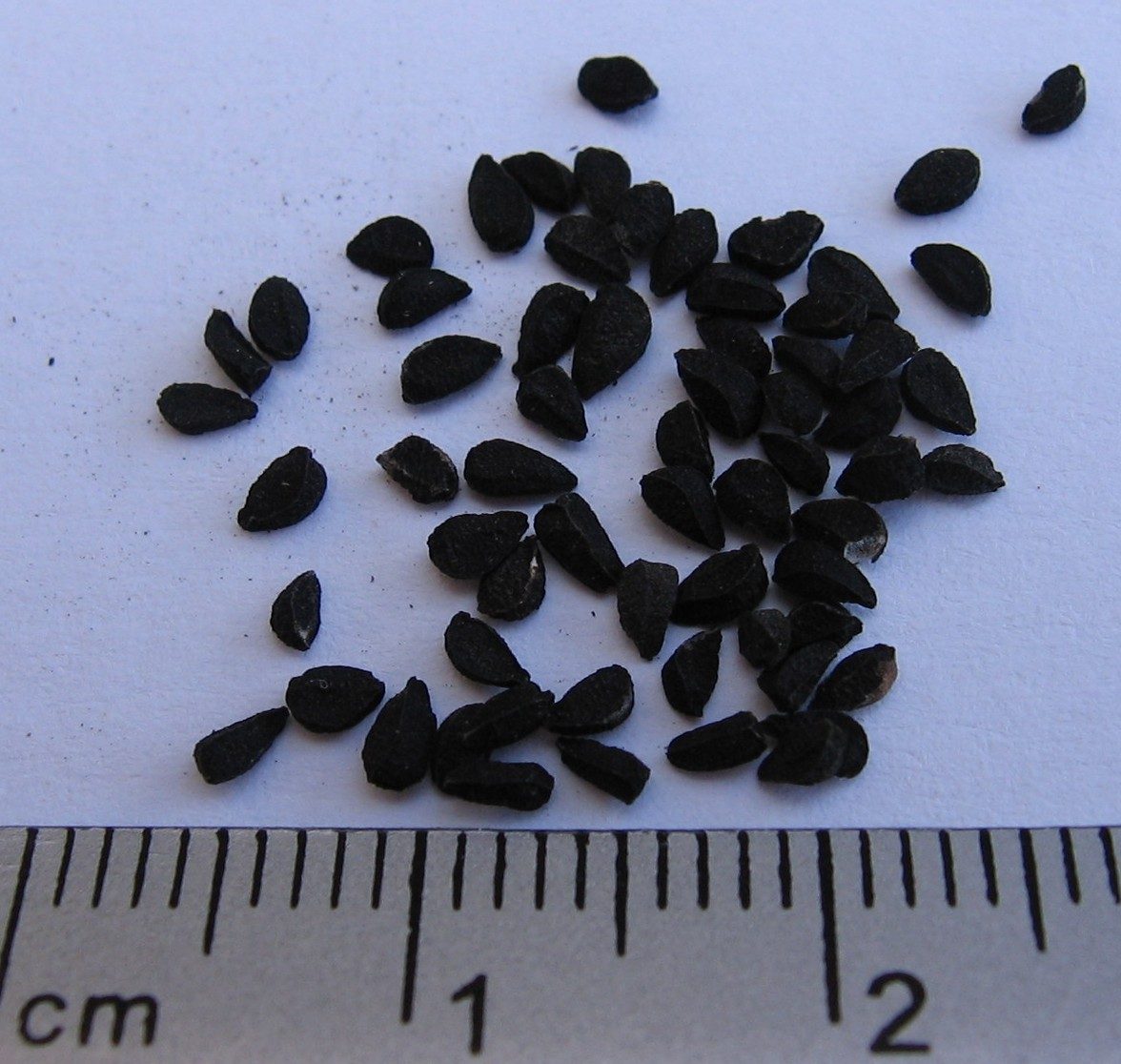
Photo: No machine-readable author provided. TheGoblin~commonswiki assumed (based on copyright claims). · CC BY-SA 3.0
Black cumin
Nigella sativa
Black cumin is an annual with delicate blue-white flowers, famous for its aromatic black seeds used as a spice and traditional remedy.
Characteristics
The plant of aromatic black seeds
Black cumin, or Nigella sativa, is an annual herb of the buttercup family, Ranunculaceae, the same as columbine. It has slender, branching stems, finely divided leaves cut into thread-like segments, and delicate five-petalled flowers of a white-blue colour, often veined. After flowering, swollen capsules form that hold numerous small black seeds, angular and intensely aromatic. It should not be confused with true cumin or caraway: despite its names, it is unrelated to them.
Origin and habitat
It is native to the Balkans, western Asia and eastern Europe, and has been cultivated for millennia across the Mediterranean basin, the Middle East and southern Asia. It prefers light, well-drained soils and sunny spots.
Culinary uses and tradition
The black seeds, with a pungent, slightly peppery flavour with notes of oregano and nutmeg, are a widely used spice: they garnish bread, flatbreads (such as Indian naan), cheeses and vegetable and legume dishes. In the herbal traditions of many cultures the seeds and their oil have been used for centuries as a folk remedy. The bluish flowers also make the plant attractive in the garden.
Cultivation
It is easy to grow from seed, sown directly in spring in full sun, on well-drained soil. It is hardy and drought-tolerant, completing its cycle in a single season. Mature capsules are harvested and left to dry to extract the seeds. It self-seeds readily.
Care
It needs little attention: moderate watering and no waterlogging. It is loved by pollinators when in flower. The seeds should be consumed in moderation and are not suited to excessive amounts.
Flowering season
Practical tips
Water needs: Moderate, drought-tolerant — always check soil moisture before watering.
Prefers Full sun: provide the right light and rotate the plant for even growth.
Recommended soil: Light, well-drained, even poor. Refresh the substrate every 1-2 years.
Dust the leaves with a damp cloth to support photosynthesis.
Feed during the growing season (spring-summer) and stop in winter.
Pros
- Prized aromatic black seeds in cooking
- Decorative bluish flowers
- Easy to grow and self-seeding
Cons
- Annual: must be resown each year
- Seeds should be consumed in moderation