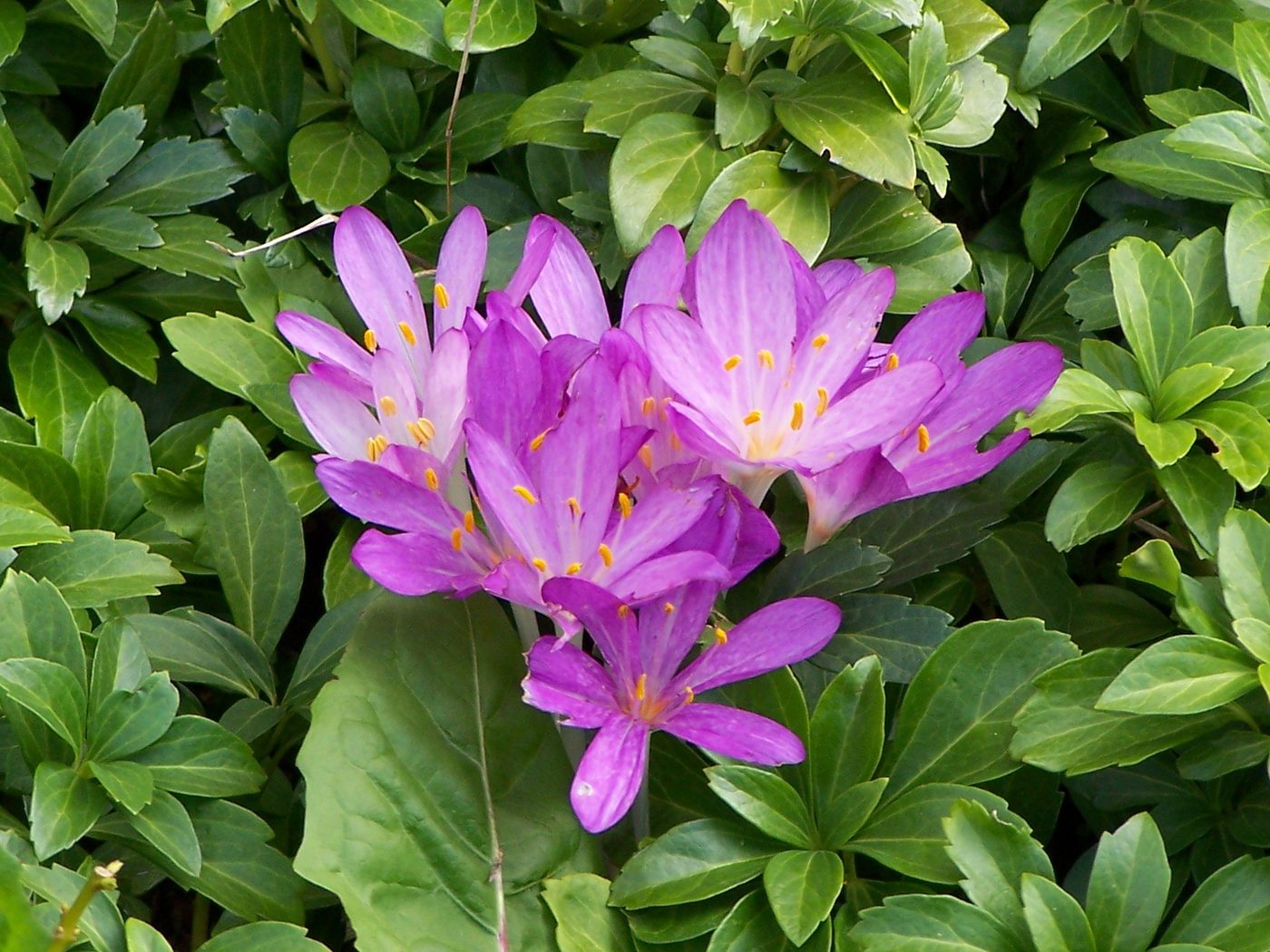
Photo: Lestat (Jan Mehlich) · CC BY-SA 3.0
Autumn crocus
Colchicum autumnale
The autumn crocus is a bulb with delicate pink-purple flowers that bloom from bare ground in autumn, but is one of Europe's most poisonous plants.
Characteristics
Description
The autumn crocus, also called meadow saffron, is a small bulbous plant of the family Colchicaceae. In autumn it produces striking solitary goblet-shaped flowers, a delicate pink-purple, which emerge directly from the ground without leaves, hence folk names such as 'naked ladies'. The broad leaves and fruits appear only the following spring. It closely resembles the true crocuses, but is unrelated to them.
Habitat and distribution
It is widespread across much of Europe. It grows wild in damp meadows, pastures and clearings, where in autumn it carpets the fields with its blooms. It is also grown as an ornamental in gardens.
Warning: a deadly poisonous plant
The whole plant, and especially the bulb and seeds, contains colchicine, an extremely toxic alkaloid. Ingestion, even of small amounts, can be fatal to humans and livestock. It is essential not to confuse it with saffron or other edible plants, and to grow it with the utmost care where there are children and pets.
Cultivation
It is a hardy, easy bulb, prized for its autumn flowering that brings colour when few other flowers are in the garden. It wants full sun or part shade and a cool, well-drained soil. The bulbs are planted in late summer. It naturalises, forming broad drifts over time.
Did you know?
Despite its toxicity, the colchicine extracted from it has important medical uses and is also used in plant breeding. Meadow saffron must never be confused with true saffron, which comes from the flower of Crocus sativus.
Flowering season
Practical tips
Water needs: Moderate — always check soil moisture before watering.
Prefers Full sun or part shade: provide the right light and rotate the plant for even growth.
Recommended soil: Cool, rich, well-drained. Refresh the substrate every 1-2 years.
Dust the leaves with a damp cloth to support photosynthesis.
Feed during the growing season (spring-summer) and stop in winter.
Pros
- Autumn flowering that brings colour to the garden
- Hardy and easy, naturalises by itself
- Delicate flowers that emerge from bare ground
Cons
- Extremely poisonous, fatal if eaten
- To be kept away from children and pets
- Easily confused with edible saffron