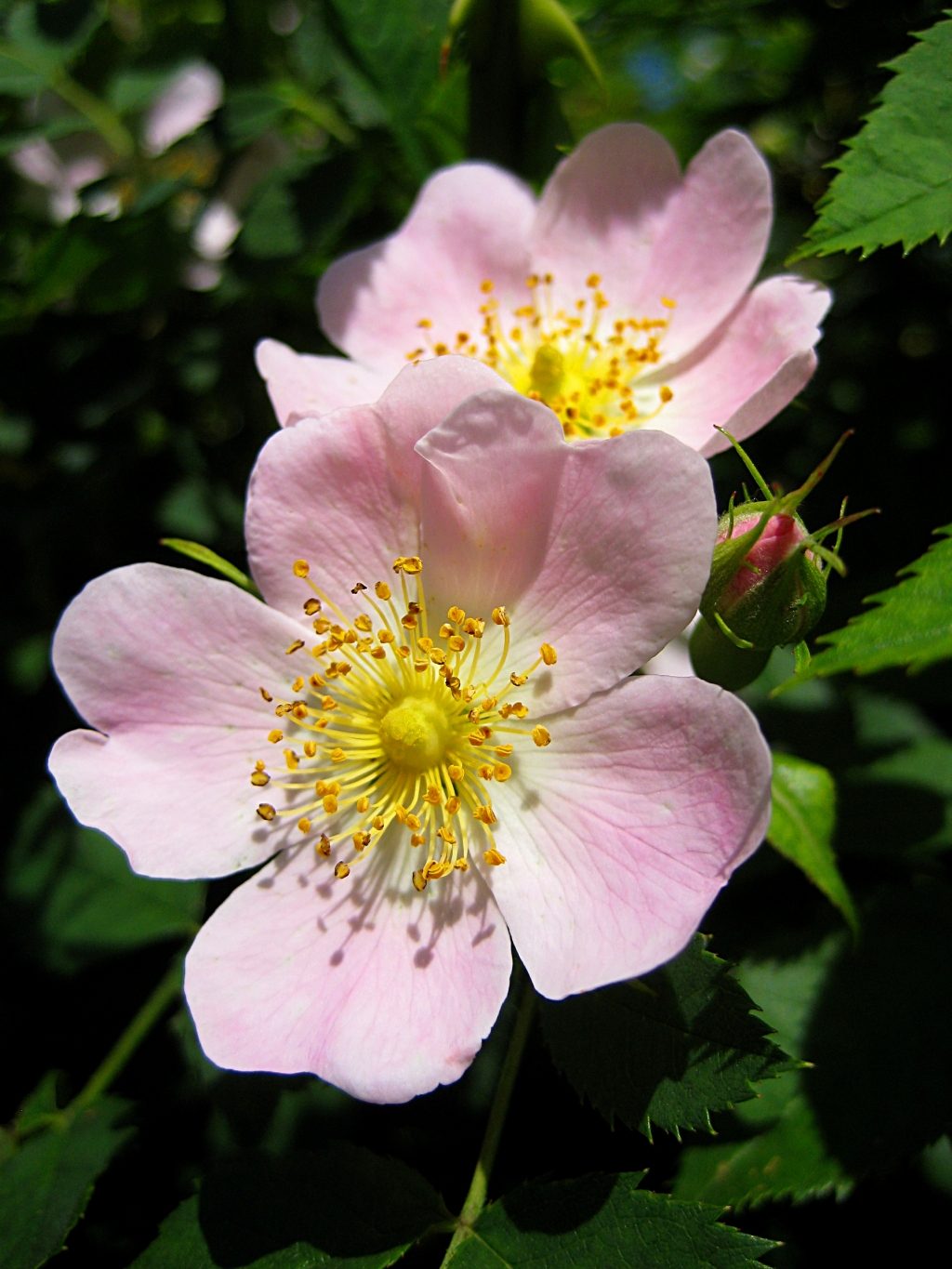
Photo: Roberta F. · CC BY-SA 3.0
Dog rose
Rosa canina
The wild rose par excellence: delicate flowers in spring and red rose hips rich in vitamin C in autumn, a treasure of European hedgerows.
Characteristics
The wild rose of hedgerows
The dog rose is the most common of European wild roses, the ancestor of many cultivated roses. It is a climbing, thorny shrub, with long arching stems covered in curved prickles that let it cling to the surrounding vegetation. In spring it clothes itself in simple five-petalled flowers, of a soft pink or almost white, delicately scented. But it is in autumn that it offers its most precious treasure: the rose hips, the bright-red false fruits that persist for a long time on the branches.
The leaves are compound, made up of several leaflets with toothed margins.
Where it grows
It is a hardy and very widespread plant, present across much of Europe, western Asia and North Africa. It grows wild at the edges of woods, along hedges, in clearings, on sunny slopes and in uncultivated land. Its adaptability lets it thrive in very different conditions, from calcareous to poor soils.
The hips and vitamin C
The dog rose's hips are famous for their very high vitamin C content, among the highest in the plant world. For centuries they have been gathered in autumn to make teas, syrups, jams and preserves. Inside them are the true seeds, surrounded by a fluff that is best removed. They are a traditional food and a folk remedy against seasonal ailments.
Cultivation and care
The dog rose is one of the easiest plants to grow. It prefers sunny positions and tolerates drought, cold and poor soils well. It needs very little care and resists pests and diseases better than ornamental roses. It is often used as a rootstock for cultivated roses and as a defensive hedge plant, thanks to its thorny stems.
A treasure for biodiversity
Classified as least concern, the dog rose is not threatened and is indeed a valuable plant for wildlife: its flowers attract pollinators and its hips feed birds and small mammals through the winter. Growing it in the garden means combining beauty, usefulness and support for biodiversity.
Flowering season
Practical tips
Water needs: Low, drought tolerant — always check soil moisture before watering.
Prefers Full sun: provide the right light and rotate the plant for even growth.
Recommended soil: Adaptable, even poor and calcareous. Refresh the substrate every 1-2 years.
Dust the leaves with a damp cloth to support photosynthesis.
Feed during the growing season (spring-summer) and stop in winter.
Pros
- Hips very rich in vitamin C
- Hardy and easy to grow
- Excellent for defensive hedges and biodiversity
- Resists drought, cold and disease
Cons
- Very thorny stems
- Vigorous growth that needs containing