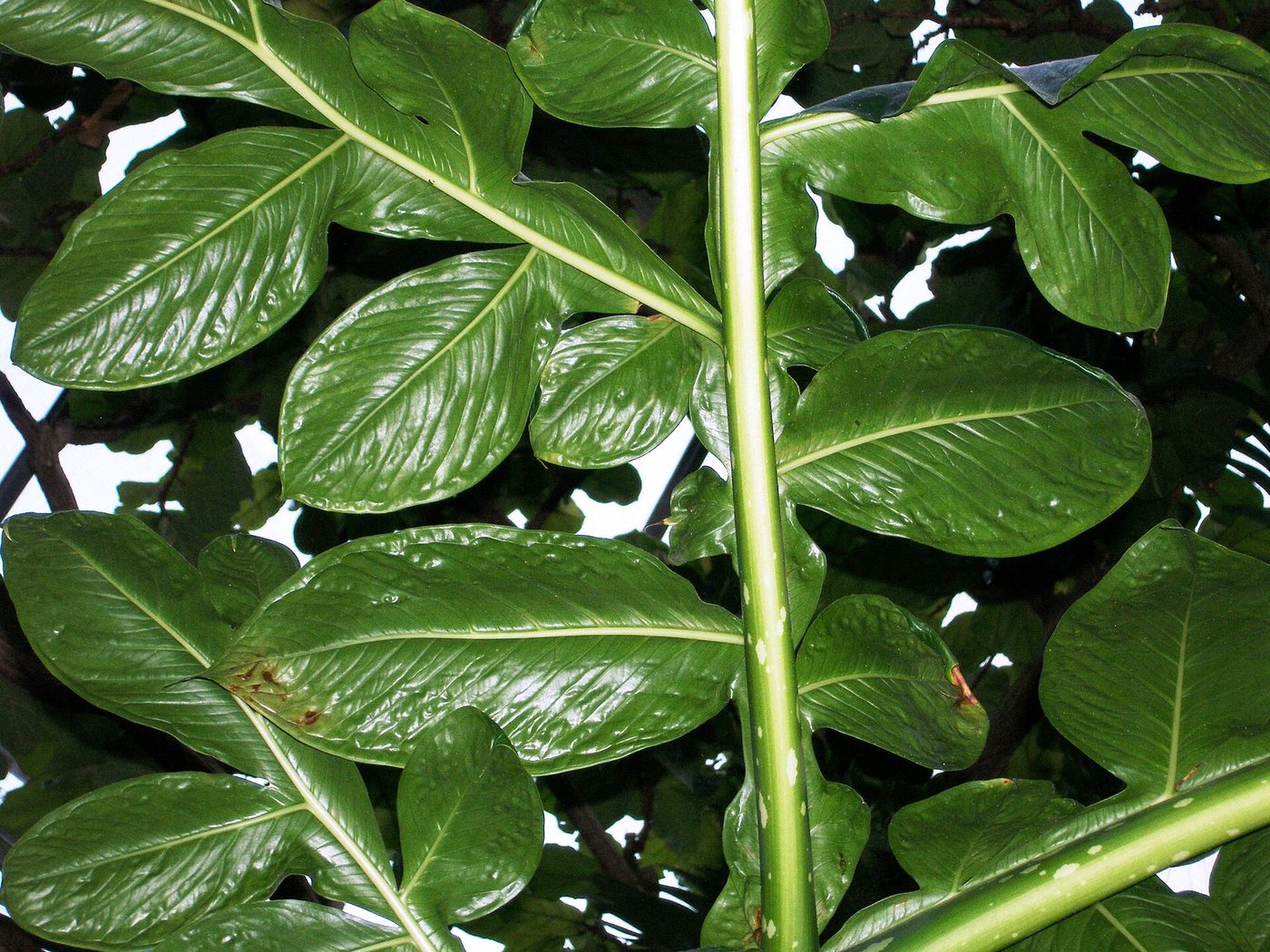
Photo: Dryas · CC BY-SA 3.0
Titan arum
Amorphophallus titanum
The titan arum produces the largest unbranched inflorescence in the world, a giant that gives off an intense smell of rotting flesh to attract pollinators.
Characteristics
The giant that smells of carrion
The titan arum (Amorphophallus titanum) is a plant of the family Araceae famous for two records: it produces the largest unbranched inflorescence in the world — which can exceed three metres in height — and gives off one of the most intense stenches in the plant kingdom. The inflorescence consists of a broad enveloping "leaf" (the spathe), green outside and deep purple-red within, from which rises a huge central "spadix". Outside flowering, the plant instead produces a single gigantic leaf, several metres tall and branched like a small tree, which stores energy in its large underground tuber.
Habitat and range
It is endemic to the rainforests of the island of Sumatra, Indonesia, where it grows in the humid, shady understorey.
Flowering and pollination
Flowering is a rare, unpredictable event that may recur only after many years. When the spadix opens, it gives off a powerful smell of rotting meat and even produces heat, warming itself to spread the stench more effectively. This deception attracts beetles and carrion flies, which pollinate it while thinking they have found a carcass on which to lay their eggs.
Did you know?
The spectacular and very brief flowering — lasting only a couple of days — is a major attraction in botanical gardens worldwide, drawing crowds of visitors. In Spanish it is sometimes called "the ugliest flower in the world".
Conservation
The IUCN lists it as Endangered. Deforestation in Sumatra seriously threatens wild populations; cultivation in botanical gardens helps preserve the species.
Practical tips
Water needs: High, constantly humid environment — always check soil moisture before watering.
Prefers Shade or partial shade of the understorey: provide the right light and rotate the plant for even growth.
Recommended soil: Rich, deep and well-draining. Refresh the substrate every 1-2 years.
Dust the leaves with a damp cloth to support photosynthesis.
Feed during the growing season (spring-summer) and stop in winter.
Pros
- The largest unbranched inflorescence in the world
- A spectacular, rare botanical phenomenon
- A major attraction in botanical gardens
Cons
- Endangered by deforestation in Sumatra
- Nauseating smell of rotting flesh
- Extremely rare, short-lived flowering