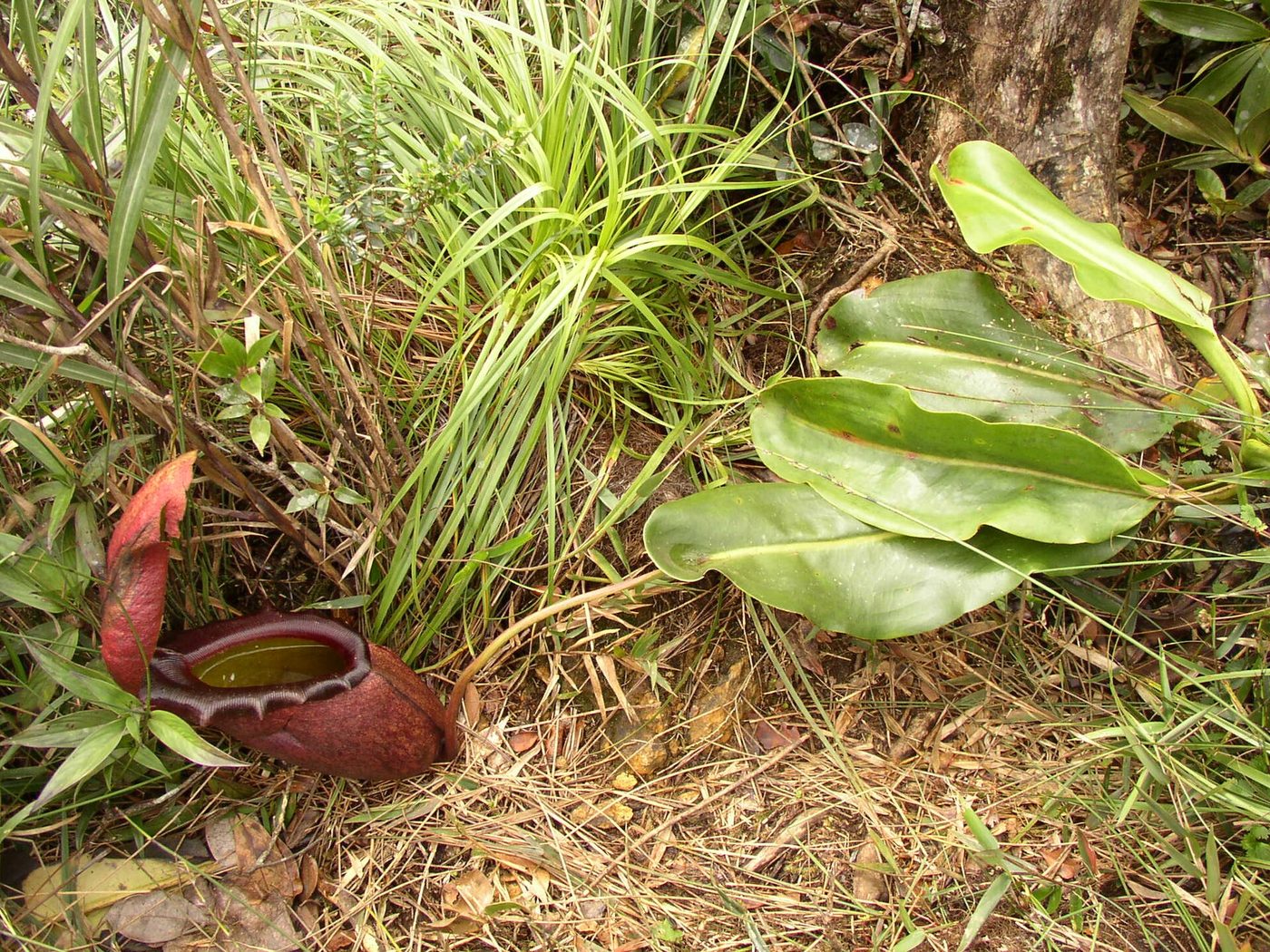
Photo: No machine-readable author provided. NepGrower~commonswiki assumed (based on copyright claims). · CC BY-SA 3.0
Giant pitcher plant
Nepenthes rajah
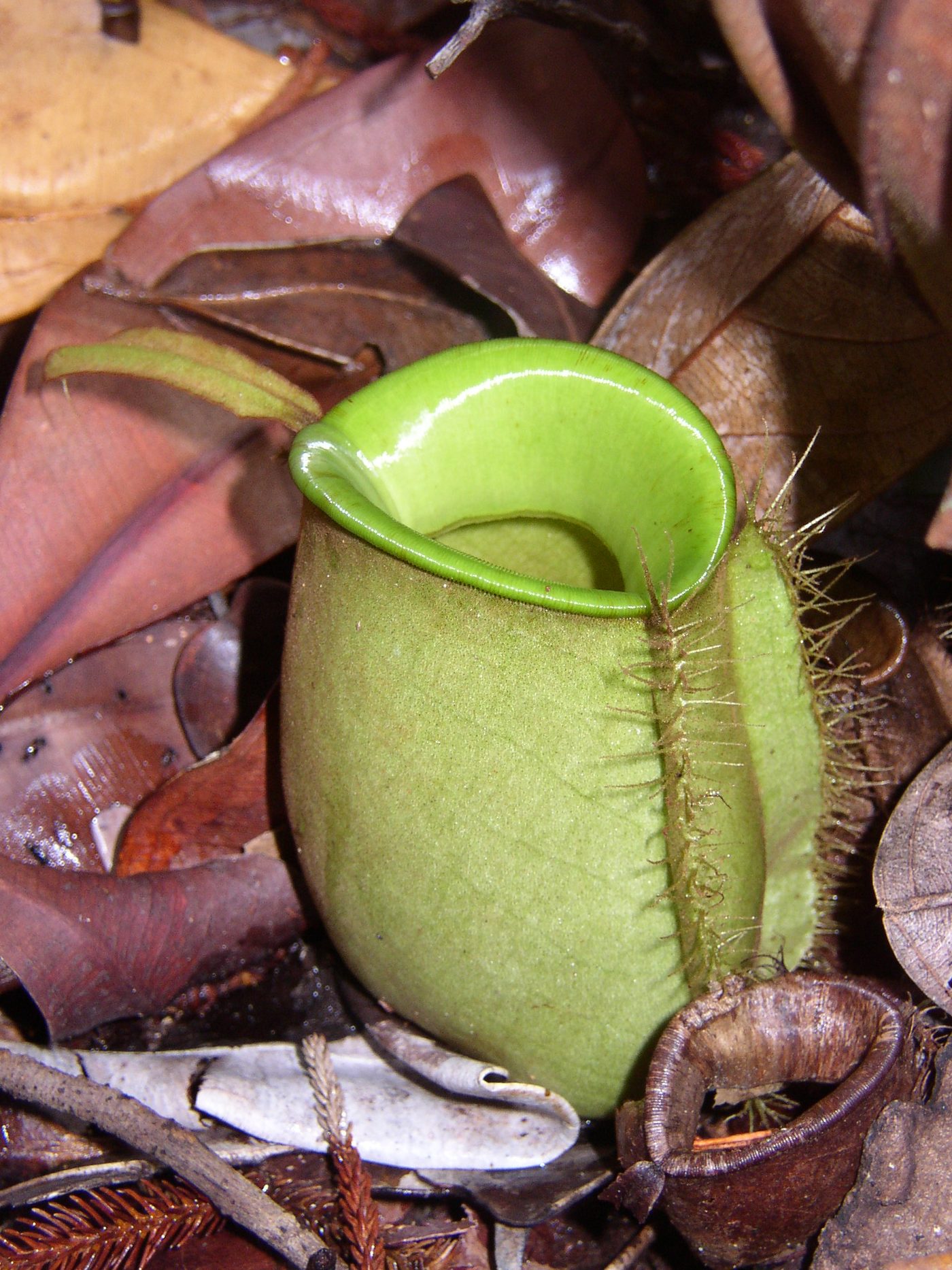
A carnivorous plant endemic to Borneo, the giant pitcher plant produces the largest pitchers of its genus — traps able to hold litres of fluid and even small vertebrates.
Characteristics
The carnivorous plant with giant traps
The giant pitcher plant is one of the most spectacular carnivorous plants in the world. Its pitchers — urn-shaped traps hanging from the leaves — are among the largest in the entire Nepenthes genus: they can exceed 35 cm in height and hold several litres of fluid, a good part of it digestive juice. At this size the plant catches not only insects but occasionally small vertebrates such as frogs and rodents.
Habitat and distribution
It is a strictly endemic species: it grows only on Mount Kinabalu and neighbouring Mount Tambuyukon, in Sabah, Malaysian Borneo. It lives exclusively on serpentine substrates, rich in metals and poor in nutrients, in areas where groundwater seeps and keeps the soil permanently moist, at elevations between 1,500 and 2,650 metres. It is therefore a highland plant, used to cool climates.
A surprising mutualism
The largest pitchers are not only for catching prey: recent studies have shown they also act as "toilets" for small mammals such as tree shrews. These animals lick the nectar produced on the lid and, in doing so, defecate into the urn: the plant thus gains precious nitrogen from their droppings, in a refined relationship of mutual benefit.
Cultivation and care
It is a difficult plant, suited only to experienced growers. It requires highland conditions: bright but filtered light, high humidity, cool nights and a poor, acidic, permanently moist substrate watered with mineral-free water. Growth is slow and the giant pitchers appear only on mature plants.
Conservation
Because of its tiny range, the giant pitcher plant is classified by the IUCN as Endangered and listed on CITES Appendix I, which bans international trade in wild specimens. Plants for sale come from cultivated propagation.
Practical tips
Water needs: High: permanently moist substrate — always check soil moisture before watering.
Prefers Bright but filtered light: provide the right light and rotate the plant for even growth.
Recommended soil: Serpentine, poor, acidic and free-draining. Refresh the substrate every 1-2 years.
Dust the leaves with a damp cloth to support photosynthesis.
Feed during the growing season (spring-summer) and stop in winter.
Pros
- Among the largest pitchers in the world
- Surprising mutualism with small mammals
- Iconic plant for experienced collectors
Cons
- Very hard to grow: needs highland conditions
- Endangered and protected by CITES
- Slow growth, giant pitchers only when mature