Photo: Rhododendrites · CC BY-SA 4.0
White pitcher plant
Sarracenia leucophylla
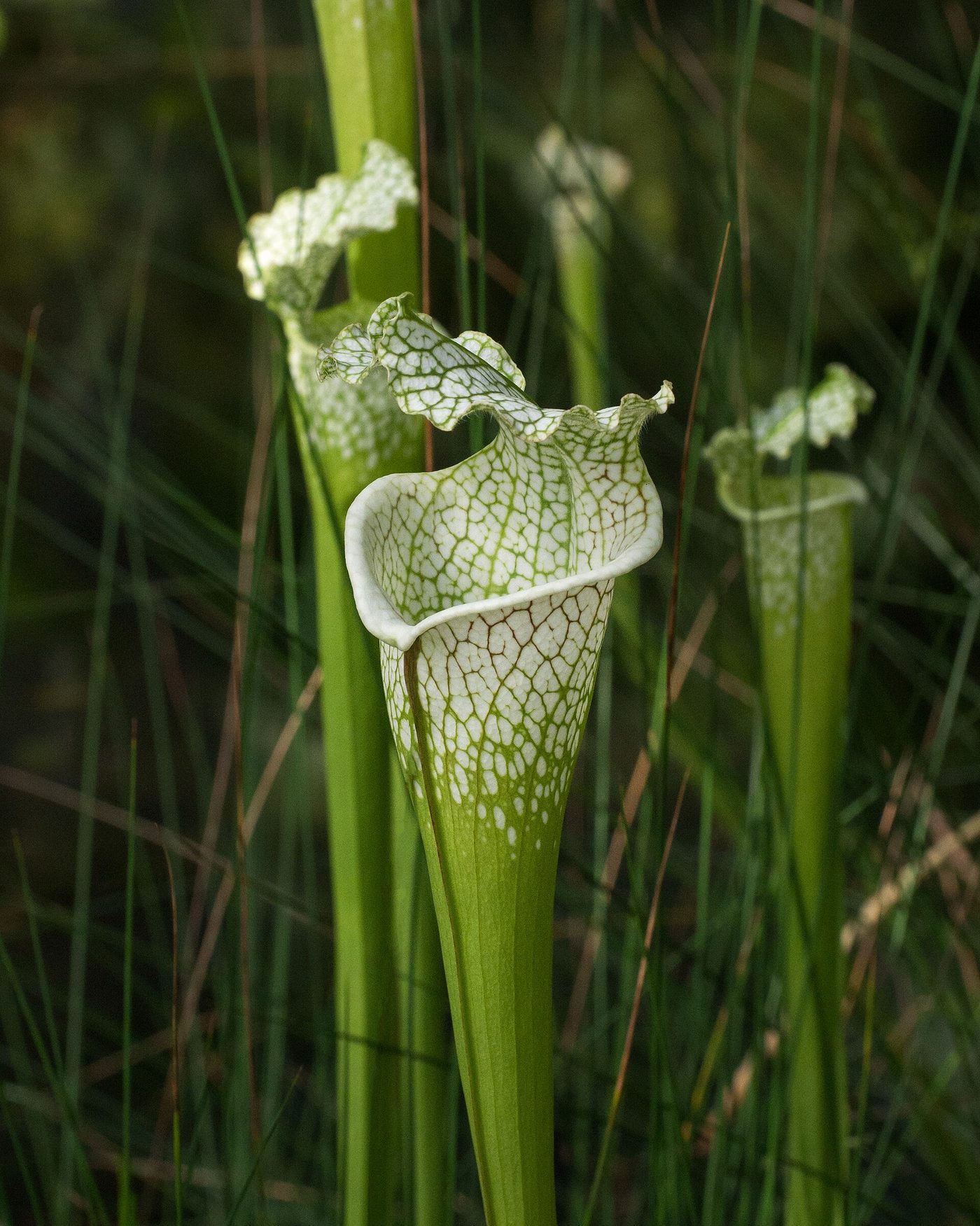
The white pitcher plant is a spectacular North American carnivorous plant with tall trumpet-shaped pitchers, mottled white and veined red, that catch insects.
Characteristics
White trumpets that catch insects
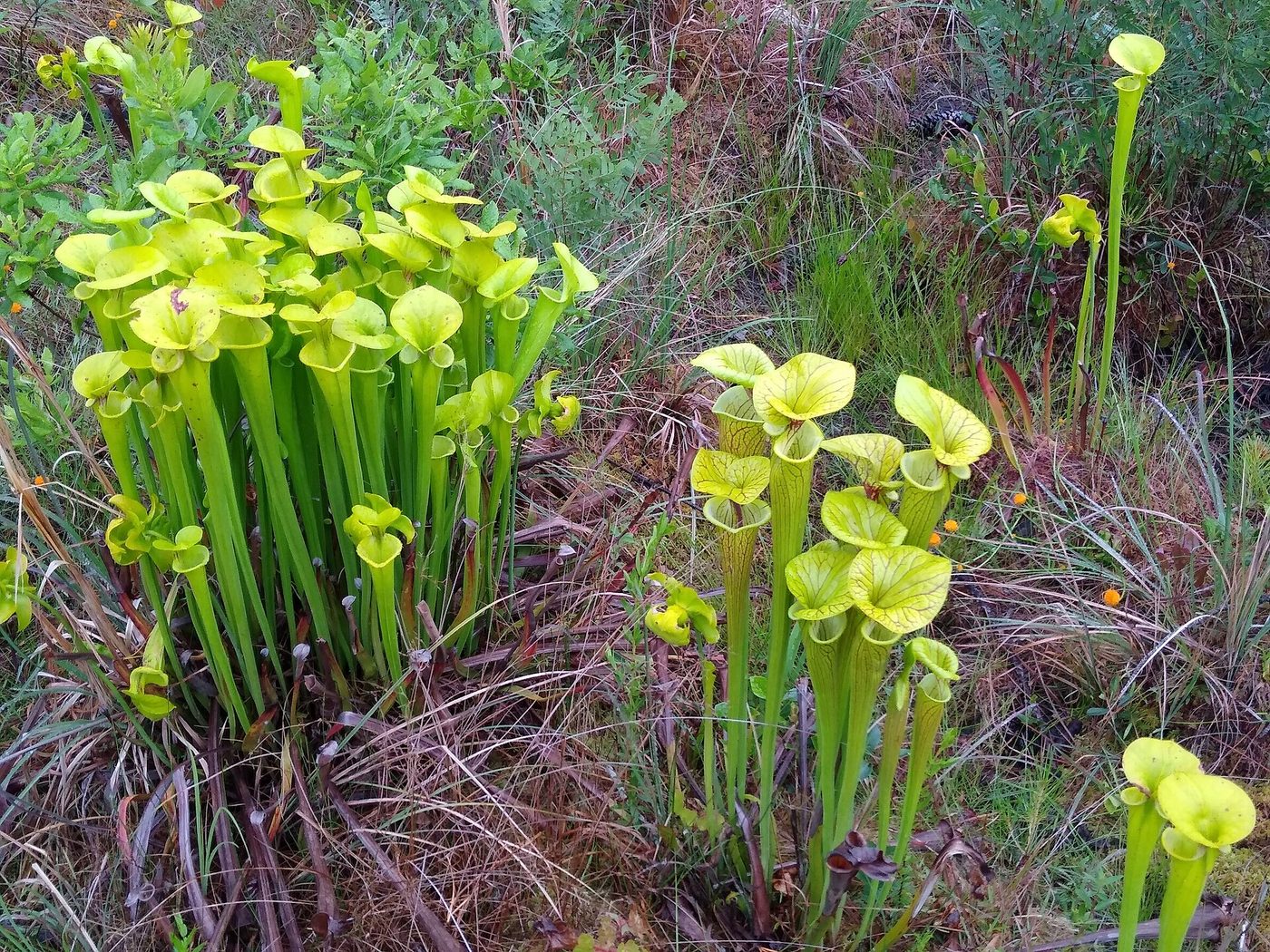
The white pitcher plant, or crimson pitcherplant, is among the most spectacular pitcher plants of the genus Sarracenia. Its leaves are transformed into tall, upright trumpet-shaped tubes that can exceed 80 centimetres. The upper part of the pitchers and the lid are a bright white, finely netted with green and red veins — a combination that strongly attracts insects. In spring, before or alongside the pitchers, it produces large nodding flowers.
Habitat and range
It is native to the wetlands of the south-eastern United States, along the Gulf of Mexico coast, from south-western Georgia to Mississippi. It lives in wet longleaf-pine savannas, on poor, acidic and permanently waterlogged soils.
How it catches prey
Insects, drawn by the vivid colours and the nectar secreted on the rim, land on the lid and slip into the tube. The inner walls, waxy and lined with downward-pointing stiff hairs, prevent them climbing back out: the prey falls to the bottom of the pitcher, where it is digested. The white pitcher plant is especially active in autumn, catching large numbers of insects.
Cultivation
It can be grown in pots by experienced enthusiasts: it needs full sun, a poor, acidic mix (sphagnum peat and silica sand) kept permanently waterlogged, and watering with rainwater or deionised water only, from below. In winter it needs a period of cold dormancy.
Conservation
The species is listed as Vulnerable by the IUCN: its native wetlands are in steep decline through reclamation, drainage and illegal collection. It should never be taken from the wild.
Flowering season
Practical tips
Water needs: Very high, substrate always waterlogged — always check soil moisture before watering.
Prefers Full sun: provide the right light and rotate the plant for even growth.
Recommended soil: Poor and acidic (sphagnum peat and sand). Refresh the substrate every 1-2 years.
Dust the leaves with a damp cloth to support photosynthesis.
Feed during the growing season (spring-summer) and stop in winter.
Pros
- White, veined pitchers among the most ornamental
- Catches large numbers of insects in autumn
- Spectacular spring flowers
Cons
- Vulnerable, declining in the wild
- Demanding: pure water, full sun and cold rest