Photo: No machine-readable author provided. NepGrower~commonswiki assumed (based on copyright claims). · CC BY-SA 2.5
Flask-shaped pitcher plant
Nepenthes ampullaria
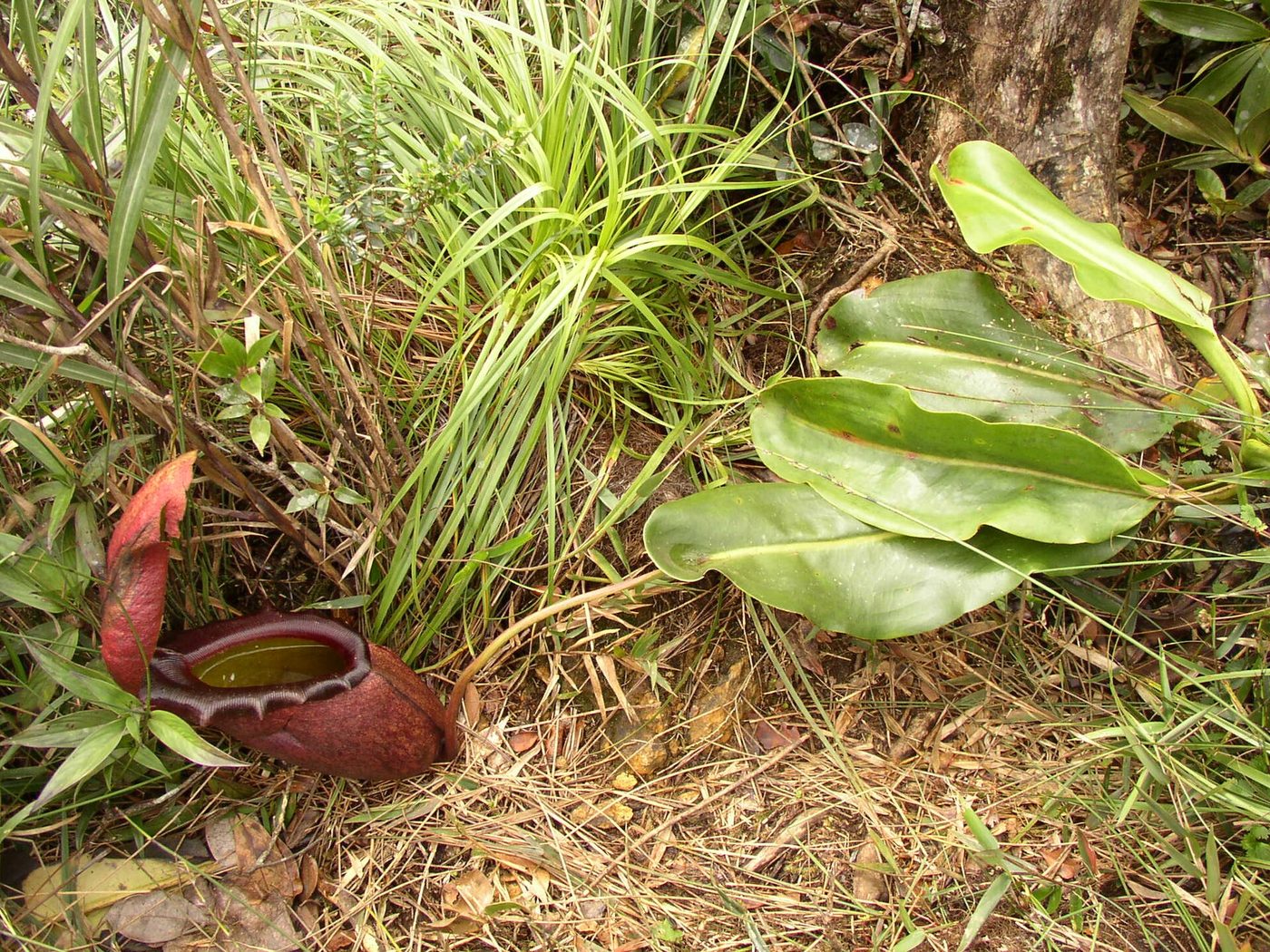
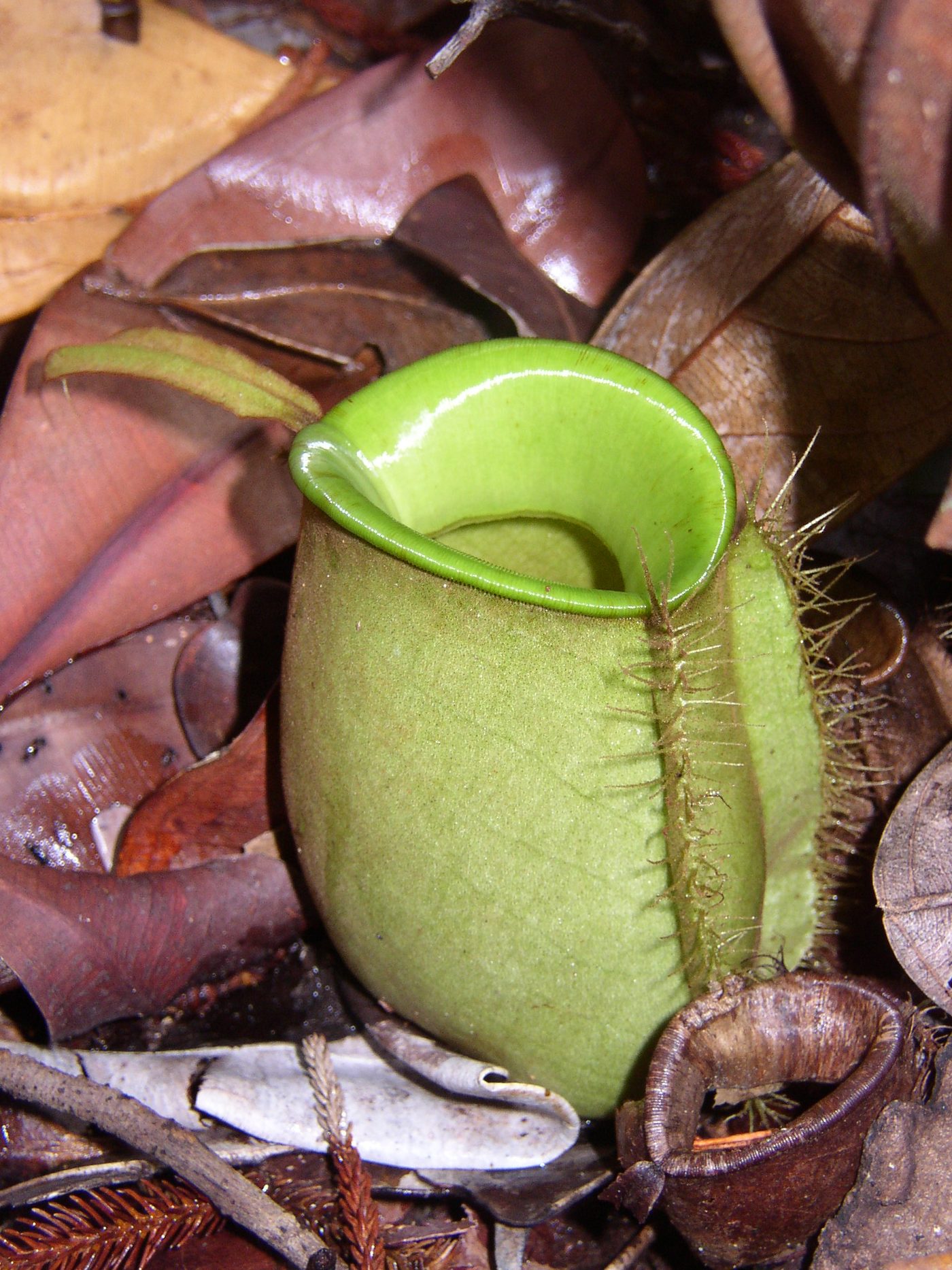
Nepenthes ampullaria is a tropical carnivorous pitcher plant with rounded flask-like pitchers, unusual for feeding on fallen leaves rather than insects.
Characteristics
A carnivore that eats leaves
Nepenthes ampullaria is one of the most recognisable pitcher plants of the genus Nepenthes. Its pitchers — the famous carnivorous "jugs" — are small, rounded and flask-shaped, with a reduced lid folded back out of the way. They often sprout in dense clusters straight from the base of the plant, carpeting the forest floor like a mat of green and reddish cups.
Habitat and range
It grows across much of Southeast Asia: Borneo, the Maluku Islands, New Guinea, Peninsular Malaysia, Singapore, Sumatra and Thailand, from sea level to over 2000 metres. It favours the damp, shaded areas of rainforests, peat swamps and marshy margins.
An unusual diet
Unlike most pitcher plants, which trap insects, N. ampullaria has largely switched to a detritivorous diet: its upward-facing pitchers collect leaves falling from the trees and absorb their nitrogen as they decompose. This is why the lid is small and does not act as a "roof" — it lets the litter in.
Cultivation
It is a warm-glasshouse plant: it loves high temperatures, high humidity and filtered light. Grow it in a poor, acidic mix kept constantly moist and watered only with rainwater or deionised water, never hard tap water and never fed like an ordinary plant. There is no need to feed it insects.
Conservation
The species is listed as Least Concern by the IUCN thanks to its wide range, but local populations suffer from the destruction of peat-swamp forests and from illegal collection.
Practical tips
Water needs: High: substrate kept constantly moist — always check soil moisture before watering.
Prefers Bright but filtered light, no harsh direct sun: provide the right light and rotate the plant for even growth.
Recommended soil: Poor, acidic and free-draining (sphagnum, perlite, coir). Refresh the substrate every 1-2 years.
Dust the leaves with a damp cloth to support photosynthesis.
Feed during the growing season (spring-summer) and stop in winter.
Pros
- Rounded pitchers among the most decorative of Nepenthes
- Does not need to be fed insects
- Forms carpets of cups at the base, very striking
Cons
- Demanding about constant humidity and warmth
- Will not tolerate hard tap water