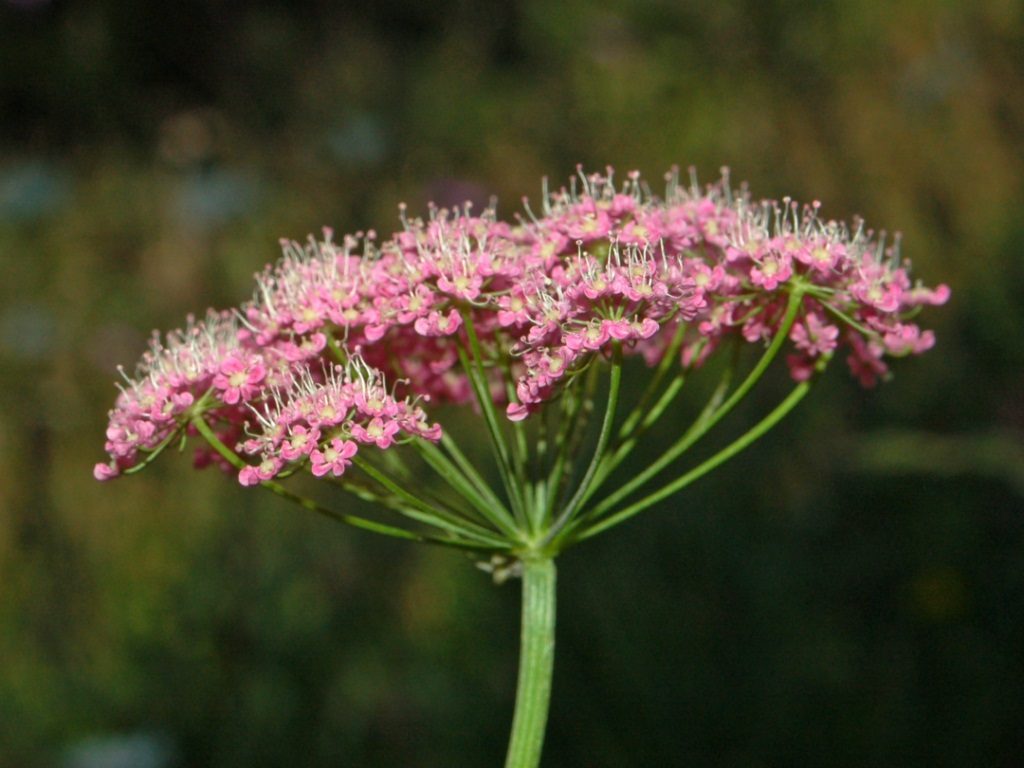
Photo: Hectonichus · CC BY-SA 3.0
Greater burnet-saxifrage
Pimpinella major
The greater burnet-saxifrage is a perennial herb of European meadows, with delicate umbels of white-pink flowers and an aromatic root used in herbalism.
Characteristics
Umbels of flowers in the meadows
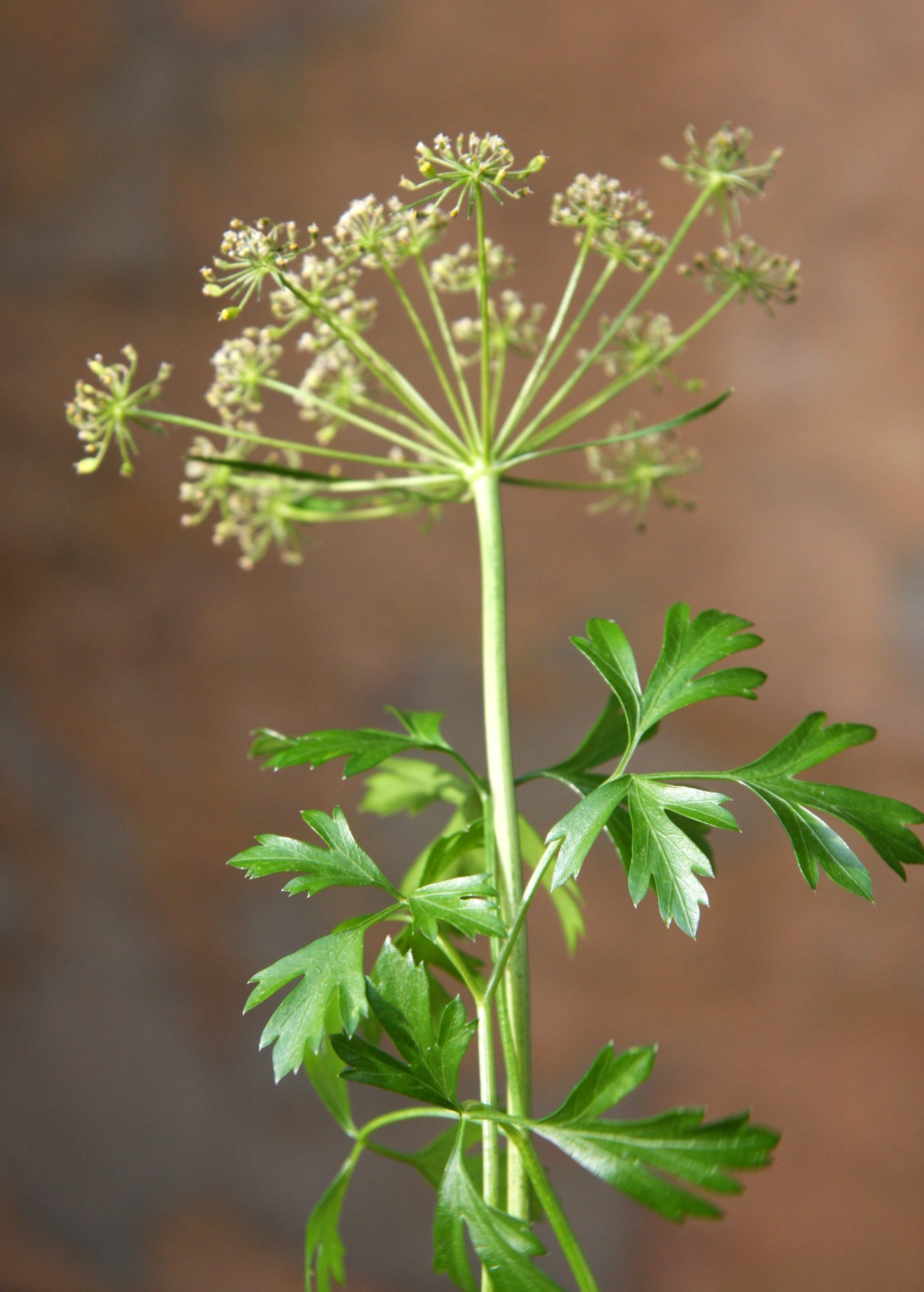
The greater burnet-saxifrage is a robust perennial herb of the carrot family, Apiaceae, the same as fennel, anise and carrot. It has upright, hollow, ridged stems reaching over a metre, and leaves divided into toothed leaflets. The small flowers, gathered in broad compound umbels, are usually pinkish, sometimes white, appearing in high summer. The whole plant gives off a characteristic aromatic scent.
Habitat and range
It is widespread across much of Europe, where it grows in cool meadows, on woodland edges, along hedgerows and in mountain pastures. It prefers fertile, well-drained soils, including chalky ones, in sunny or partly shaded spots.
Uses and tradition
The root of the burnet-saxifrage has long been used in herbal tradition, valued for its aromatic, pungent flavour. Its properties are akin to those of the lesser burnet-saxifrage, and in the past the plant was used as a folk remedy and a flavouring. Its strong scent, likened in some languages to incense, is also said to repel insects.
Cultivation
It is easy to grow in the garden, where it fits into flowery meadows and naturalistic plantings. It wants full sun or part shade and a cool, fertile soil. It is very hardy, withstands frost well and, once established, needs little attention. Its flowers are useful to pollinators.
Care
It needs occasional watering and no special care. It can be propagated from seed or by dividing the clump. It is non-toxic and entirely safe in the garden.
Flowering season
Practical tips
Water needs: Moderate, likes cool meadows — always check soil moisture before watering.
Prefers Full sun or part shade: provide the right light and rotate the plant for even growth.
Recommended soil: Fertile, cool and well-drained, even chalky. Refresh the substrate every 1-2 years.
Dust the leaves with a damp cloth to support photosynthesis.
Feed during the growing season (spring-summer) and stop in winter.
Pros
- Umbels of flowers useful to pollinators
- Aromatic root used in herbalism
- Hardy and easy in naturalistic gardens
Cons
- Flowers inconspicuous compared to ornamentals
- Can spread by self-seeding