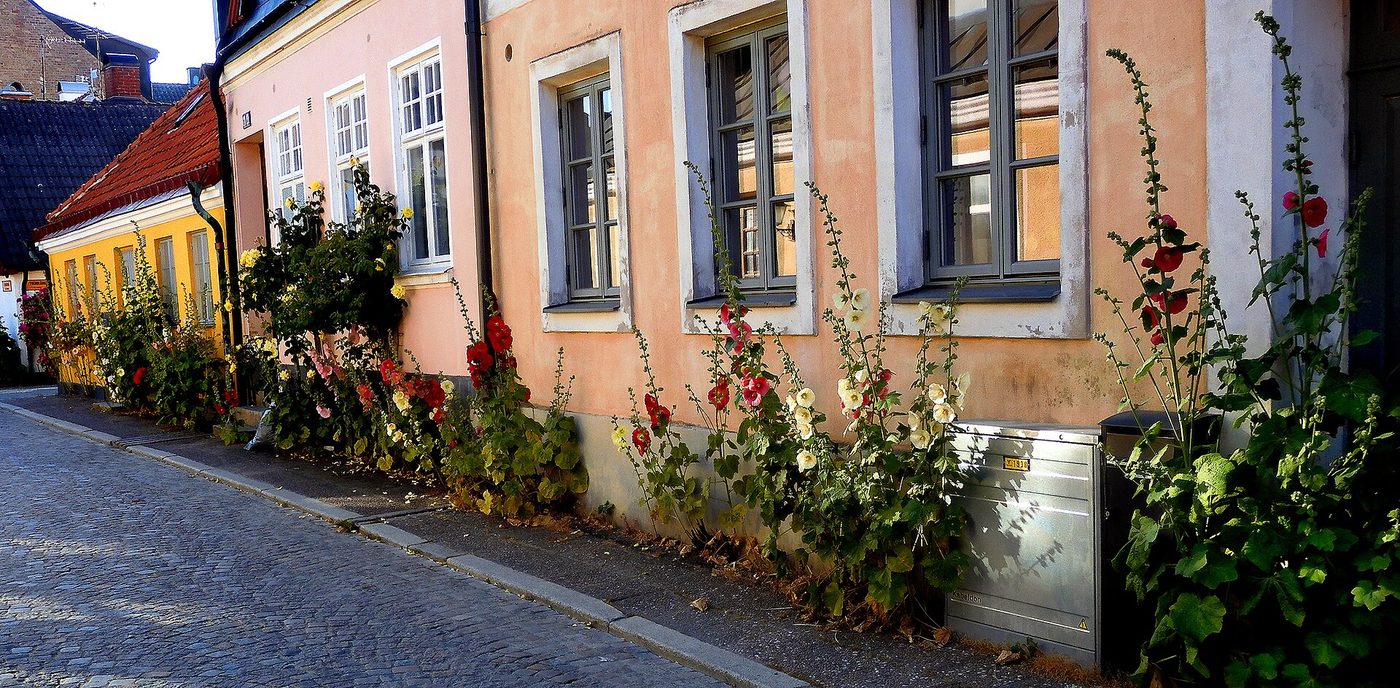
Photo: Foto: Jonn Leffmann · CC BY 3.0
Hollyhock
Alcea rosea
The hollyhock is an ornamental plant with towering stems clothed in large cup-shaped flowers, a classic of cottage gardens and borders.
Characteristics
Towers of flowers in the garden
The hollyhock is an ornamental plant of the mallow family, famous for its tall, upright stems, which can exceed two metres, clothed for much of their length in large cup-shaped flowers. The blooms, single or double, come in a wide range of colours: white, pink, red, yellow, even a near-black purple. The leaves are broad, rough and lobed. It is often grown as a biennial or a short-lived perennial.
Origin and habitat
Native to south-western Asia, particularly China, it was introduced to Europe around the 15th century and has since become a symbol of cottage gardens. It prefers sunny spots sheltered from wind, which could bend its tall stems.
Cultivation
It wants full sun and fertile, deep, well-drained soil. Once established it is hardy and tolerates drought. It flowers from summer into early autumn; biennial forms are sown one year to bloom the next. It self-seeds freely, reappearing year after year in the garden. The tall stems often need staking.
Facts and uses
The flowers are edible and used to garnish dishes and salads, and in herbal tradition its parts, like those of other mallows, are used for soothing infusions. It is much loved by pollinators, especially bees and bumblebees.
Care
It can be prone to hollyhock rust, a fungal disease that spots the leaves: good air circulation and avoiding wetting the foliage help. Removing faded flowers prolongs the bloom and limits self-seeding where it is not wanted.
Flowering season
Practical tips
Water needs: Moderate, drought-tolerant when mature — always check soil moisture before watering.
Prefers Full sun: provide the right light and rotate the plant for even growth.
Recommended soil: Fertile, deep and well-drained. Refresh the substrate every 1-2 years.
Dust the leaves with a damp cloth to support photosynthesis.
Feed during the growing season (spring-summer) and stop in winter.
Pros
- Tall, spectacular border display
- Much loved by pollinators
- Hardy and self-seeding
Cons
- Prone to hollyhock rust
- Tall stems often need staking