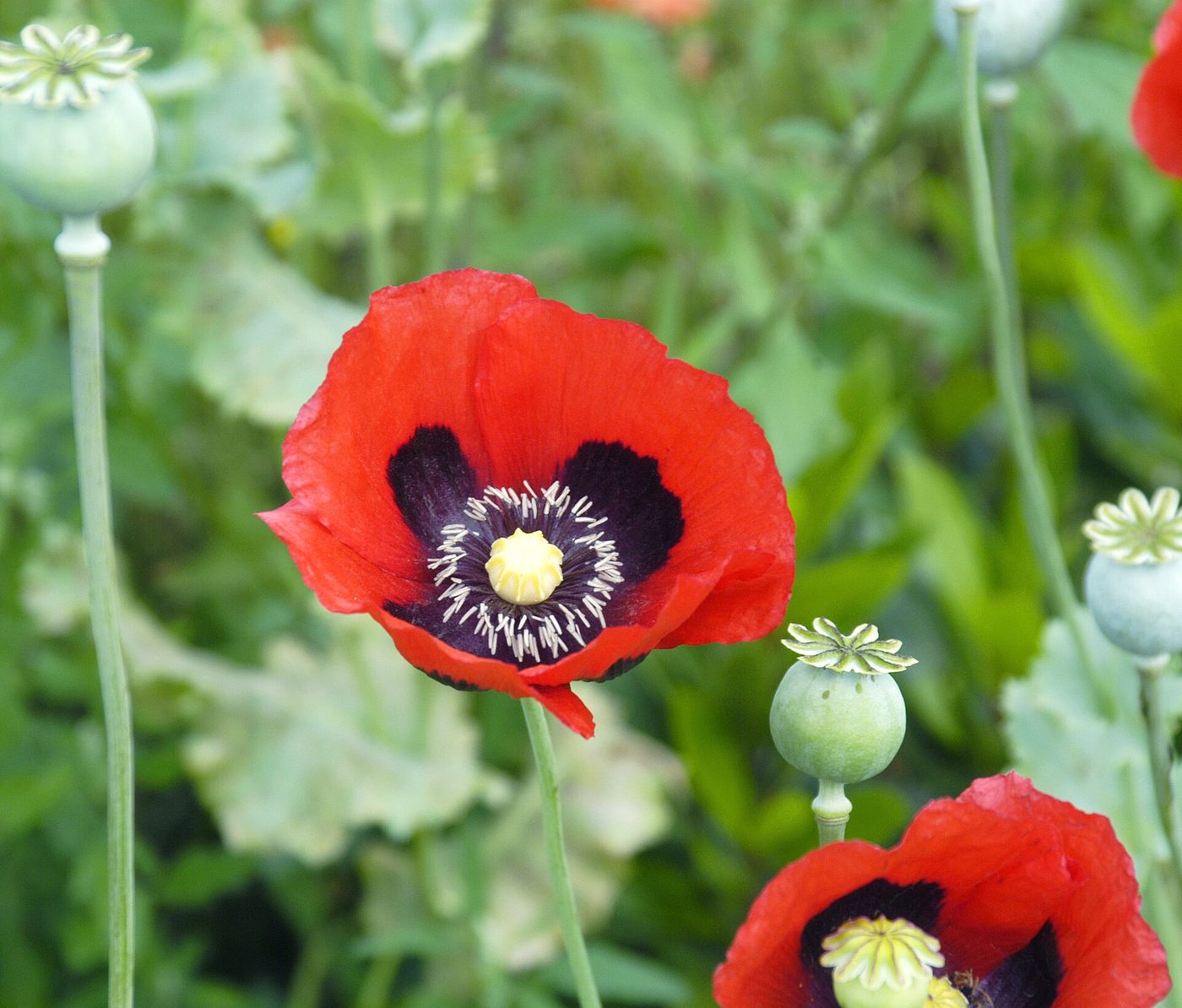
Opium poppy
Papaver somniferum
With its large delicate flowers and unmistakable capsules, the opium poppy is a plant with a very long history, grown for its seeds, for ornament and for pharmaceutical uses.
Characteristics
A plant with large flowers
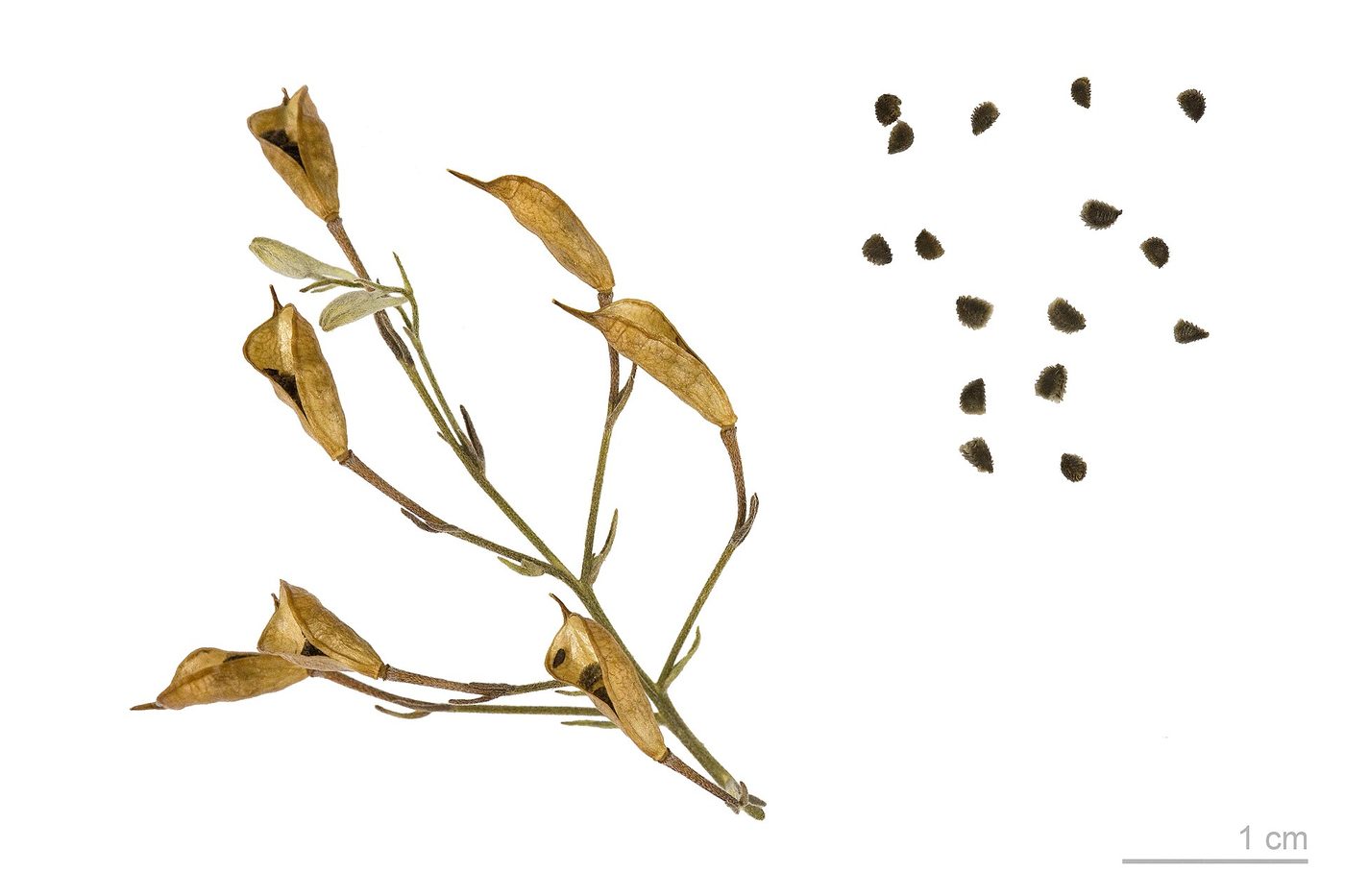
The opium poppy is an annual herbaceous plant with large, showy flowers, with four delicate, crumpled-looking petals, of colours ranging from white to pink, from purple to red. The stem and leaves, glaucous and slightly waxy, bear a single large flower at the top. After flowering the most characteristic fruit develops: a rounded capsule, topped by a small disc, containing very numerous tiny seeds. It is precisely this capsule that makes the plant unmistakable.
Origin and distribution
Cultivated by humans since antiquity, the opium poppy has a millennia-old history whose roots lie in the eastern Mediterranean and Asia. Today it is grown in many parts of the world. It prefers temperate climates, fertile, well-drained soils and sunny positions, and grows easily as a seasonal plant.
Uses and importance
The opium poppy is one of the most important plants in human history for its many uses. Its tiny seeds, entirely safe and free of narcotic effects, are a very widespread food ingredient: they are used to garnish bread, cakes and baked goods and to produce an oil. From the plant also derive important substances used in medicine, the basis of some of the best-known painkilling drugs, produced in strictly controlled and legal contexts. It is also a beautiful ornamental plant.
Ornamental cultivation
In gardens, some varieties of poppy are prized for their spectacular flowers and for their decorative capsules, also used in dried-flower arrangements. It is sown in sunny, well-drained soil; the plant grows rapidly and flowers between spring and summer. In many countries, however, the cultivation of this species is subject to legal regulations and restrictions that it is essential to know and respect.
Legal note
Because of the substances it contains, the opium poppy is a regulated plant in numerous countries, where its cultivation may be restricted or forbidden. Anyone wishing to grow it, even for ornamental purposes, must find out about the rules in force in their own territory. The culinary seeds available commercially, by contrast, are an ordinary food product.
Flowering season
Practical tips
Water needs: Moderate — always check soil moisture before watering.
Prefers Full sun: provide the right light and rotate the plant for even growth.
Recommended soil: Fertile, well-drained. Refresh the substrate every 1-2 years.
Dust the leaves with a damp cloth to support photosynthesis.
Feed during the growing season (spring-summer) and stop in winter.
Pros
- Large, ornamental flowers
- Seeds used in cooking and for oil
- Decorative capsules for dried arrangements
- Plant of great historical and medical importance
Cons
- Cultivation regulated or forbidden in many countries
- Annual plant, must be resown
- Some parts contain active substances