Photo: Wikimedia Commons · CC BY-SA 3.0
Oriental poppy
Papaver orientale
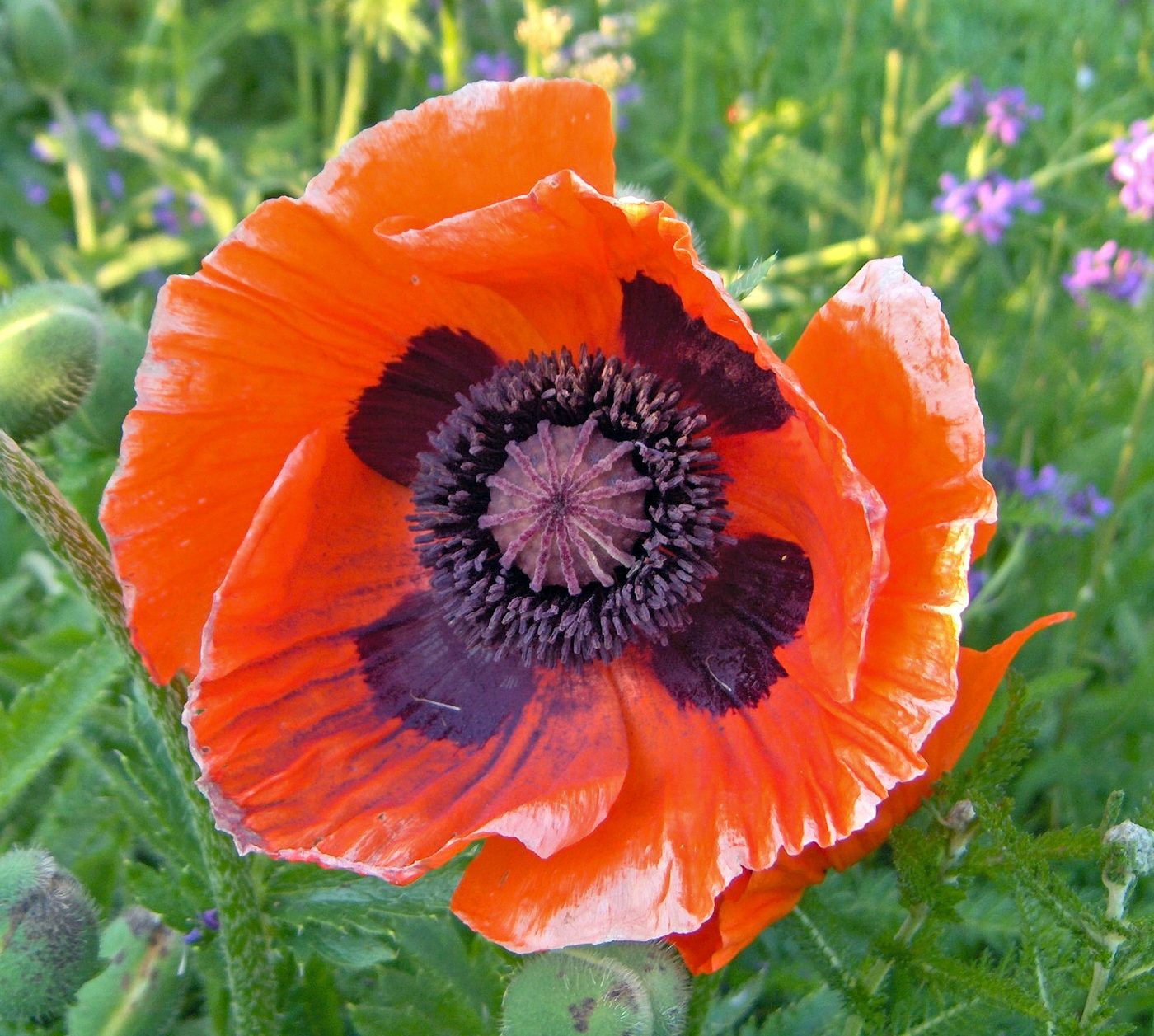
The Oriental poppy is a hardy perennial with huge cup-shaped orange-red flowers blotched with black at the base — a spectacular garden classic.
Characteristics
Great cups of fire
The Oriental poppy is a showy herbaceous perennial in the family Papaveraceae. Its flowers are among the largest and most striking in the garden: broad cups of silky petals, often a vivid orange-red, with a black blotch at the base and a central boss of dark stamens. The leaves are rough and hairy, deeply cut, gathered in a basal rosette. Numerous cultivars exist in colours ranging from white to pink, apricot and scarlet.
Origin and habitat
It is native to the Caucasus, north-eastern Turkey and northern Iran, where it grows in mountain meadows and slopes. It is a very hardy plant, used to cold winters and summers with dry spells.
Cultivation
It loves full sun and fertile, deep, well-drained soil: above all it dislikes winter waterlogging. It flowers from late spring into early summer; after flowering the foliage yellows and the plant enters a summer rest, then resumes growth in autumn. It is therefore useful to pair it with other perennials that fill the summer gap.
Warning
Like many Papaveraceae, it contains alkaloids and is toxic if eaten; the sap can irritate the skin. Keep it away from children and animals that might chew its parts.
Care
It needs little attention once established. It can be propagated by root cuttings during summer dormancy. After flowering, cut back the yellowed foliage; the plant is long-lived and resents transplanting, so it is best placed in a permanent spot.
Flowering season
Practical tips
Water needs: Moderate, dislikes waterlogging — always check soil moisture before watering.
Prefers Full sun: provide the right light and rotate the plant for even growth.
Recommended soil: Fertile, deep and well-drained. Refresh the substrate every 1-2 years.
Dust the leaves with a damp cloth to support photosynthesis.
Feed during the growing season (spring-summer) and stop in winter.
Pros
- Huge, spectacular flowers
- Long-lived and very hardy perennial
- Many cultivars in different colours
Cons
- Summer foliage yellows (dormancy)
- Resents transplanting and waterlogging