Photo: Agnieszka Kwiecień, Nova · CC BY-SA 4.0
Panda plant
Kalanchoe tomentosa
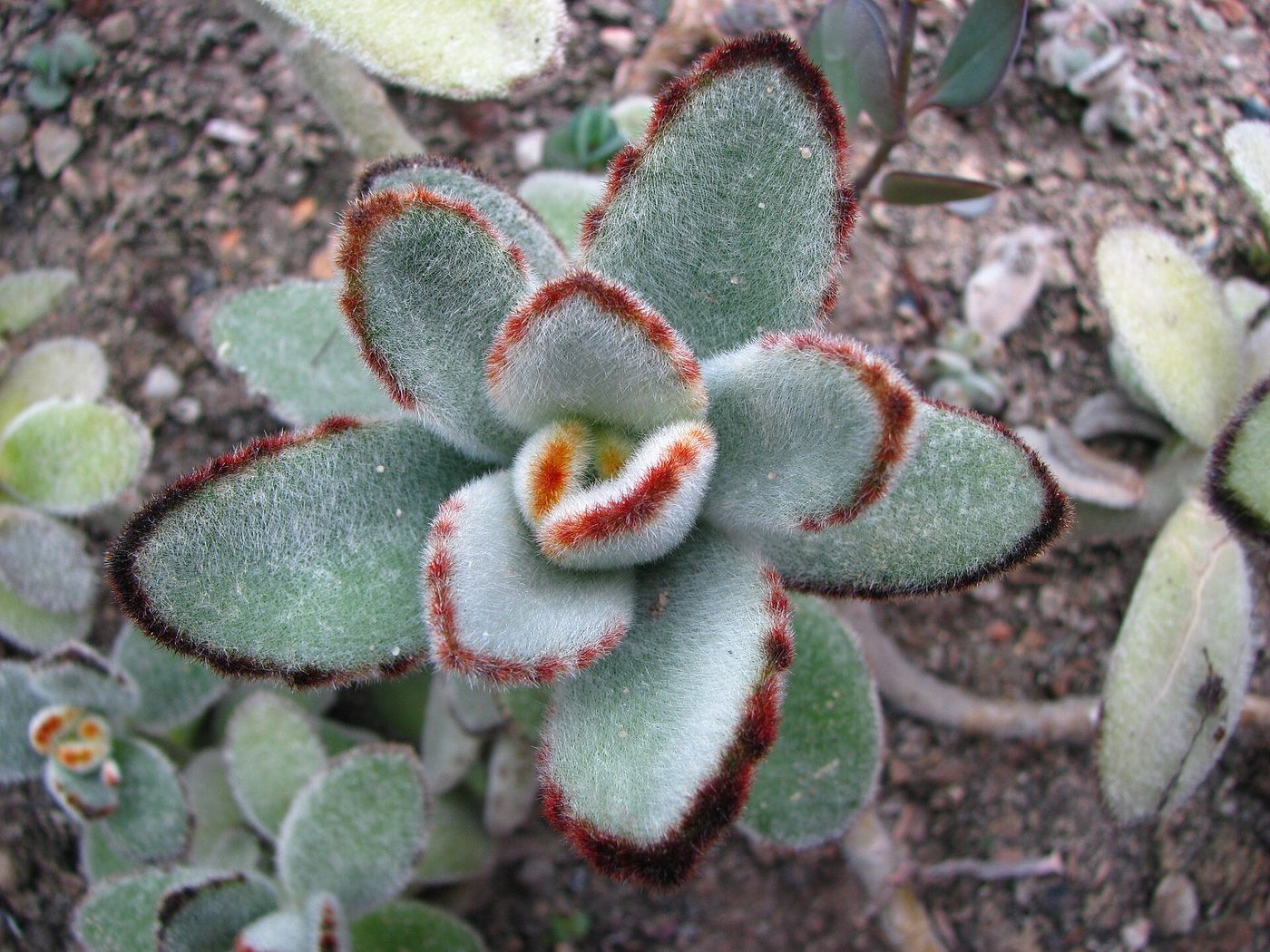
A Madagascar succulent with plush, velvety leaves, the panda plant has silver-green leaves covered in fuzz and edged with chocolate-brown markings.
Characteristics
A plush succulent
The panda plant is a shrubby succulent with a soft, unmistakable look. Its fleshy, oval, slightly curved leaves are entirely covered in dense silvery-white fuzz that gives them a velvety, plush-toy texture. The leaf edges and tips are often marked with chocolate-brown spots that stand out against the silver-green and have earned it the nicknames 'pussy ears' and 'chocolate soldier'.
Origin and habitat
It is native to Madagascar, where it grows on granitic and rocky ground in arid habitats. Like many stonecrops, it has developed succulent leaves to store water and survive droughts; the fuzz helps protect it from excess sun and reduce water loss.
Cultivation
It is one of the most popular succulents as a houseplant, valued for its unusual texture. It wants plenty of light (it tolerates some direct sun), a free-draining mineral substrate and sparing watering: let the soil dry out well between waterings and cut back further in winter. It is frost-tender and must be kept away from the cold. It has received the Royal Horticultural Society's prestigious Award of Garden Merit.
Care with pets
Like other kalanchoes, it contains toxic substances (cardiac glycosides) and can be dangerous if eaten by dogs and cats. It is best kept out of their reach.
Care
It propagates easily from a leaf or cutting. Take care not to wet the velvety leaves when watering, to avoid spoiling the fuzz and encouraging rot.
Practical tips
Water needs: Low: let dry between waterings — always check soil moisture before watering.
Prefers Bright light, some direct sun: provide the right light and rotate the plant for even growth.
Recommended soil: Mineral and very free-draining. Refresh the substrate every 1-2 years.
Dust the leaves with a damp cloth to support photosynthesis.
Feed during the growing season (spring-summer) and stop in winter.
Pros
- Unique velvety silver-green and chocolate leaves
- Easy to grow indoors
- Propagates easily from leaf or cutting
Cons
- Toxic to dogs and cats
- Rots with too much water or waterlogging
- Frost-tender