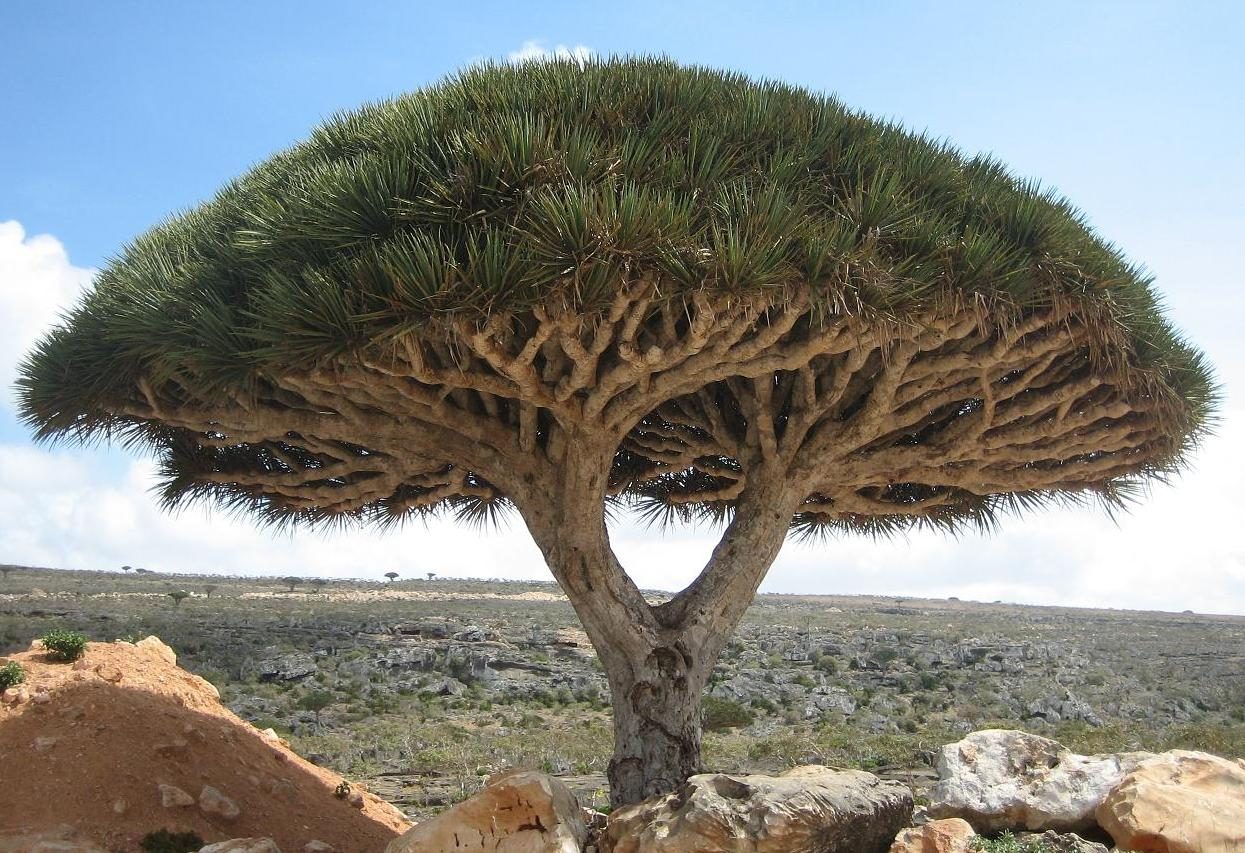
Socotra dragon tree
Dracaena cinnabari
The Socotra dragon tree is an umbrella-shaped tree endemic to Socotra island, famous for the red resin known as 'dragon's blood'.
Characteristics
The umbrella-shaped tree
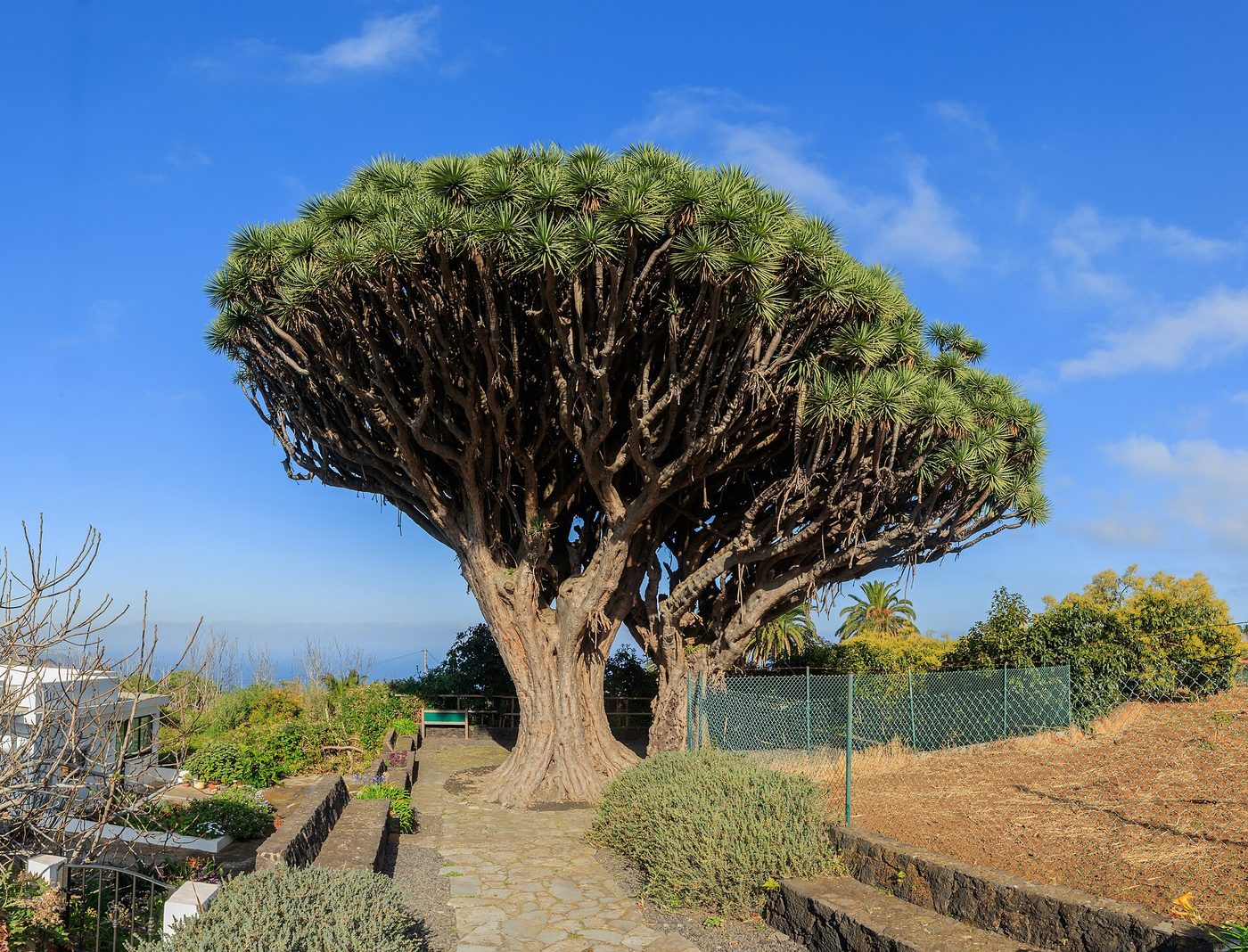
The Socotra dragon tree (Dracaena cinnabari) is a tree-like plant of the family Asparagaceae, with an unmistakable silhouette: a sturdy trunk that branches high up into a dense umbrella- or mushroom-shaped crown, supported by repeatedly forking branches. Its stiff, leathery leaves are clustered at the tips of the branches. The umbrella shape is no accident: it helps collect moisture from mists and channel it to the roots, while shading the ground below and reducing evaporation.
Origin and habitat
It is endemic to the Socotra archipelago in Yemen, in the Indian Ocean — an island famous for its unique flora. It grows on rocky, arid plateaus, adapted to a water-poor environment.
The 'dragon's blood'
Its name comes from the deep-red resin the tree exudes when its bark is cut: so-called 'dragon's blood'. For centuries this resin has been gathered and used as a dye, varnish, cosmetic and traditional remedy. It is the national tree of Yemen.
Cultivation and care
It grows extremely slowly and wants full sun, a rocky, very free-draining soil and very little water: it dislikes waterlogging and frost. Outside its climate it is sometimes grown as an ornamental or collector's specimen, with great patience.
Conservation
The IUCN lists it as Vulnerable. Natural regeneration is poor: young trees struggle to grow because of increasing aridity, goat grazing and climate change that reduces the mists the species depends on.
Practical tips
Water needs: Sparse: arid climate, captures moisture from mists — always check soil moisture before watering.
Prefers Full sun: provide the right light and rotate the plant for even growth.
Recommended soil: Rocky, very free-draining. Refresh the substrate every 1-2 years.
Dust the leaves with a damp cloth to support photosynthesis.
Feed during the growing season (spring-summer) and stop in winter.
Pros
- Unique, spectacular umbrella silhouette
- Produces the prized 'dragon's blood'
- Symbol and national tree of Yemen
Cons
- Vulnerable, with poor regeneration
- Extremely slow growth
- Threatened by aridity, grazing and climate