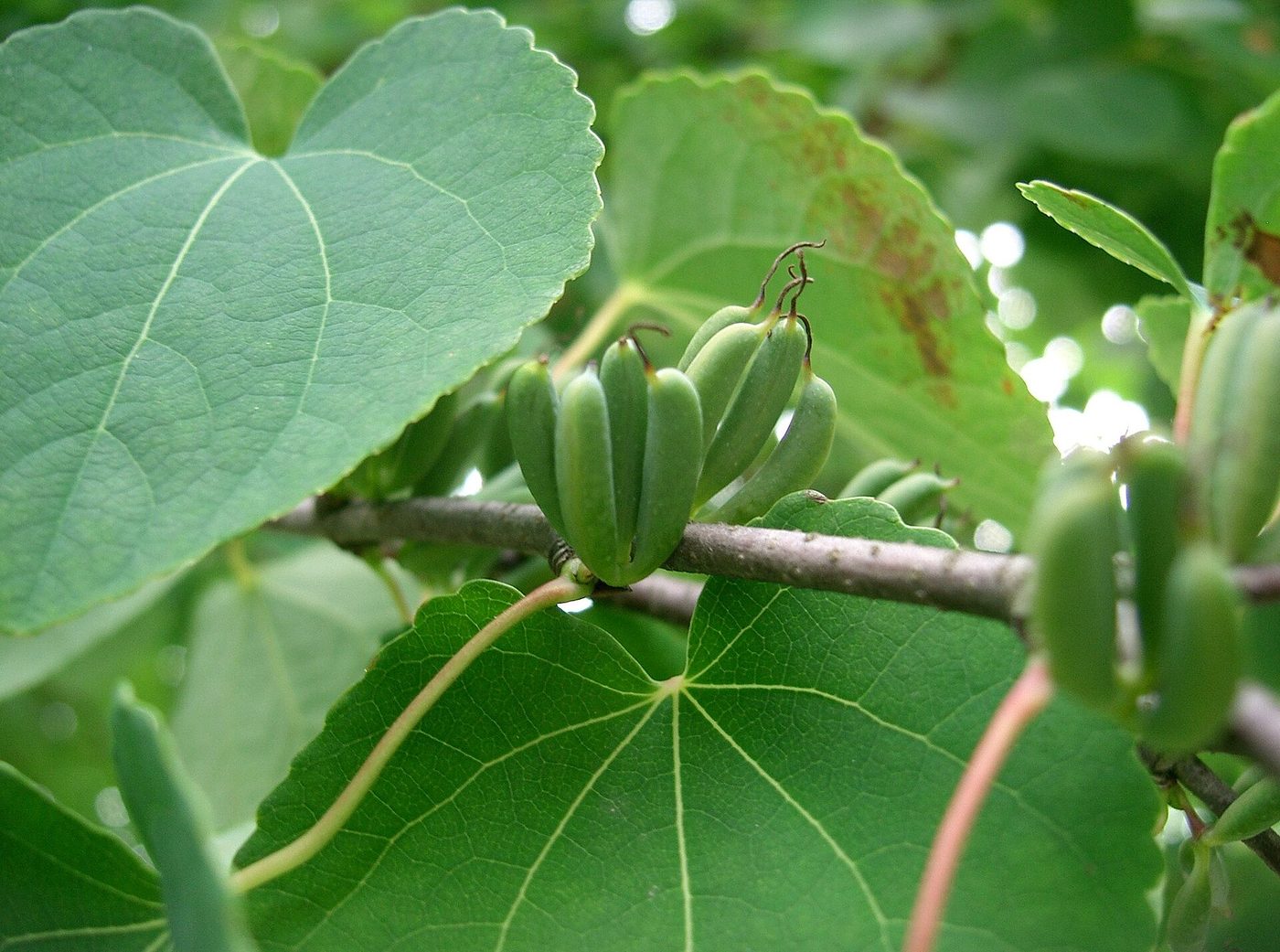
Photo: KENPEI · CC BY-SA 3.0
Katsura tree
Cercidiphyllum japonicum
The katsura, or caramel tree, is an elegant ornamental tree with heart-shaped leaves that smell of caramelised sugar in autumn.
Characteristics
The tree that smells of caramel
The katsura, or caramel tree, is an elegant deciduous tree native to China and Japan, one of only two species in the family Cercidiphyllaceae. It has a broad, light crown, often multi-stemmed, with small heart-shaped leaves very similar to those of the Judas tree. The foliage is pinkish in spring, blue-green in summer and turns yellow, orange and pink in autumn. Its most famous feature is the scent: as the leaves fall, the tree gives off a delicate aroma of caramelised sugar or candyfloss, which earned it its common names.
Origin and habitat
It is native to the moist mountain forests of China and Japan, where it can reach 30 metres. In cultivation it is more compact. It prefers cool, deep, moist soils and spots sheltered from dry wind.
Cultivation
It wants full sun or part shade and a fertile, cool, well-drained soil. It is very hardy and withstands cold winters, but dislikes prolonged drought: in summer it should be watered regularly to keep the foliage from wilting. It grows at a moderate to fast rate, forming a harmonious tree ideal as a garden specimen.
Notable facts and ornamental use
It is prized for its two seasons of interest: the delicate spring colouring and the autumn display accompanied by the caramel scent. In spring it produces small reddish, petal-less flowers, inconspicuous, before the leaves. It is widely planted in parks and large gardens across the temperate world.
Care
It needs little pruning: intervention is limited to removing dead branches. A mulch at the base helps keep the roots cool. It is non-toxic, so it is safe even in gardens used by children and pets.
Flowering season
Practical tips
Water needs: Regular, likes cool, moist soils — always check soil moisture before watering.
Prefers Full sun or part shade: provide the right light and rotate the plant for even growth.
Recommended soil: Fertile, deep, cool and well-drained. Refresh the substrate every 1-2 years.
Dust the leaves with a damp cloth to support photosynthesis.
Feed during the growing season (spring-summer) and stop in winter.
Pros
- Heart-shaped leaves smelling of caramel in autumn
- Spectacular autumn colours
- Very hardy and non-toxic
Cons
- Dislikes prolonged drought
- Needs cool, moist soils