Photo: Stan Shebs · CC BY-SA 3.0
Spiral aloe
Aloe polyphylla
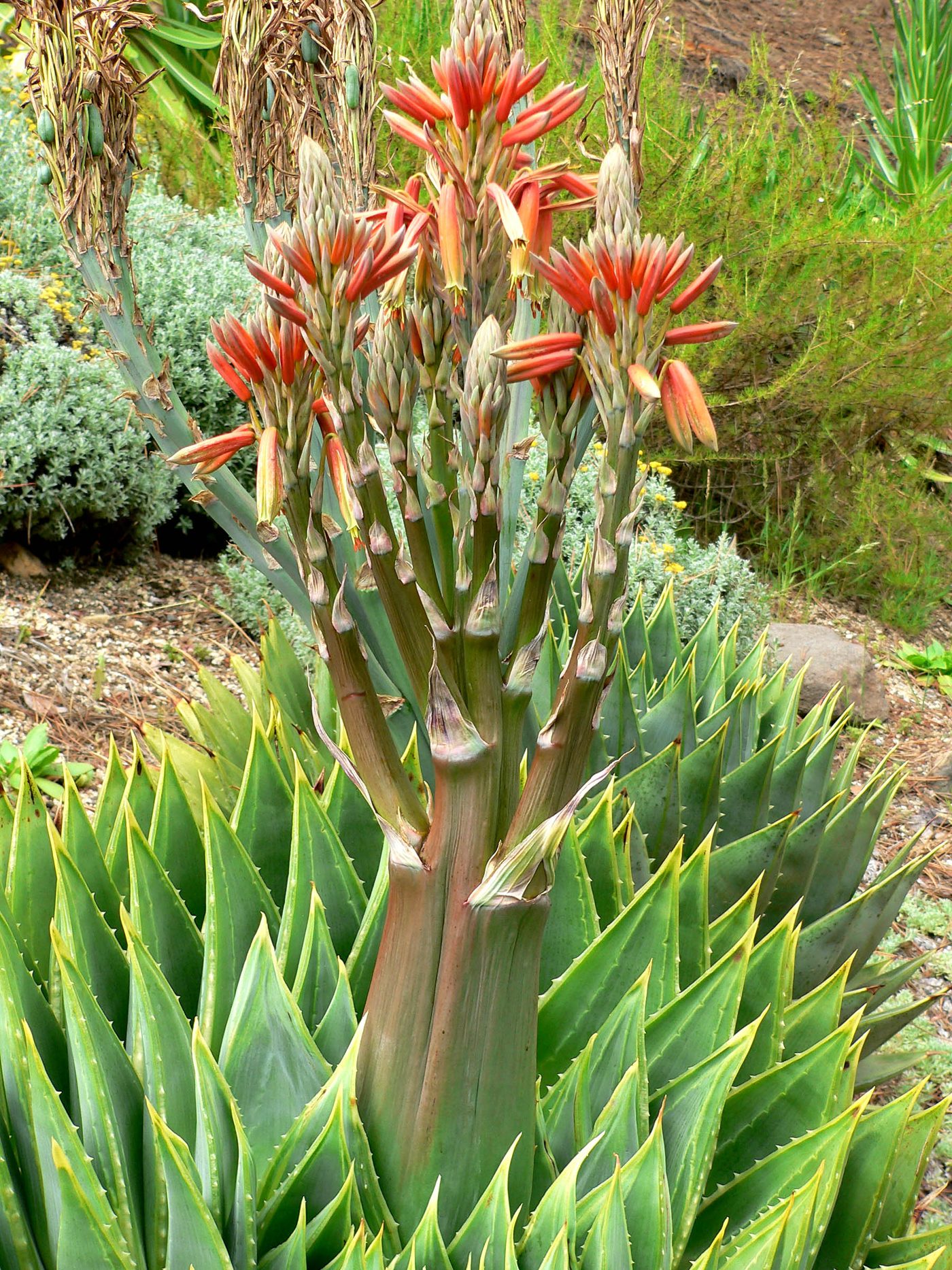
The spiral aloe is an extraordinary succulent, famous for its perfectly geometric rosette whose leaves arrange themselves in elegant spirals.
Characteristics
A living spiral
The spiral aloe is perhaps the most captivating of all aloes, famous for its strikingly symmetrical rosette: the fleshy, grey-green, pointed leaves arrange themselves in rows that coil into a five-armed spiral, clockwise or anticlockwise depending on the individual. The scientific name polyphylla means "many-leaved". A mature rosette can reach 50–60 cm across. It is an evergreen perennial succulent.
Origin and habitat
It is endemic to the Kingdom of Lesotho, in the Drakensberg mountains of southern Africa, where it grows on high, rocky slopes. It is used to a cool, moist mountain climate with frequent mist and winter snowfall: for this reason, unlike many desert aloes, it tolerates cold and needs more moisture.
Cultivation
It is notoriously difficult to grow outside its habitat. It wants full sun or bright light, a very free-draining but slightly acidic mix, and regular watering in the growing season, while avoiding any waterlogging that would rot its heart. It prefers cool, humid climates and dislikes prolonged dry heat. The perfect spiral develops only in mature, well-grown plants.
Conservation
The spiral aloe is a protected and threatened species in the wild, due to the illegal collection of wild specimens, grazing and botanical poaching. Plants on sale must come solely from controlled propagation, never from wild collection.
Care
It should be repotted rarely and handled carefully to avoid damaging the symmetry. Propagation from seed is slow; side offsets are rare. With patience and the right cool conditions, it rewards with one of the most perfect forms in the plant kingdom.
Flowering season
Practical tips
Water needs: Moderate, more demanding than many aloes — always check soil moisture before watering.
Prefers Full sun or bright light, tolerates part shade: provide the right light and rotate the plant for even growth.
Recommended soil: Very free-draining, mineral and slightly acidic. Refresh the substrate every 1-2 years.
Dust the leaves with a damp cloth to support photosynthesis.
Feed during the growing season (spring-summer) and stop in winter.
Pros
- Spiral rosette of rare geometric beauty
- Tolerates cold, unusual for an aloe
- Evergreen and long-lived
Cons
- Difficult to grow outside its habitat
- Protected and threatened in the wild