Photo: Björn S... · CC BY-SA 2.0
Straw foxglove
Digitalis lutea
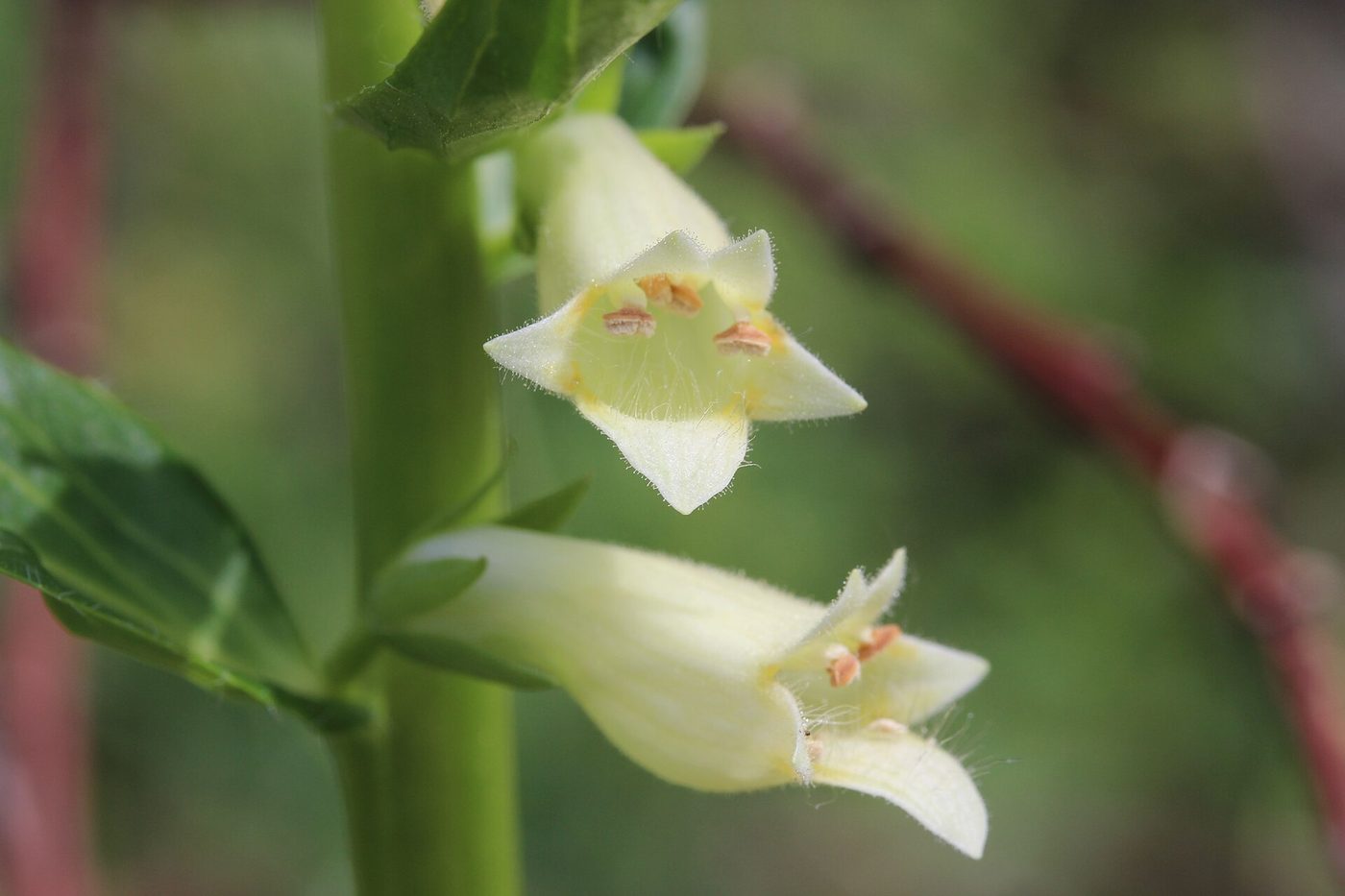
The straw foxglove is a European perennial bearing slender spikes of creamy-yellow tubular flowers, daintier and more discreet than the common foxglove.
Characteristics
Description
The straw foxglove is a herbaceous perennial that forms a basal rosette of smooth, glossy, lance-shaped leaves, from which a slender flower spike rises up to a metre tall in summer. The flowers are tubular, nodding and arranged along one side of the stem, in a soft creamy yellow. Compared with the better-known common foxglove, its flowers are smaller, more numerous and pale in colour, giving the plant an elegant, understated look.
Habitat and distribution
It is native to western and southern Europe and North Africa, where it grows wild in open woodland, along path edges and on rocky slopes, often on limestone soils. It prefers cool, part-shaded positions and is frequently found in hills and mountains.
Cultivation
It is an easy, very hardy perennial, ideal for naturalistic borders and woodland gardens. It wants a cool, well-drained soil and a spot in part shade or gentle sun. It tolerates hard frost well. Sow in spring or late summer; it self-seeds freely, naturalising gracefully without becoming a nuisance.
- Cut back spent stems to encourage a second flush
- Leave some spikes to ripen seed for self-sowing
- Divide clumps every few years to rejuvenate them
Warning: a toxic plant
Like all foxgloves, every part of the plant contains cardiac glycosides, substances highly toxic if eaten that act on the heart. Grow it with care where children and pets are present, and handle it without touching your mouth.
Did you know?
The genus Digitalis is famous in medicine: its active compounds gave rise to heart drugs. The straw foxglove, however, is valued today mainly as an ornamental and as a rich nectar source for bumblebees and bees.
Flowering season
Practical tips
Water needs: Moderate — always check soil moisture before watering.
Prefers Part shade or gentle sun: provide the right light and rotate the plant for even growth.
Recommended soil: Cool, well-drained, tolerates limestone. Refresh the substrate every 1-2 years.
Dust the leaves with a damp cloth to support photosynthesis.
Feed during the growing season (spring-summer) and stop in winter.
Pros
- Hardy and elegant, ideal for borders and woodland gardens
- Long-lasting flowers loved by bees and bumblebees
- Self-seeds without becoming invasive
Cons
- All parts are toxic if eaten
- Short-lived perennial, needs to reseed
- Dislikes dry heat and waterlogging