Photo: James Steakley · CC BY-SA 3.0
Watermelon peperomia
Peperomia argyreia
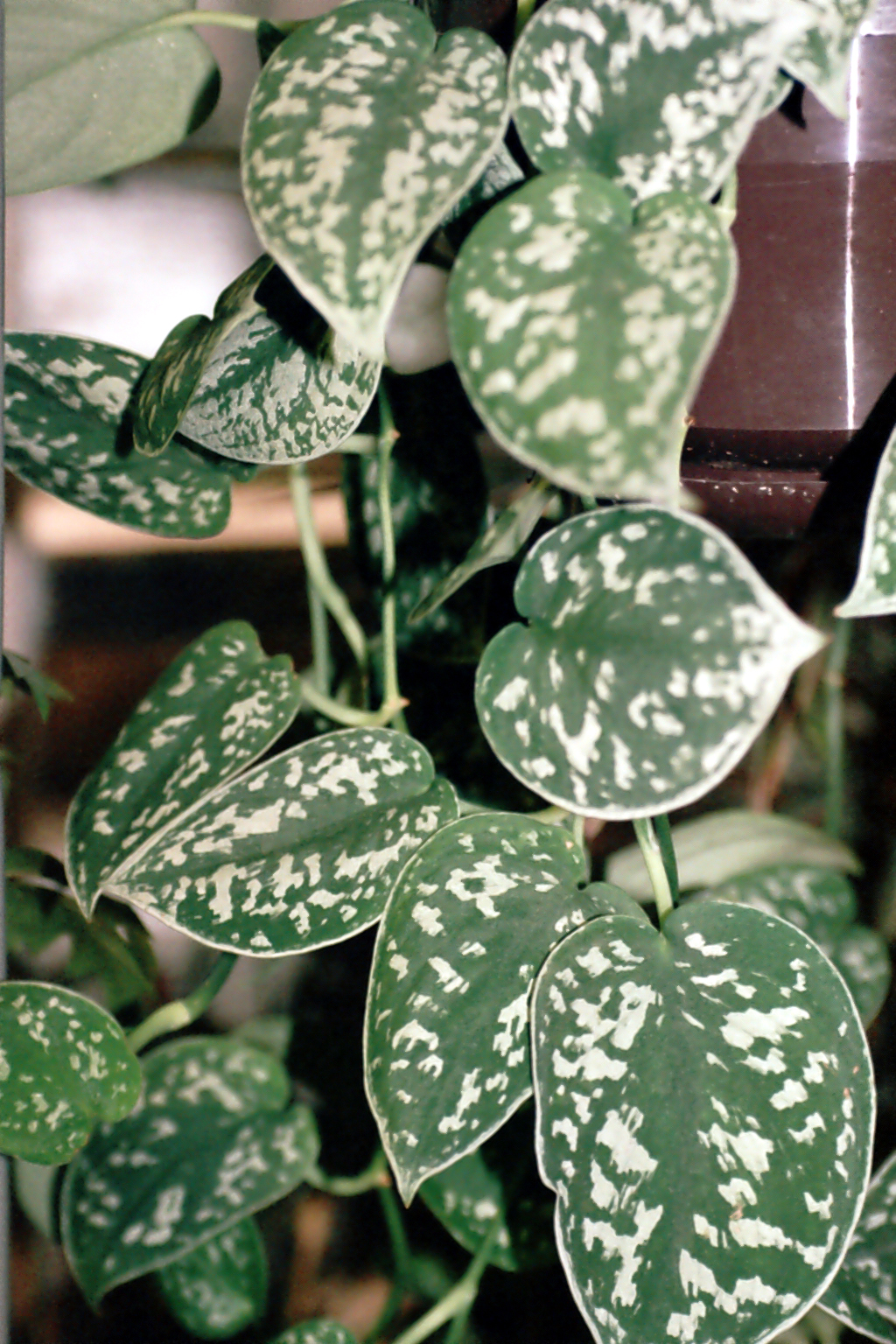
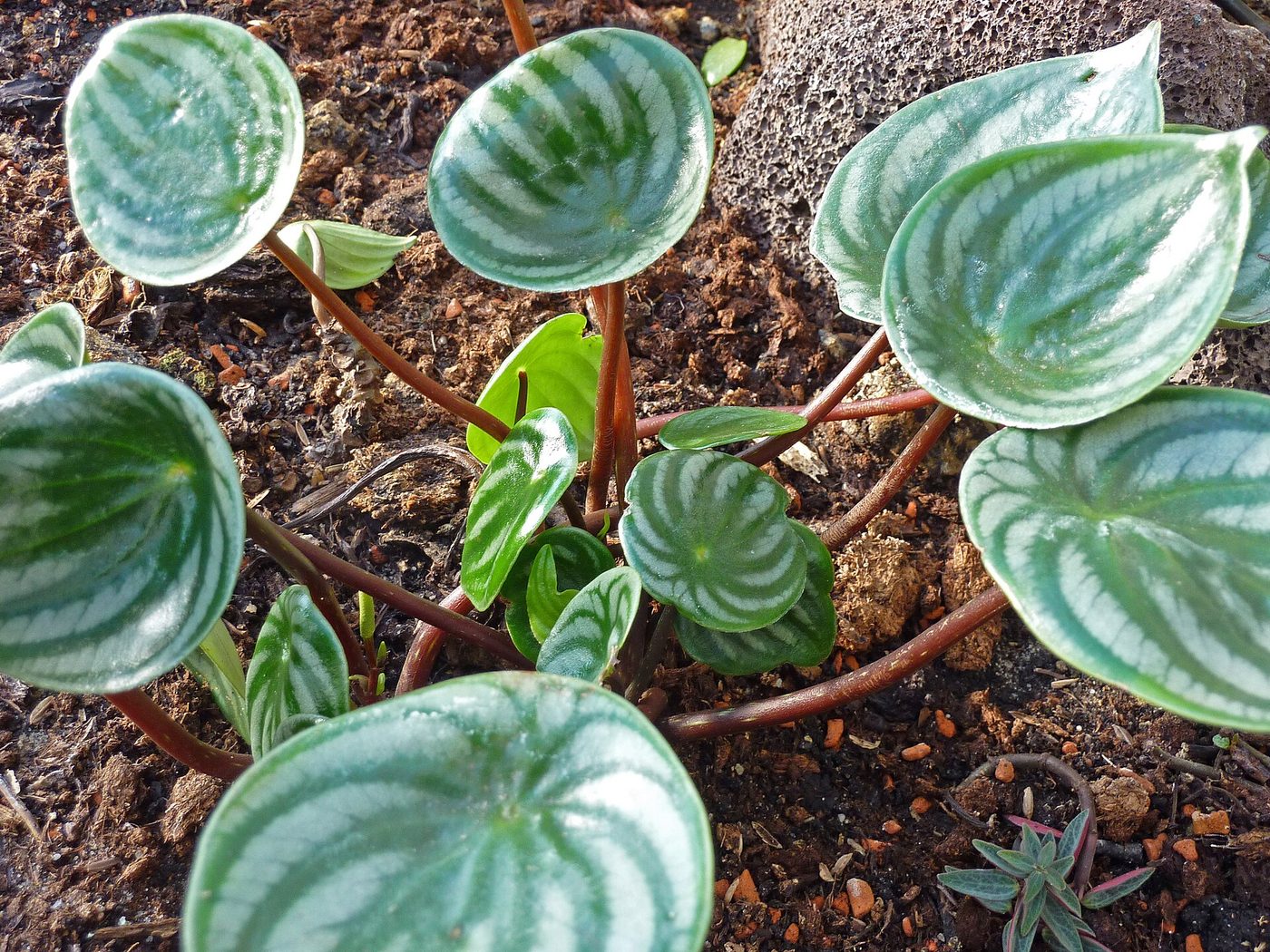
The watermelon peperomia is a small houseplant with round, fleshy leaves marked by silver stripes that recall the rind of a watermelon.
Characteristics
Leaves like a watermelon rind
The watermelon peperomia is a small evergreen perennial of the pepper family, Piperaceae. Its leaves are the real reason for its appeal: round-oval, slightly fleshy and glossy, of a deep green crossed by curved silver bands radiating from the centre, forming a pattern just like the rind of a watermelon. The stems are reddish. Despite its common names, it is related to neither watermelons nor begonias. In summer it produces slender spikes of tiny green flowers.
Origin and habitat
It is native to northern South America, particularly Bolivia, Brazil, Ecuador and Venezuela, where it grows as an understorey plant in rainforests, in shade and high humidity.
Cultivation
It is an easy, compact houseplant. It loves filtered light or bright part shade, never direct sun, which scorches its leaves. Its slightly succulent leaves store water, so it should be watered moderately, letting the top few centimetres of soil dry out between waterings: waterlogging is the most common cause of rot. It dislikes cold below 12 °C.
Care and facts
Thanks to its small size it is perfect for desks, shelves and terrariums. It propagates easily from leaf cuttings, like African violets. It is non-toxic, so it is safe even in homes with children and pets.
Flowering season
Practical tips
Water needs: Moderate, succulent leaves — always check soil moisture before watering.
Prefers Filtered light or part shade, no direct sun: provide the right light and rotate the plant for even growth.
Recommended soil: Light, airy and free-draining. Refresh the substrate every 1-2 years.
Dust the leaves with a damp cloth to support photosynthesis.
Feed during the growing season (spring-summer) and stop in winter.
Pros
- Decorative watermelon-rind leaves
- Compact, perfect for desks and terrariums
- Non-toxic, safe with children and pets
Cons
- Dislikes cold and waterlogging
- Direct sun scorches the leaves