Photo: Marius CONJEAUD · CC BY-SA 3.0
Indri
Indri indri
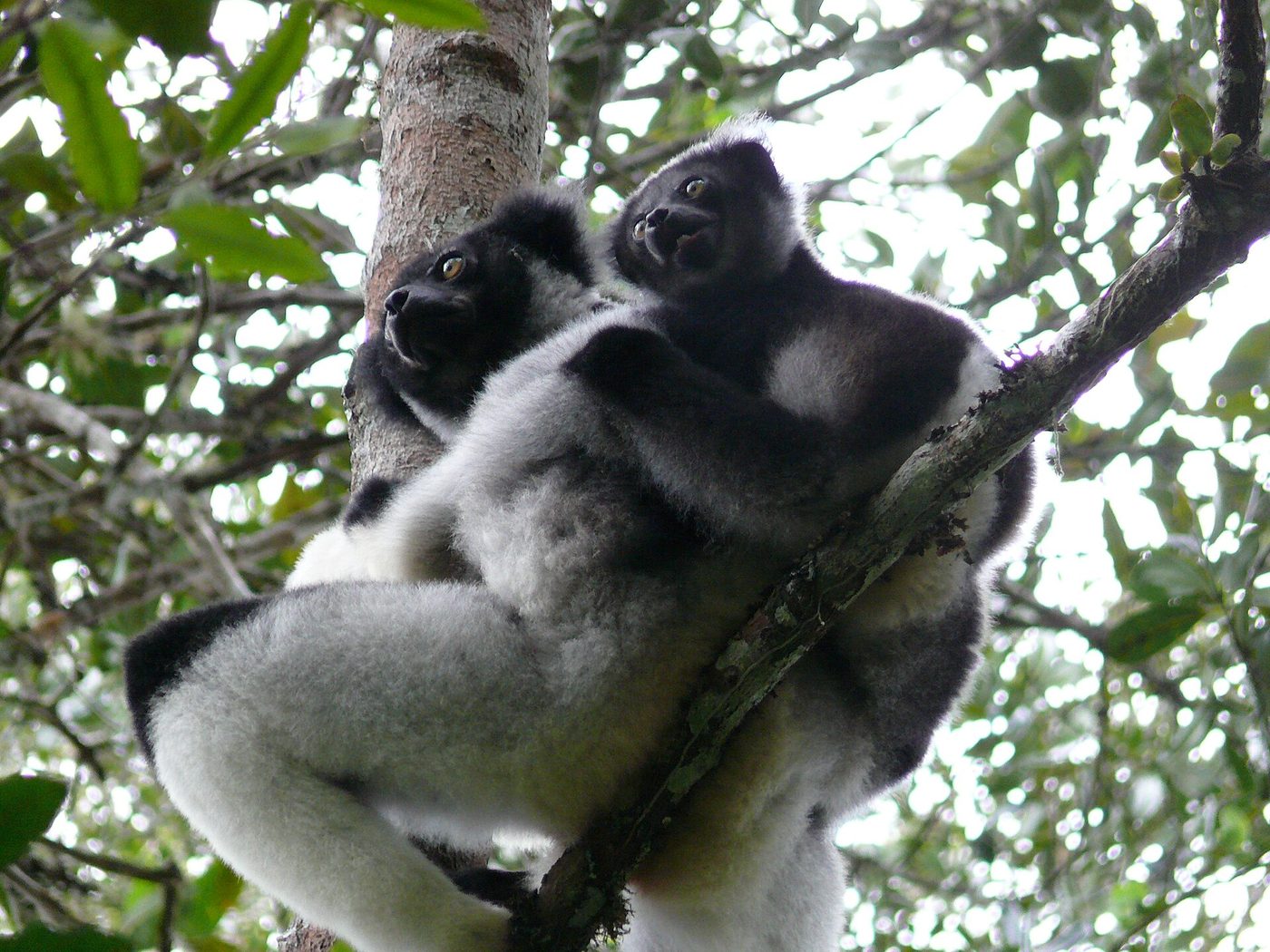
The largest of the living lemurs, with its black-and-white coat and very short tail, the indri fills the forests of Madagascar with powerful, melodious songs.
Characteristics
Temperament
Arboreal, songful, lives in a monogamous pair
Diet
Herbivore: mainly leaves, with seeds, fruit and flowers
The giant of the lemurs
The indri is the largest of the living lemurs, a primate of solemn, elegant appearance. Its coat is dense, with a characteristic black-and-white pattern that varies from one individual to another. Unlike most other lemurs, the indri has a greatly reduced, barely visible tail, which gives it an unusual silhouette. It often maintains an upright posture when clinging to trunks or moving between trees, and its large eyes and rounded ears give it an attentive, curious expression.
Habitat and distribution
It is endemic to Madagascar, where it lives exclusively in the rainforests of the north-east of the island. It is a strictly arboreal animal, spending its life among the canopy, moving with powerful leaps from one tree to another. It lives in small family groups, made up of a monogamous pair and their young.
The song of the indri
The most extraordinary feature of the indri is its voice. Family groups communicate through powerful, melodious songs that resound for kilometres through the forest. These calls, which can last several minutes, serve to mark the territory and to keep contact between groups. Remarkably, the indri seems to possess a genuine sense of rhythm, a very rare characteristic in the animal world.
Feeding and conservation
It is herbivorous and feeds above all on leaves, supplementing its diet with seeds, fruit and flowers. The indri is classified as a critically endangered species: the destruction of the rainforest, caused by logging and agriculture, seriously threatens its survival. It is also notoriously difficult to keep in captivity, which makes the protection of its natural habitat the only real hope for its future.
Pros
- The largest living lemur
- Unique powerful, melodious songs
- Seems to possess a sense of rhythm
- Elegant and fascinating in appearance
Cons
- Critically endangered species
- Depends on the rainforest
- Does not survive in captivity