Photo: J. Patrick Fischer · CC BY-SA 3.0
Bactrian camel
Camelus bactrianus
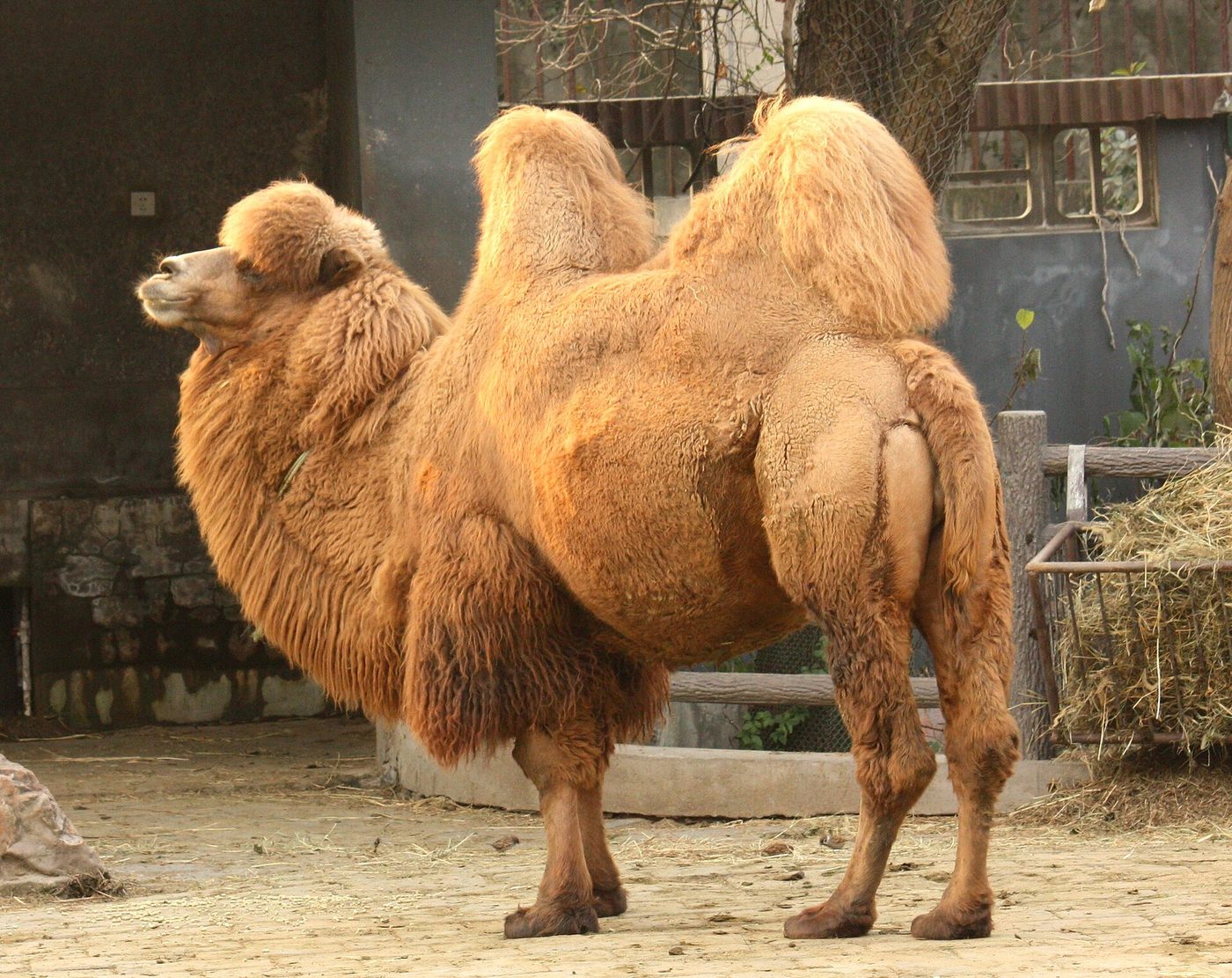
With its two humps and thick coat, the Bactrian camel is the 'ship of the desert' of Central Asia, able to withstand frost and drought alike.
Characteristics
Temperament
Docile, patient and hardy
Diet
Herbivore: grasses, shrubs and arid plants
The two-humped camel
The Bactrian camel is easily recognised by its two humps, which distinguish it from the dromedary, which has only one. It is a large, sturdy and imposing mammal, covered with a thick woolly coat that becomes particularly long in winter. The humps do not contain water, as is often believed, but reserves of fat: a precious store of energy that the animal can use in periods of food scarcity. When the reserves run out, the humps sag and flop to one side.
Habitat and distribution
It lives in the arid regions and steppes of Central Asia, in territories marked by extreme climates, with scorching summers and freezing winters. The domestic Bactrian camel has been kept for millennia by the peoples of these regions as a pack and draught animal and a source of milk, wool and meat. It is perfectly adapted to a very harsh environment, where water and food are scarce and temperatures swing enormously.
Extraordinary adaptations
The Bactrian camel is a masterpiece of adaptation. It can endure thirst for a long time and, when it finds water, is able to drink enormous quantities at once. Its thick coat protects it from both intense cold and scorching sun. Nostrils that can close, double rows of long eyelashes and bushy eyebrows defend it from sandstorms, while its broad hooves allow it to walk on both sand and snow.
A millennia-old companion of humans
For centuries the Bactrian camel was a protagonist of the great caravan routes, such as the famous Silk Road, carrying goods and people across deserts and mountains. Its endurance and its ability to carry heavy loads over long distances made it irreplaceable for trade and travel in inner Asia.
Curiosities and conservation
There is also a wild form of two-humped camel, today extremely rare and threatened, which lives free in a few remote areas. The domestic Bactrian camel, by contrast, is widespread and kept by millions of people. Its history remains deeply intertwined with that of the civilisations of Central Asia.
Pros
- Extraordinary resistance to heat, cold and thirst
- Irreplaceable pack animal in extreme environments
- Provides milk, wool and labour
- Docile and suited to living with humans
Cons
- Needs wide open spaces
- Sheds a lot of hair at the seasonal change
- Not suited to very humid climates