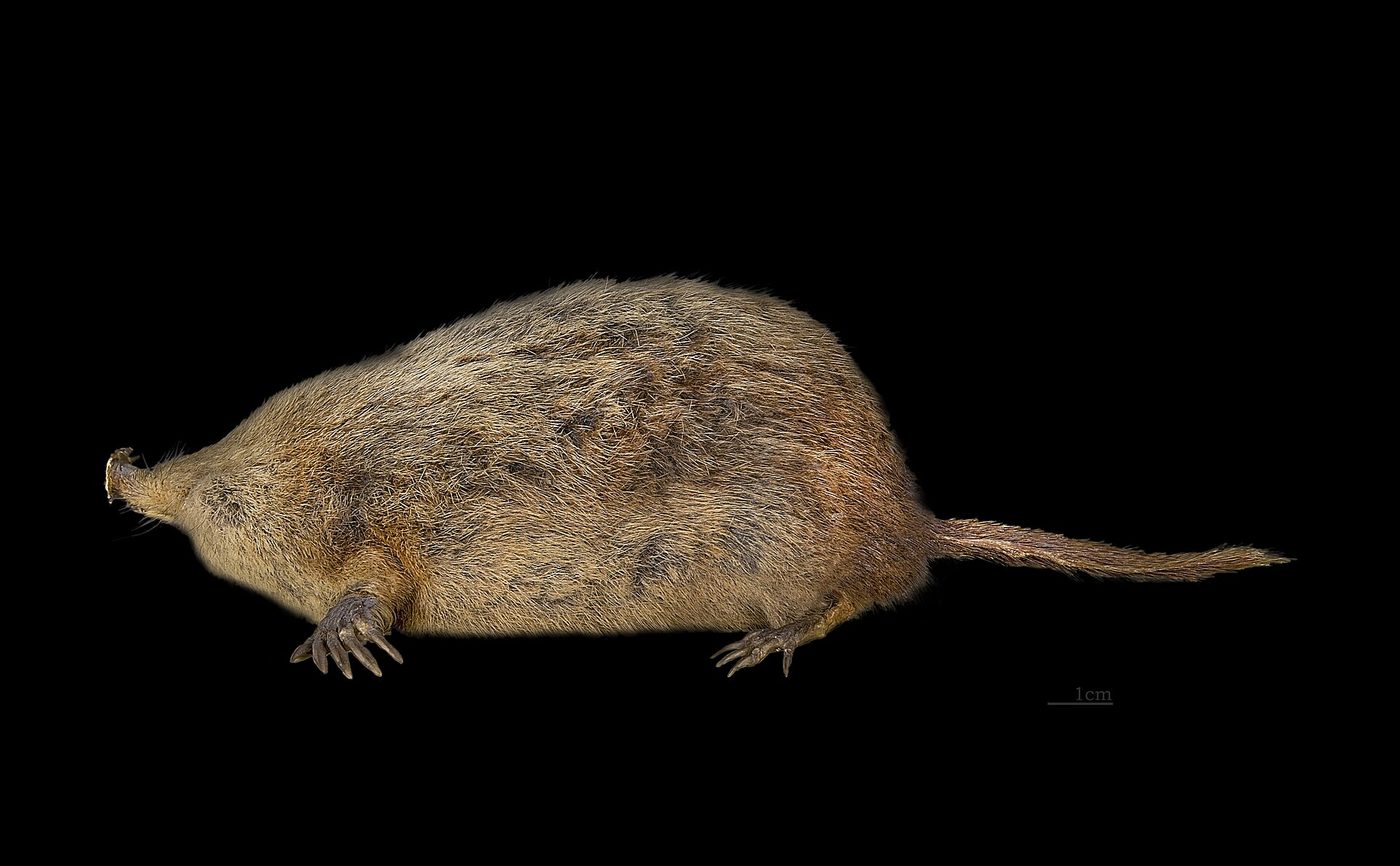
Photo: Didier Descouens · CC BY-SA 3.0
Star-nosed mole
Condylura cristata
With a snout shaped like a star of twenty-two tentacles, this small North American mole has one of the most extraordinary sensory organs in the animal kingdom.
Characteristics
Temperament
Underground, active and shy, a skilled digger and swimmer. It 'sees' the world through touch thanks to its star-shaped snout; it is one of the fastest predators known.
Diet
Insectivore: earthworms, insects, small aquatic invertebrates and other prey, found in the ground and water.
The mole with a star on its snout
The star-nosed mole is a small insectivorous mammal of North America, unmistakable for its most bizarre feature: the tip of its snout is adorned with a crown of twenty-two fleshy, mobile appendages, arranged like the rays of a star. Otherwise it has the typical look of moles: a cylindrical body, tiny eyes, dark velvety fur and powerful forelegs suited to digging. It lives in damp environments, such as swamps, marshy meadows and banks, where it digs tunnels and swims skilfully.
The most sensitive touch organ
The 'star' on the snout serves not to smell or to grasp, but to touch. It is one of the most sophisticated sensory organs known: its twenty-two appendages are covered with tens of thousands of tiny touch receptors, which let it explore the ground with extraordinary precision and speed. Living underground and in murky water, where sight is useless, the mole 'sees' the world through touch.
The fastest predator
This exceptional sensory ability makes the star-nosed mole one of the fastest predators known. It can detect, identify and swallow prey in a fraction of a second, a time so short that it approaches the limits of the speed of the nervous system. It feeds on earthworms, insects, small aquatic invertebrates and other prey that it finds in the ground and water.
A surprising swimmer
Unlike many other moles, this species is also a skilled swimmer and underwater hunter. It has been observed 'smelling' underwater by rapidly blowing out and re-inhaling air bubbles, a way unique among mammals of perceiving odours even in the aquatic environment.
Conservation
The star-nosed mole is classified as least concern and its populations are stable. It is not a threatened species, but it depends on the presence of intact wetlands. The conservation of swamps and aquatic environments is therefore important to ensure its survival, as for many other species tied to these habitats.