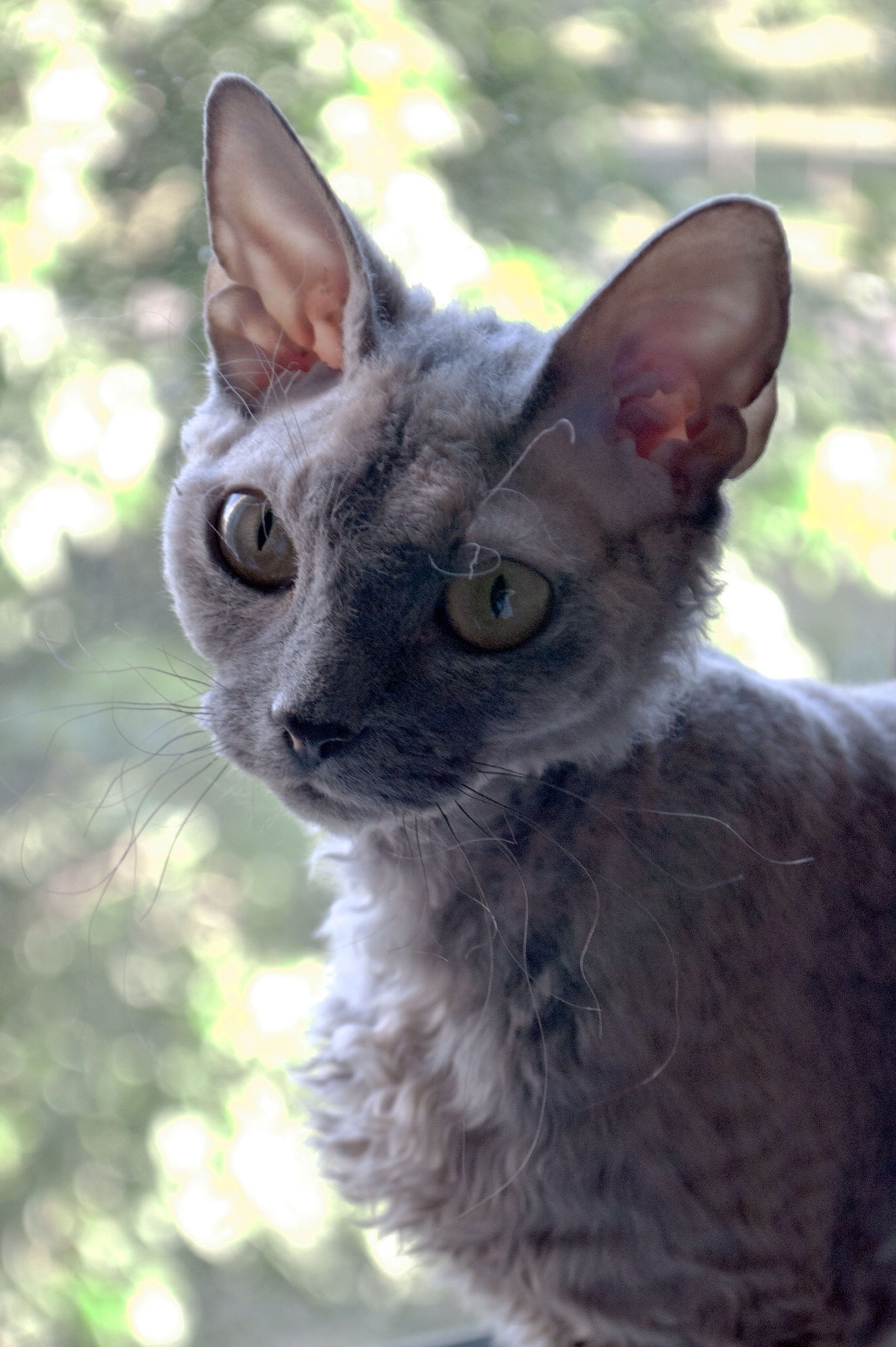
Devon Rex
Felis catus
Characteristics
Temperament
Exceptionally lively, social, intelligent ("monkey-cat"). Hyperactive: climbs everywhere, manipulates objects, plays for hours. Strongly attached to owner, sleeps under covers. Hydrophilic. NOT suitable for loneliness. Mutant curly hair, hypoallergenic.
Diet
Obligate carnivore, exceptionally active metabolism. 250-300 kcal/day in 2-3 meals (free feeding recommended). High-quality kibble (35-40% protein) or wet/BARF. DNA tests for Feline Spasticity and HCM mandatory. Abundant hydration.
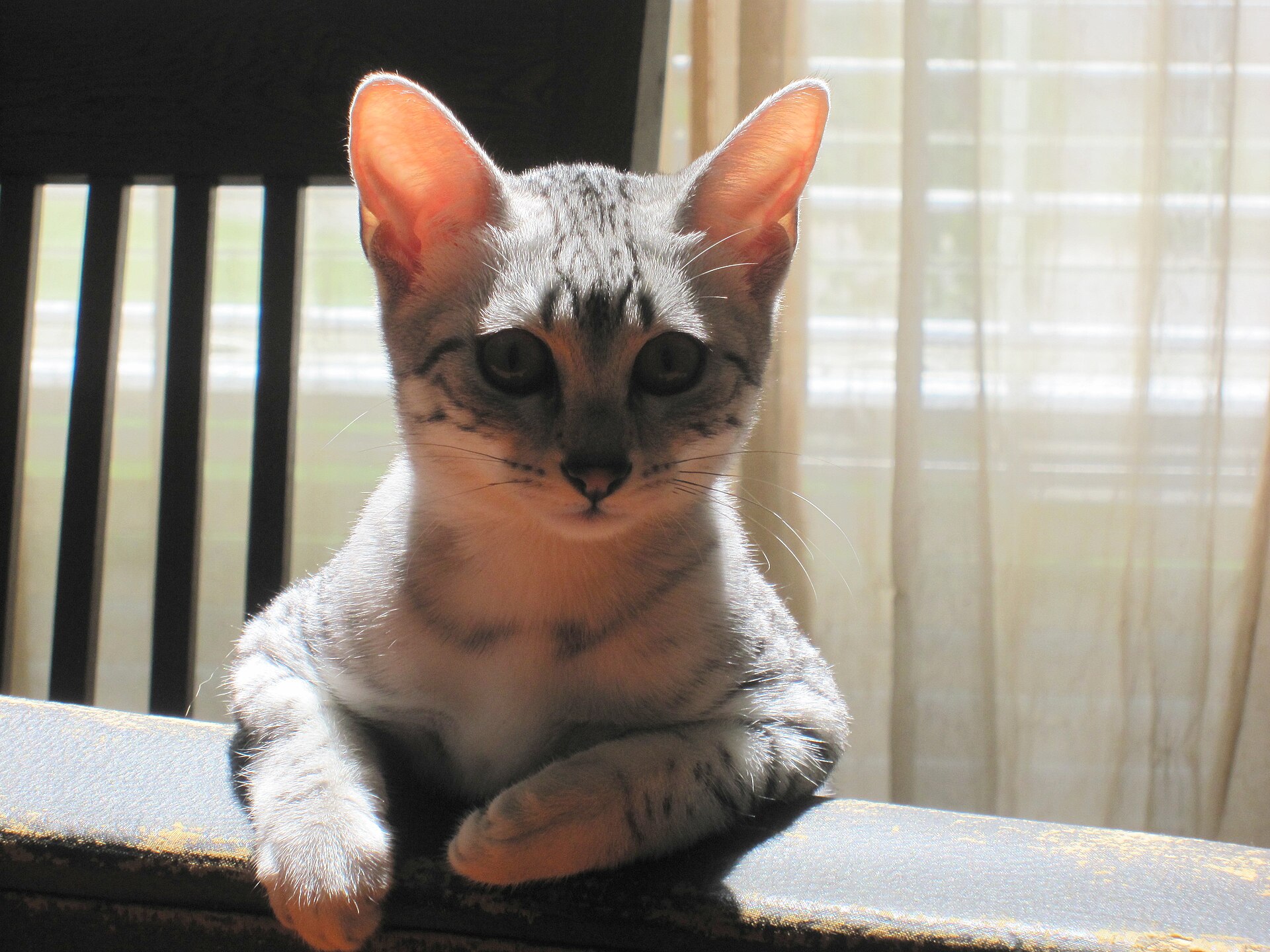
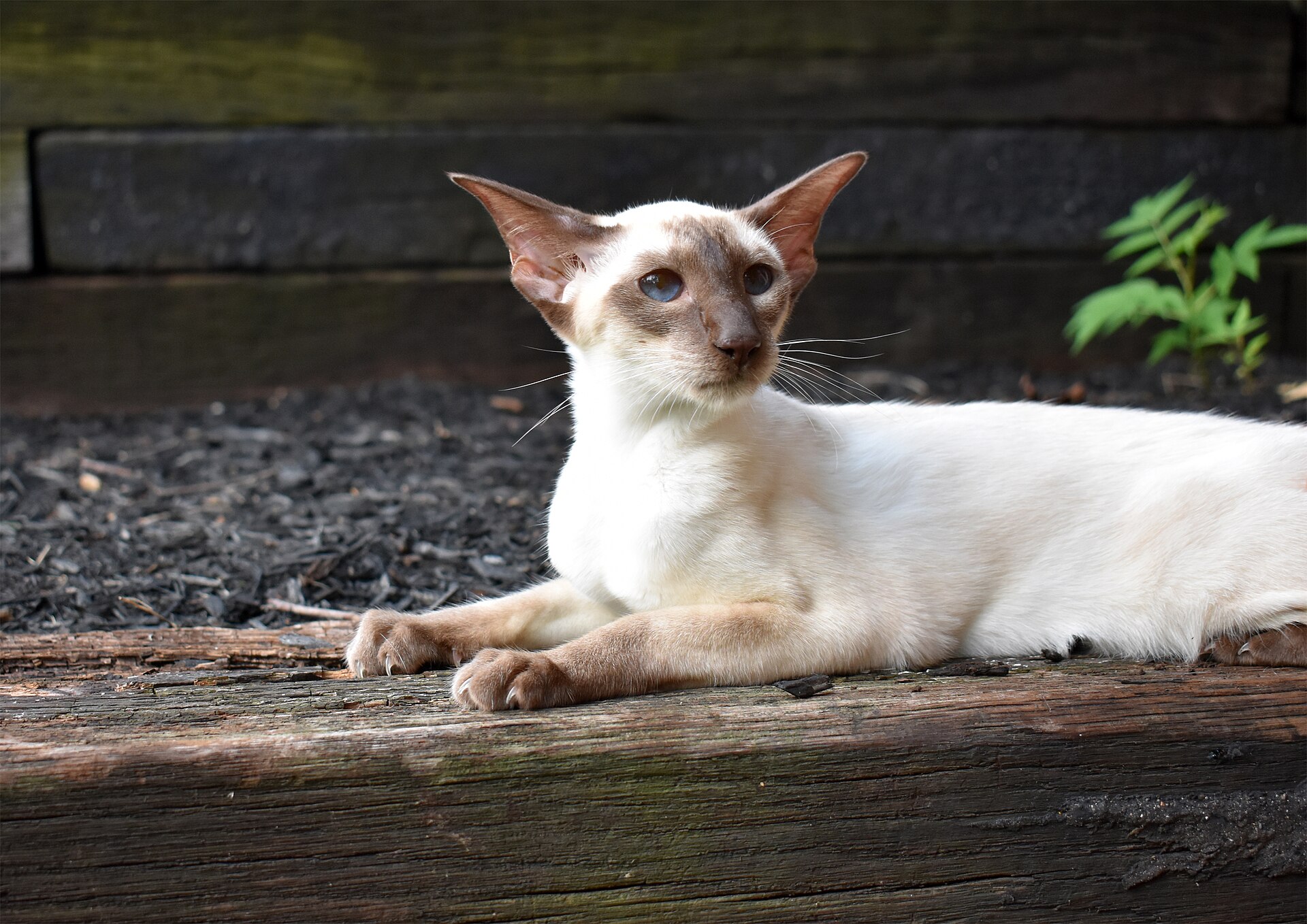
The Devon Rex (Felis catus) is one of the most extravagant and fascinating cat breeds in the world. Born in England (Devon) in 1959 from a rare spontaneous mutation of the hair gene, it is characterised by a unique coat: short, curly, wavy hair reminiscent of karakul lamb. Combined with enormous bat-like ears, large oval eyes, heart-shaped face with pronounced cheekbones, the Devon Rex has an unmistakable appearance, often compared to an "elf" or "alien". Nicknamed the "monkey-cat" for its incredibly active, playful, social and affectionate personality (more similar to a monkey than a cat), it is considered one of the most "companion" cats in the world. It is also among the most hypoallergenic breeds: the short atypical hair produces less Fel d 1 protein than average.
Classification and category
The Devon Rex belongs to the species Felis catus, the domestic subspecies derived from the African wildcat (Felis silvestris lybica). It is classified by FIFe in Category III — Shorthair (code DRX), by CFA as a distinct breed, by British GCCF as Group 6. The standard provides for a small-medium size: weight 2.5-3.5 kg for females, 3.5-4.5 kg for males, withers height 25-30 cm. The structure is slim, elegant, muscular despite the small size. Full physical maturity is reached at 1.5-2 years. The breed has been officially recognised by the British GCCF since 1967, by FIFe in 1968, by the American CFA in 1979. The curly hair is due to a recessive mutation of the gene "Re" (genetically distinct from the "r" mutation that gives curly hair to the Cornish Rex, different from the Devon Rex). The cross with Cornish Rex produces kittens with straight hair (the two mutations "cancel" each other out genetically). All colours and patterns are admitted by the standard: solid (black, white, red, blue, cream, chocolate, cinnamon, lilac), bicolour (with white), tabby (mackerel, classic, ticked), tortie, colorpoint, smoke, silver.
Habitat and distribution
The Devon Rex is a completely domestic breed, perfectly adapted to apartment life provided it is dynamic and socialised. Its extremely social, lively and company-needing nature makes it ideal for active families with time to dedicate to the cat. It is NOT a breed for introverted or sedentary people: it needs constant interaction. It is thermally delicate: short hair almost totally absent on the belly makes it vulnerable to intense cold (requires heated environment at 20+ °C) and intense sun (risk of burns on bare areas).
The history of the breed is recent and well documented. In 1959 in Buckfastleigh (Devon, England), a lady named Beryl Cox noticed a curly-haired stray hidden on her property. The stray cat gave birth to a single litter, from which only one male "Kirlee" with characteristic curly hair survived. Cox tried to crossbreed Kirlee with the mother of the Cornish Rex (similar curly-haired breed discovered in 1950 100 km away), mistakenly believing they were of the same mutation. The resulting offspring all had STRAIGHT hair (revealing that they were two different recessive mutations not interacting). From Kirlee the new Devon Rex breed was developed, separate from the Cornish Rex. The breed was recognised by the GCCF in 1967. Today it is widespread globally, with concentrations in Great Britain (country of origin), USA, continental Europe (Italy, Germany, France), Russia, Australia. It is a relatively rare breed: in Italy about 200-300 kittens/year are registered with FIFe pedigree. The average price of a kitten is 1,200-2,500 euros; show line specimens 3,000-5,000 euros.
Diet
The Devon Rex is an obligate carnivore with exceptionally active metabolism: the daily caloric requirement of a 3.5 kg adult is about 250-300 kcal (higher in proportion to weight than other cats due to its hyperactivity), distributed in 2-3 small meals. Free feeding with food always available is often recommended (the breed rarely becomes obese due to intense activity). The ideal diet consists of high-quality kibble rich in animal protein (minimum 35-40%), or wet feeding or BARF under veterinary supervision.
The breed is particularly predisposed to hereditary pathologies: Hereditary Myopathy (Spasticity) — progressive degenerative muscle pathology, DNA test available since 2007, MANDATORY in breeders; hypertrophic cardiomyopathy (HCM) — annual cardio screening from 3 years; skin dermatitis (for atypical hair, skin is more exposed), congenital patellar luxation. A complete genetic panel is recommended in breeders. The coat care is easy: self-cleaning short hair, does not require frequent brushing. However, the skin can accumulate grease (especially in bare areas): light monthly baths with shampoo specific for sensitive skin. Water always available. The Devon Rex is particularly hydrophilic: loves to play with running water. Portions must be controlled after sterilisation (20-25% metabolism drop).
Physical features
The Devon Rex has a slim, elegant, muscular, small-medium size body. The head is the most distinctive characteristic: in the form of a heart or rounded equilateral triangle, with pronounced cheekbones (for pronounced bone structure), short broad muzzle, strong chin. The ears are enormous in proportion to the body: very wide at the base, rounded at the tip, attached low, well-spaced (forming the characteristic "bat-like appearance" or "elf"). The eyes are large, oval, well-spaced, with "alien-elfic" expression, of variable colour (green, gold, amber, blue in colorpoints).
The coat is the world's unique signature: short hair (1-1.5 cm), curly, wavy, silky. The hair structure is exceptional: the hair cuticle is anomalous, with smaller scales and rounded cuticles (unlike the hair of all other cats). The result is hair that curls naturally, similar to the wool of a karakul lamb. The whiskers are also curly (unique characteristic of the breed with the Cornish Rex). In some body areas (belly, throat, inner parts of legs) the hair is particularly thin, almost absent — exposure of bare skin. All colours and patterns are admitted. The body is slim but muscular, with long slender legs (hind legs longer than front, creating an "inclined" posture). The tail is long, thin, covered with curly hair. The chest is well developed (the Devon Rex has a very deep chest for its size). Devon Rex kittens can show temporary "bald spots" (bare areas) during growth, which are covered by curly hair within 6-12 months. A notable characteristic: the Devon Rex has the ability to "rotate" eyes and ears spectacularly, contributing to the unique expressiveness.
Behaviour and curiosities
The Devon Rex has an exceptionally lively, social, affectionate, intelligent temperament. It is often defined "the monkey-cat" for its incredible activity: it climbs everywhere (on the owner's shoulders, curtains, on top of cupboards), manipulates objects with dexterous paws, plays actively for hours, is hyperactive. It is strongly attached to the owner: loves to be picked up, follows everywhere, sleeps under the covers (preferably on the owner's neck for warmth), "hangs" on the owner's shoulders to position itself higher up.
Intelligence is exceptionally high (top 10 most intelligent breeds): learns names (cat's and family members'), simple commands, plays fetch, can be trained on a leash, understands dozens of human words. It is relatively vocal: melodic meowing, frequent "chirps" and "trills", purrs very loudly. It is hydrophilic: many specimens love to play with running water (taps, fountains, sinks). It gets along with everyone if well socialised: children (of appropriate age, too young risk injuries given the hyperactivity), elderly, other cats, calm dogs, even rabbits and birds. It is NOT suitable to be left alone for many hours: it needs constant company (human or of other animals). Recommended in pairs (two Devon Rex together multiply activity). Longevity is excellent: 12-15 years on average, with well-cared specimens reaching 18-20 years.
The Devon Rex is considered among the most hypoallergenic in the world: the short atypical hair produces lower amounts of Fel d 1 protein (main feline allergen) than average. However, NO cat is 100% hypoallergenic. 2019 studies (University of Indiana) have confirmed that Devon Rex produce 30% less Fel d 1 than the feline average. Practical tests before adoption are recommended for those who suffer from allergies. Cultural curiosity: the Devon Rex is a very popular breed on social media in recent years for its "alien" photogenic appearance. Several Devon Rex are Instagram celebrities with hundreds of thousands of followers (e.g. "Loki the Devon Rex", "Sphynx and Devon Cats" accounts). In cinema, the Devon Rex appears in the film "Dune" (2021, Denis Villeneuve) as the cat of the character Leto Atreides — deliberate choice for the breed's "extraterrestrial" appearance. The breed is also the subject of scientific studies for the hair mutation: the Re gene (and r of the Cornish Rex) is studied to understand mammalian hair development.
Pros
- Aspetto unico al mondo (pelo riccio, orecchie a pipistrello)
- Carattere estremamente affettuoso e sociale
- Ipoallergenico (30% meno Fel d 1)
- Intelligenza top, addestrabile a guinzaglio
Cons
- Predisposto a Spasticità Felina e HCM (test DNA obbligatori)
- Sensibile al freddo (necessita ambiente >20 °C)
- NON tollera solitudine prolungata
- Richiede cure dermatologiche (bagni mensili)