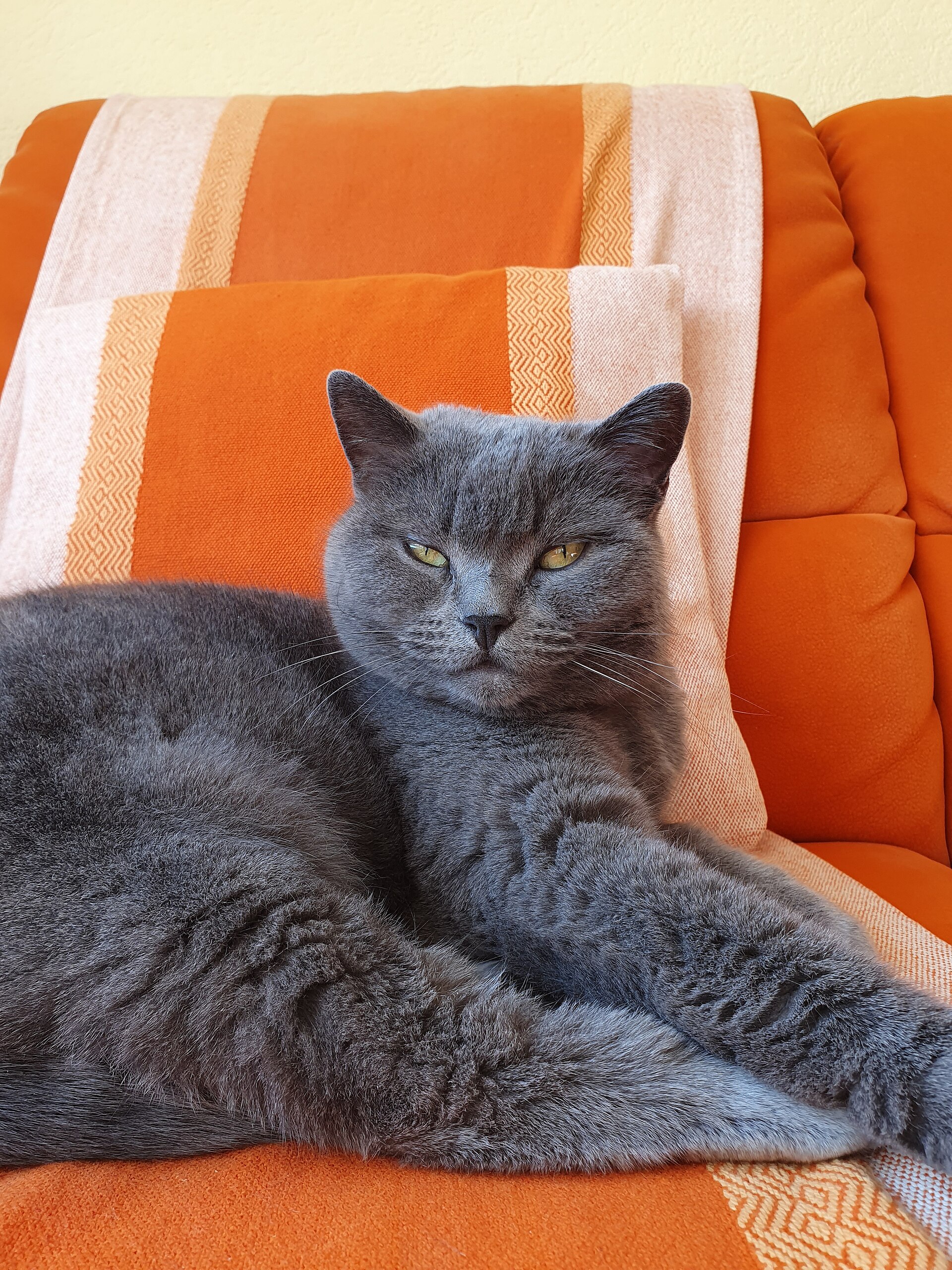
Chartreux
Felis catus
Characteristics
Temperament
A calm, sweet, deeply loyal cat, often described as a "dog-cat" for its attachment to its human, whom it loves to follow around the house without being intrusive. Famously silent: many individuals meow very little, giving small trills instead. Balanced, patient and adaptable, it is an excellent family and flat cat, generally in harmony with children and other animals. It retains a good hunter's instinct, satisfied by play. Intelligent and cooperative, it can learn small games such as fetch.
Diet
A strict carnivore, like every cat: it needs good-quality complete foods (wet and/or dry), rich in animal protein and suited to age and lifestyle, with fresh water always available. Being robust, food-loving and inclined to a quiet life, the Chartreux easily tends to become overweight, especially after neutering: portions should be measured and a little daily physical activity encouraged through play, which also satisfies its hunter's instinct.
The Chartreux (Italian "Certosino") is one of the most fascinating and ancient cat breeds in Europe, universally known as "the blue cat of France". Famous for:
- The blue-grey coat: even, dense, woolly and slightly water-repellent, in every shade from ash-blue to slate
- Copper-coloured eyes: from gold-yellow to deep orange, a beautiful contrast with the blue fur
- The "smile": the structure of the muzzle, tapered and with full cheeks, gives it a characteristic smiling expression
- The "potato on toothpicks" build: a robust, muscular body supported by relatively slender legs
- Its silence: a famously quiet cat; many individuals meow very little or not at all
- Its sweet, loyal character: calm, affectionate and attached to its human, almost "dog-like"
The Chartreux is a domestic breed and enters this portal to enrich and balance the cats category — which is rich in wild felines — with one of the most elegant and legendary of house cats. Often confused with other "blue" breeds, it actually has a very distinct identity and a thoroughly French tradition.
Classification and category
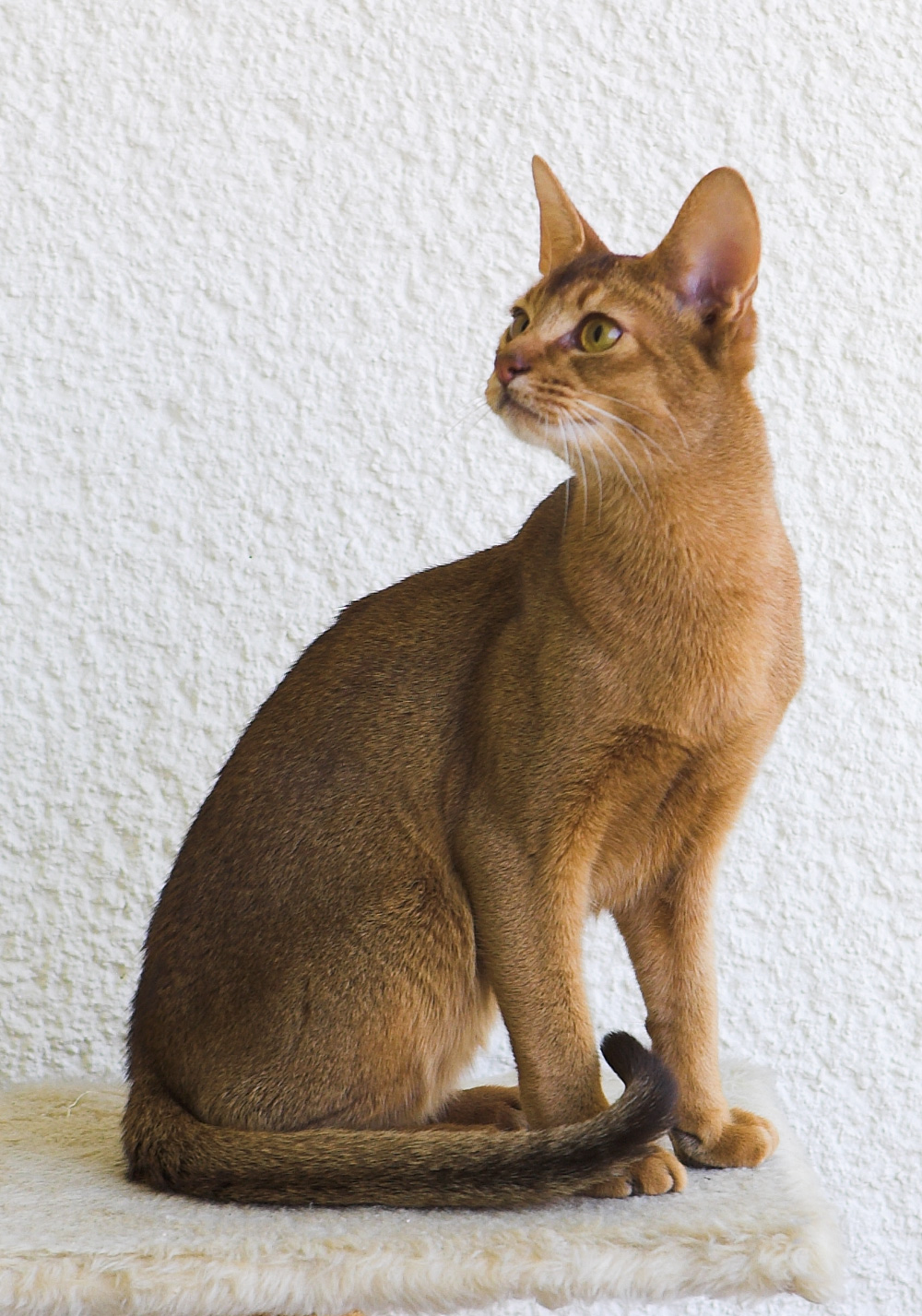
The Chartreux is a pedigree domestic cat (Felis catus), and in the portal it is classified among the pedigree cats, alongside breeds such as the Russian Blue, British Shorthair and Abyssinian. It should not be confused with the wild felines, to which the many wild species on the site belong. An important point is precisely telling it apart from the other "blue" breeds it is often mistaken for: the Russian Blue is more slender and elegant, has green eyes and a double but finer, "sparkling" coat; the blue British Shorthair is rounder and "chubbier", with a round face and a more compact coat; the Chartreux has a robust yet agile build, copper-orange eyes and the typical "smile", with a woolly coat that tends to "break" over the body. Etymology: the name recalls, by tradition, the Carthusian Order (French Chartreux), the monks who legend says bred these cats; another hypothesis links it to a fine Spanish wool, the "pile des Chartreux". It is a natural breed, that is, one that developed over time before being standardized, not created by crossing other breeds. Parameters: Weight males 4-7 kg, females 3-5 kg (males are markedly larger). Size medium-large, with a heavy, muscular look. Coat short, dense, woolly, exclusively blue (grey) in all shades. Longevity good, generally 12-15 years and often more with proper care. It is a breed that reaches full physical maturity slowly, even at 3-4 years of age.
Habitat and distribution
As a domestic breed, the Chartreux has no wild range: its "habitat" is the home and human companionship. It does, however, have a precise cultural homeland: France, where it has been documented for centuries and is regarded as a true national cat; today it is bred and loved throughout Europe and North America, though it remains a relatively uncommon breed. Ideal living environment: domestic life (it adapts very well to the home, even a flat, provided it has company and some stimulation); quiet families and people (it is a placid cat that loves its humans' presence without being intrusive); and harmonious cohabitation (it generally gets on with children and other animals, thanks to its balanced temperament). A historical note: the Chartreux risked extinction after the two World Wars; breeders saved it by rebuilding the breed from the last individuals, sometimes with controlled crosses, before returning to a rigorous standard. It is an example of how even domestic breeds can have a fragile history and how the passion of enthusiasts can preserve them.
Diet
Like all cats, the Chartreux is a strict carnivore and needs a diet rich in good-quality animal protein. As a domestic cat: complete cat foods (wet and/or dry) of good quality, suited to age and lifestyle; animal protein as the basis of the diet (it is an obligate carnivore); and always fresh, clean water available. Particular care: weight control (the Chartreux is robust and food-loving and tends to gain weight, especially if neutered and inactive; portions should be measured); care of the muscular build (a balanced diet supports its powerful structure without excess fat); and a hunter's heritage (formerly prized as a skilful mouser, it retains a predatory instinct that play can satisfy). Crucially, the main dietary pitfall for the Chartreux is its tendency to become overweight. A measured diet and a little daily physical activity (play) are essential to keep it healthy and in shape.
Physical features
A robust, powerful yet elegant cat, unmistakable for its colour and expression. Coat and colour: short, dense, woolly, double fur, with an abundant undercoat that makes it slightly water-repellent and tends to "break" like sheep's wool; colour exclusively blue (grey), in all shades from ash-blue to slate, even all over the body. The body: a robust, muscular build, jokingly called "a potato on toothpicks" for the contrast between the solid body and relatively slender legs; broad shoulders and a deep chest. The head and eyes: a broad, rounded head with full cheeks (more developed in males); a tapered muzzle that, together with the cheeks, gives the famous "smiling" expression; large, round, copper-coloured eyes, from gold-yellow to orange. Distinctive features: a rare voice (it vocalizes very little, sometimes giving small "trills" rather than meows); slow maturation (it reaches full development only at 3-4 years); and surprising agility despite its bulk.
Behaviour and curiosities
The Chartreux has a calm, sweet, loyal temperament. It is affectionate and attached to the family, but discreetly so: it loves the company of its humans and following them around the house, yet without being intrusive or clingy. Balanced and patient, it is considered an excellent family cat, also suited to flat living.
The silent cat: one of the Chartreux's best-known traits is how little it vocalizes — many individuals meow very little, and some are practically mute; when they "talk", they often give small trills or chirps rather than true meows; this silence, combined with its calm character, makes it a particularly discreet housemate. The "dog-cat": the Chartreux is often described as a cat with almost canine behaviour — it tends to bond deeply with one person, follows them around the house, may greet them on their return and, according to many owners, can even be taught to fetch small objects; this loyalty and desire for company make it a particularly engaging companion. The monks' legend: the breed's name is traditionally linked to the Carthusian Order, the monks of the Grande Chartreuse (the same as the famous Chartreuse liqueur); legend has it that the monks bred these silent, skilful hunters to rid their monasteries of mice, choosing precisely their quiet temperament so as not to disturb the silence of the cloister; historians debate the truth of this origin, but the suggestion has stayed in the name. The cat of kings and poets: the Chartreux is a historical presence in French culture — the naturalist Buffon described it in the 18th century as the cat of France, and the writer Colette had a famous Chartreux named Saha, the protagonist of her novel "La Chatte"; General de Gaulle, too, is said to have had a Chartreux; in short, it is a cat deeply woven into French feline identity. The return from the brink: like many European breeds, the Chartreux suffered terribly in the two World Wars, to the point of nearly disappearing; after the war, breeders patiently rebuilt it from the few remaining individuals and, in some cases, with targeted crosses with other blue breeds, before going back to rigorously selecting the true Chartreux type; today the breed is safe, though it remains relatively uncommon compared with other cats. The waterproof wool: the Chartreux's coat is no ordinary fur — it is a double, dense, woolly coat, with an undercoat so abundant that it is slightly resistant to water and damp; when you stroke the cat, the fur tends to "break" and form ripples, a little like a sheep's fleece — a unique texture that sets it apart by touch from the other blue breeds.
Pros
- Carattere dolce, calmo e leale: ottimo gatto da famiglia e da appartamento
- Molto silenzioso: miagola pochissimo, ideale per chi cerca tranquillità
- Affettuoso e quasi "cane-gatto": segue il proprietario e può imparare il riporto
- Robusto e in genere sano, con bel mantello blu a bassa manutenzione
Cons
- Tende al sovrappeso: serve dieta misurata e gioco quotidiano
- Razza relativamente rara e ricercata: reperibilità e costo non trascurabili
- Il folto pelo doppio richiede spazzolature regolari, specie nella muta
- Maturità fisica lenta (3-4 anni); poco adatto a chi cerca un gatto molto "chiacchierone"