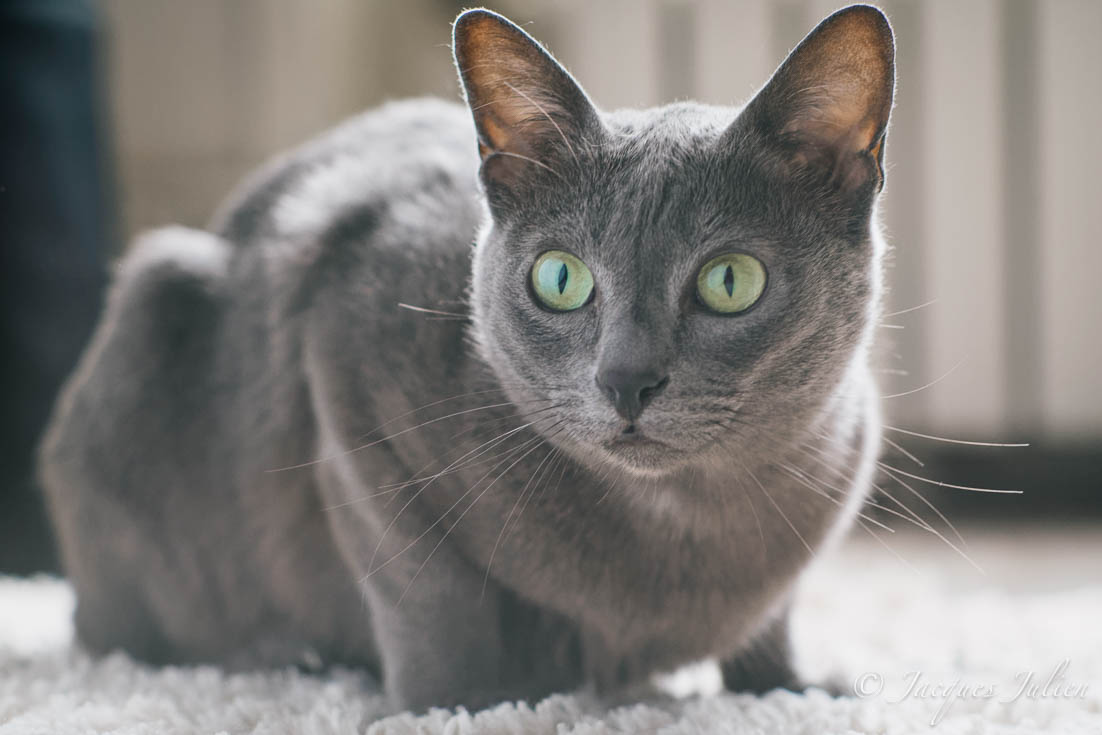
Korat
Characteristics
Temperament
An intelligent, affectionate domestic cat, deeply bonded to people, with a notable memory and marked sensitivity. It forms close relationships with its family, loves company and takes part in household life, tending to "follow" people. It is a calm but present cat that tolerates loud noises, chaos and long solitude poorly: it is at its best in a serene environment with stable relationships. Moderately active and playful, it is a faithful, discreet companion rather than a hyperactive cat.
Diet
An obligate carnivore like all cats: it needs a complete, balanced food rich in quality animal protein, suited to age, weight and lifestyle, with the right supply of taurine and always-fresh water. Being muscular and "heavy" for its size, it is good to measure portions and avoid overweight. A sensitive, habit-loving cat, it appreciates stable feeding times and routines. Coat care is minimal, thanks to the short, single coat.
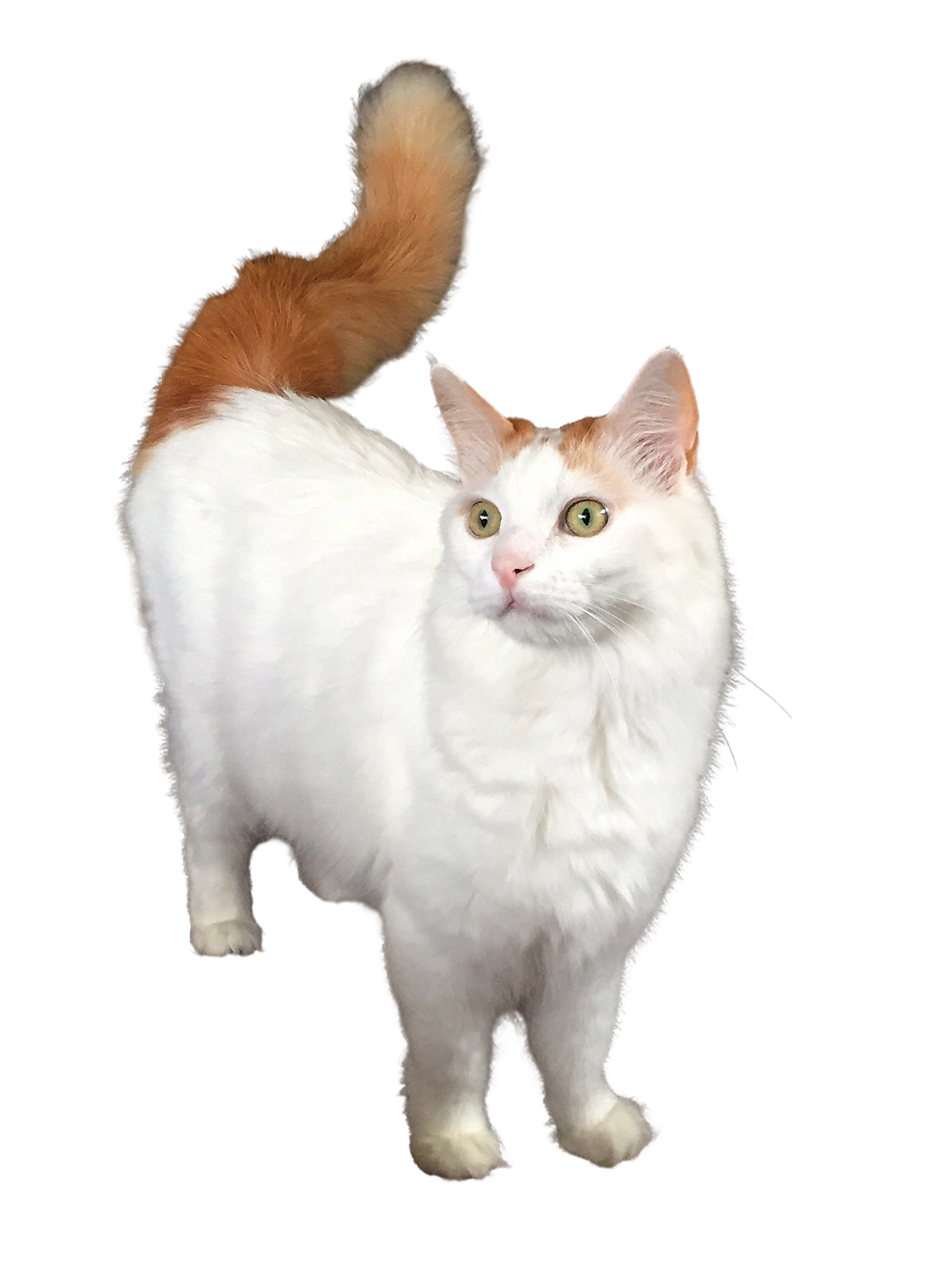
The Korat (Thai "Si-Sawat") is one of the oldest and most fascinating natural cat breeds in the world: a silver-blue cat with luminous green eyes, deeply rooted in the culture and folklore of Thailand. Famous for:
- The silver-blue coat: a short blue-grey coat with each hair silver-tipped, creating a luminous halo
- The heart-shaped face: the head, seen from the front, draws a heart
- The large green eyes: luminous and prominent, of a "peridot" green that matures with age
- The good-luck status: in Thailand it is a symbol of good fortune and prosperity
- The antiquity: a natural breed cited in ancient Thai manuscripts
- The uniqueness: it exists in only one colour (blue) and one coat type (short)
It enters the portal among the shorthaired cats, alongside breeds such as the Siamese (also of Thai origin), the Bengal and the Egyptian Mau: another piece of the rich Asian feline tradition, here represented by one of its oldest and most loved gems.
Classification and category
The Korat is a Felis catus, a natural breed (not created by humans crossing other breeds, but developed on its own) native to the Korat region (Nakhon Ratchasima), in Thailand. In the portal it is placed among the shorthaired cats. It is very important to tell it apart from other blue-grey cats, with which it is often confused: the Russian Blue has a "plush" double coat and green eyes, but a slimmer, more elegant build; the Korat has a single coat, a heart-shaped face and a more compact structure; the Chartreux, also in the portal, is blue but with eyes tending to copper-orange and a robust "feline molosser" build, different from the green-eyed Korat; the blue British Shorthair and the Nebelung are other blue cats, but with different type, coat and eyes. The combination of single silver-blue coat + heart-shaped face + large green eyes is the "identity card" that makes the Korat recognizable among blue cats. Etymology: the name "Korat" comes from the Thai region of origin; the traditional name "Si-Sawat" refers to the blue-grey colour and to the idea of good fortune and prosperity. Parameters: Weight roughly 3-4.5 kg; surprisingly "heavy" and muscular for its size. Build medium, semi-cobby, compact and muscular. Appearance heart-shaped head, large ears, large prominent green eyes. Longevity: good, often 15 years and more with proper care. Reproduction: the kittens' eyes are at first amber and take on the characteristic green only as they grow, sometimes after 2-4 years.
Habitat and distribution
The Korat is a domestic breed: its "habitat" is the home, beside people. Some notes on origin and spread: origin the Korat region, in Thailand, where it is a very ancient natural breed, considered auspicious; current spread present among pedigree-cat enthusiasts worldwide, but remaining a rare breed, carefully bred by enthusiasts. The ideal environment for this cat: a serene, quiet environment (the Korat is sensitive to loud noises and chaotic settings); a close relationship with people (it loves company and forms deep bonds; it tolerates being ignored or left alone for long poorly); and stimulation and play (intelligent and curious, it appreciates interaction and games). In Thailand the Korat has a strong symbolic value: by tradition it was (and is) given in pairs to newlyweds as a wish for happiness, prosperity and luck, and is associated with good fortune and, among farmers, with rain and good harvests. It is a cat that ideally lives indoors, where it can receive the attention and calm it needs. Status: a rare but well-established domestic breed; there are no conservation issues, but it is important to rely on serious breeders, also for the known genetic health matters (see below).
Diet
The Korat, like all cats, is an obligate carnivore and needs a diet rich in quality animal protein. In general: a complete, balanced cat food, suited to age (kitten, adult, senior), weight and lifestyle; animal protein as the basis, with the right supply of taurine and essential nutrients; and always-fresh water. Practical tips: weight management (the Korat is muscular and "heavy" for its size; it is good to measure portions and avoid overweight, monitoring physical condition); a regular routine (being a sensitive, habit-loving cat, it appreciates stable feeding times and habits); and food as a moment of relationship (given its affectionate nature, meal and play can become occasions for interaction). Crucially, for the Korat what matters most is the quality of the diet and a serene environment; more than particular dietary needs, it is its sensitivity that calls for consistency and attention in daily habits.
Physical features
A medium-sized cat of elegant but solid appearance, made unmistakable by a few very strong traits. The silver-blue coat — the distinguishing trait: a single colour, blue (a uniform blue-grey), with no other variants allowed; a short, single coat (no woolly undercoat), close-lying and glossy; and a silver tip to each hair (tipping/"silver"), giving the coat an almost metallic luminous halo. The heart face and the eyes: a heart-shaped head, seen from the front, an almost unique trait among cats; large, luminous green eyes ("peridot"), prominent and very expressive; and large ears, well open and set high. The structure: a semi-cobby, compact and muscular body, surprisingly heavy to the touch; a harmonious look, neither slight nor massive; and low shedding (the single, short coat needs little care and sheds little).
Character, curiosities and care
The Korat is famous for being an intelligent, affectionate cat, deeply bonded to people. It forms close relationships with its family, loves company and tends to "follow" people, taking part in household life. It is a cat of notable memory and marked sensitivity: quiet environments and stable relationships are ideal for it, while loud noises and chaos can make it uncomfortable.
The good-luck cat: in Thailand the Korat has for centuries been considered a bringer of good fortune; its traditional name, "Si-Sawat", evokes the blue-grey colour and the idea of prosperity; by tradition it was given in pairs to newlyweds as a wish for happiness and wealth, and was associated with luck and abundance. The cat of ancient manuscripts: the Korat is one of the oldest documented breeds; it appears in the Tamra Maew ("Treatise of Cats" or "Cat-Book Poems"), ancient Thai manuscripts that describe and illustrate the cats considered auspicious; this makes it not a modern invention, but a natural breed handed down for centuries. The single colour: unlike very many breeds, the Korat exists in only one colour, silver-blue, and one coat type, short; this chromatic "purity" is part of its historic identity: by traditional standards a true Korat is, by definition, blue with green eyes. The changing eyes: Korat kittens are born and grow at first with amber or yellow-green eyes; the characteristic brilliant "peridot" green develops fully only with maturity, sometimes after 2-4 years of age; it is a wait that rewards with one of the most fascinating gazes among cats. The heart face: seen from the front, the Korat's face clearly draws the shape of a heart, due to the particular conformation of the head and cheekbones; a detail that, together with the green eyes and the luminous coat, makes it immediately recognizable. Care and health: the Korat is a sturdy and generally healthy cat, but the breed has a known genetic predisposition to a serious neurological storage disease, gangliosidosis (GM1/GM2), for which a DNA test exists: serious breeders test breeding cats to avoid passing it on. Otherwise, it needs above all company, calm and attention: in return it offers intense affection and a very faithful companionship. Coat care is minimal, given the short, single nature of the coat.
Pros
- Bellissimo e inconfondibile: manto blu argentato luminoso, muso a cuore, occhi verdi
- Molto affettuoso e legato alle persone, ottimo compagno
- Pelo corto e singolo: poche cure e bassa perdita di pelo
- Intelligente e dalla notevole memoria; razza antica e di grande fascino
Cons
- Razza rara: può essere difficile da reperire da allevatori seri
- Sensibile a rumori forti, caos e lunghe solitudini: non adatto ad ambienti caotici
- Nota predisposizione genetica alla gangliosidosi (GM1/GM2): scegliere riproduttori testati
- Molto legato: soffre se ignorato o lasciato a lungo solo