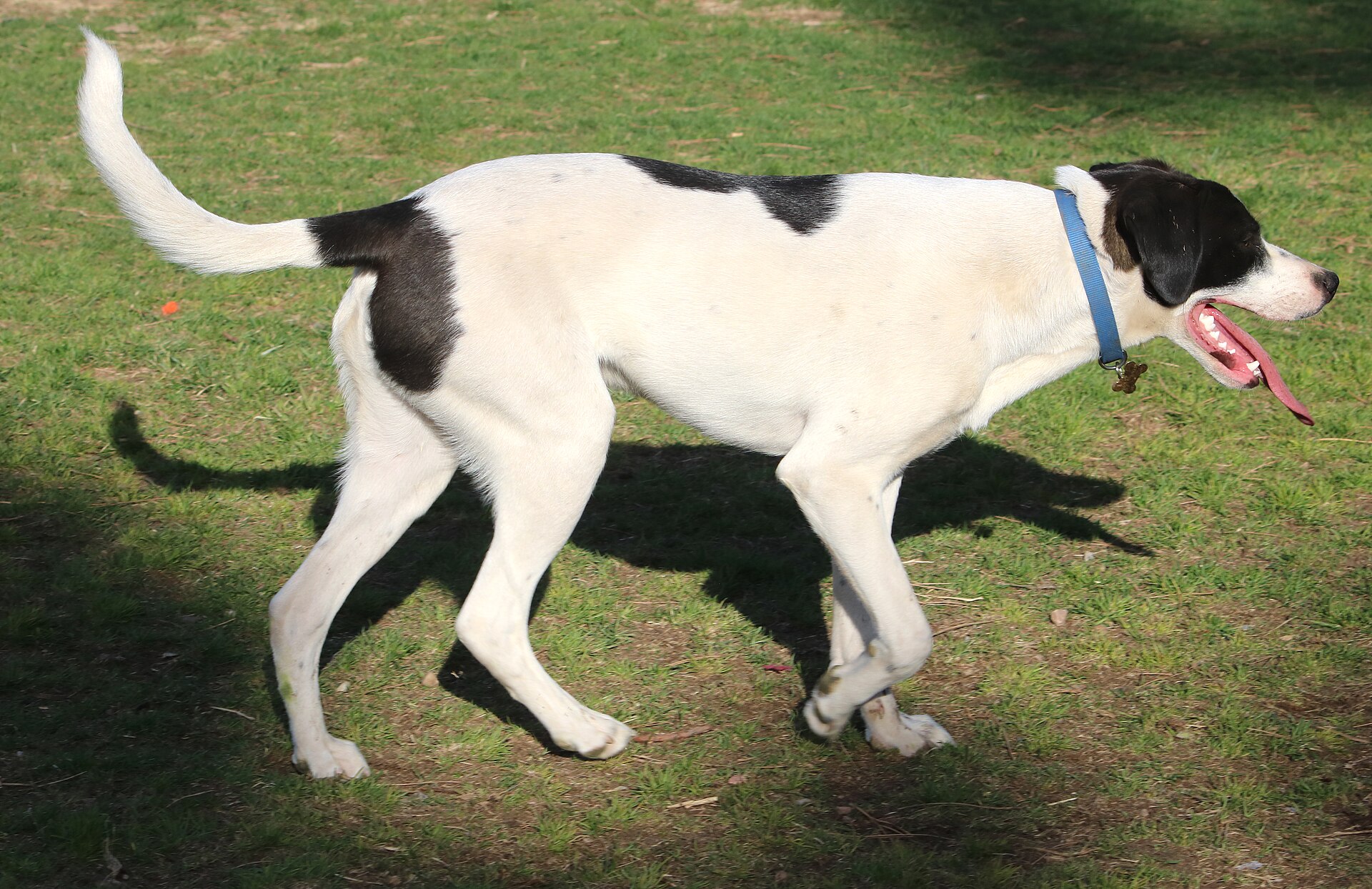
English Pointer
English Pointer
Characteristics
Temperament
A sporting pointing dog, energetic and tireless, with a very strong hunting instinct and extraordinary stamina: born to gallop and "quarter" for game over open ground. Despite its soul as a great worker, it has a notoriously gentle, even-tempered and affectionate nature, very attached to the family and generally patient. It is intelligent and cooperative, but needs a great deal of daily movement: without adequate physical and mental exercise it can become restless and frustrated. It is the ideal companion for sporty, active people and families, while it copes poorly with a sedentary life and confined spaces.
Diet
A domestic carnivore with high energy needs, given its intense physical activity: the diet must be based on quality animal proteins (meat) for muscles and stamina, with an adequate supply of fat as an energy source and balanced carbohydrates and fibre. Rations must be calibrated to the actual activity level (a hunting Pointer consumes far more than a sedentary dog). As in other deep-chested medium-large sporting dogs, it is prudent to avoid intense effort right after large meals. Form weight (lean and muscular) and constant access to fresh water should be maintained, following the vet's advice.
The English Pointer, as its very name says, is "the dog that points": the pointing dog par excellence, the very symbol of this category of hunting helpers. Athletic, lean and extremely elegant, it is famous for:
- The spectacular "point": it freezes pointing at the game with muzzle, body and tail perfectly aligned, often with one front paw raised
- The runner's physique: muscular, slim, built to gallop tirelessly over open ground
- The short, smooth coat: white with liver (brown), black, orange or lemon markings, often "ticked"
- The inexhaustible energy: a born athlete, with great stamina
- The gentle character: even-tempered and affectionate with the family, despite being a working dog
- The characteristic head: with a marked stop and a slightly concave (dish-faced) muzzle
It enters the portal among the pointing dogs, alongside the Weimaraner and the English Setter: with them it completes the portal's trio of pointing dogs, the breeds selected to locate and "point" feathered game.
Classification and category
The English Pointer is a breed dog (Canis lupus familiaris) belonging to the group of pointing dogs of the British type. In the portal it is placed among the pointing dogs, the category of breeds that, having scented the game, freeze in a rigid, motionless pose — the "point" — signalling its presence to the hunter. It is useful to tell it apart from the other pointing dogs in the portal: the English Setter — also British, but with a long, silky, feathered coat, the typical creeping gait and an often more crouched "point"; the Pointer instead has a short coat and a more erect, statuesque point; the Weimaraner — the "grey ghost", a continental (German) pointing dog with a uniform grey coat and light eyes; the Pointer is instead typically white with markings; the Pointer is recognized by its short white-and-marked coat, its lean runner's build and its erect point with muzzle, body and tail in line. The combination of short white-and-marked coat + lean, athletic body + erect, statuesque point is the English Pointer's "identity card". Etymology: "pointer" comes from the English "to point", with reference to the point with which it indicates the game's position. Parameters: Height at the withers about 55-70 cm. Weight about 20-34 kg, with males sturdier than females. Appearance a medium-large, lean, muscular and elegant dog. Longevity: like many medium-large sporting dogs, it lives on average about 12-15 years. Origin: a breed developed in England from the 17th-18th century, with probable contributions from the Spanish pointer, the foxhound, the greyhound and the setter, to obtain a fast, hardy dog with a sure point.
Habitat and ideal environment
The English Pointer is not a wild animal but a domestic breed born and selected for work in the open field. Its ideal "habitat" reflects its nature as a great runner: countryside, fields and open ground (where it can gallop and "quarter" for game at long range); environments with plenty of space (it adapts poorly to a sedentary life or to confined spaces); and an active outdoor life (it needs a great deal of daily movement, running and physical activity). It is an energetic, hardy, tireless dog, built to cover great distances at a gallop. For this reason: it is not suited to those who lead a lazy life or can offer only short walks; it gives its best with sporty, active owners (hunting, running, long hikes, dog sports); and if it does not vent enough energy it can become restless and frustrated. Although a working dog, it has a gentle, sociable character and bonds closely with the family: it can live very well as a companion dog, provided its enormous need for movement is met. It is a breed widespread throughout the world, both as a hunting helper and as a sporting companion.
Diet
The English Pointer is a domestic carnivore with a high energy expenditure, given its intense physical activity. A correct diet must support its athletic build: quality animal proteins (meat as the basis of the diet, for muscles and stamina); the right amount of fat (an important source of energy for a very active dog); and balanced carbohydrates and fibre (for steady energy and good digestion). Practical guidance: rations suited to the work (a hunting or very sporting Pointer consumes more than a sedentary dog, and the diet must be calibrated to actual activity); attention to meals and activity (as in other deep-chested medium-large sporting dogs, it is prudent to avoid intense effort right after large meals); and form weight (it must be kept lean and muscular, avoiding the overweight that would penalize its agility). As with every dog, fresh water always available and a balanced diet suited to age, size and activity level, preferably following the vet's advice.
Physical features
The English Pointer is the very image of canine athletic elegance. The runner's body: a lean, muscular build, made for speed and endurance; a deep chest and tucked-up belly, like a galloper's; long, sturdy limbs, with a free, powerful gait. The coat and colours: short, dense, smooth hair, glossy and close-lying; white with liver (brown), black, orange or lemon markings, often with ticking. The head and expression: a noble head with a well-marked stop and a slightly concave (dish-faced) muzzle; pendant ears, set high, lying close to the cheeks; a tail carried roughly level with the back, which "lashes" sideways during work and stiffens in the point.
Curiosities and behaviour
The English Pointer is a fascinating dog, combining the purest hunting instinct with a gentle, affectionate temperament. Its most iconic feature is precisely the point, one of the most famous images in the dog world.
The "postcard" point: when it locates the game, the Pointer freezes in a rigid, statuesque pose — muzzle, body and tail aligned toward the prey, one front paw often raised and bent; it is a pose so perfect and sculptural that it has become the very symbol of pointing dogs, reproduced in paintings, prints and hunting logos. A name that is a programme: the term "pointer" literally means "the one who points/indicates"; the name precisely describes the dog's task: it neither chases nor catches the game, but locates it and "indicates" its position to the hunter, remaining motionless in wait. The great galloper: the Pointer is famous for its fast, wide, tireless gait; in field trials and "quartering" competitions it can cover enormous distances at a gallop, methodically scouring the ground; this extraordinary stamina is also why it needs so much exercise. The trio of pointing dogs: in the portal the Pointer completes the group of pointing dogs together with the English Setter and the Weimaraner; they are three different interpretations of the same task: the long-coated Setter with its crouched point, the grey Weimaraner of the German continental school, and the short-coated Pointer with its erect point — the "English school" of the pointing dog. The house dog: despite its soul as a great worker, the Pointer has a notoriously even-tempered, gentle and affectionate character; it bonds closely with the family and is generally patient: an excellent companion for sporty people and families able to offer it the movement it needs; neglecting its exercise, on the contrary, makes it restless: it is a dog that gives a great deal, but asks for an active life in return.
Pros
- Cane da ferma elegante, atletico e instancabile, con una ferma spettacolare
- Temperamento dolce, equilibrato e affettuoso in famiglia
- Pelo corto e liscio, facile da pulire e curare
- Intelligente e collaborativo, ottimo compagno sportivo
Cons
- Enorme bisogno di movimento: non adatto a vita sedentaria o spazi ristretti
- Se non sfoga abbastanza energia può diventare irrequieto e frustrato
- Istinto venatorio fortissimo: tende a inseguire e a perlustrare a lungo raggio
- Richiede padroni attivi e tempo per esercizio fisico quotidiano