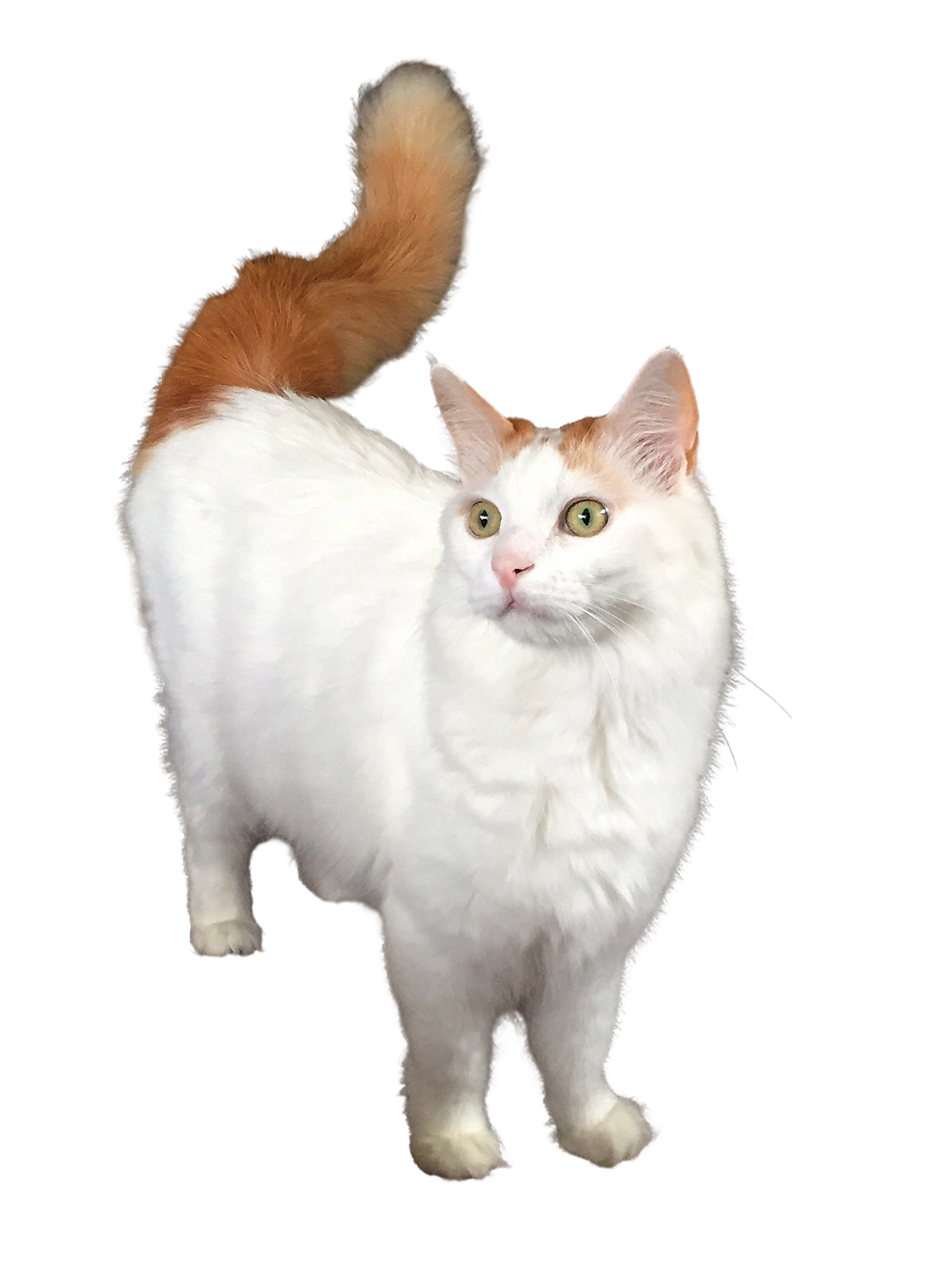
Turkish Van
Felis catus
Characteristics
Temperament
An energetic, playful, intelligent and independent cat, with a strong, almost "dog-like" temperament: it loves play, interaction and activity, is a tireless jumper and climber and bonds closely with the family. It is not the classic quiet lap cat, but a dynamic companion that needs space, stimulation and attention. Its most surprising trait is its unusual love of water, which it adores playing with and sometimes immerses itself in ("the swimming cat"). Affectionate but selective, it gives its best with active people and families able to support its liveliness.
Diet
A carnivore like all cats: it needs a diet rich in quality animal proteins (meat as the basis), with the right amount of fat as energy and taurine, an essential amino acid present in foods of animal origin, and few carbohydrates. Being an athletic, very active cat, it has good energy needs, to be calibrated to age and lifestyle. Though sturdy and muscular, it should be kept in shape, avoiding overweight. Given its love of water it usually drinks willingly; fresh water should always be available. Complete, balanced foods are recommended, following the vet.
The Turkish Van (also "Van cat") is one of the oldest and most fascinating natural cat breeds, tied to the Lake Van region of eastern Turkey. It is famous for two traits that make it unique:
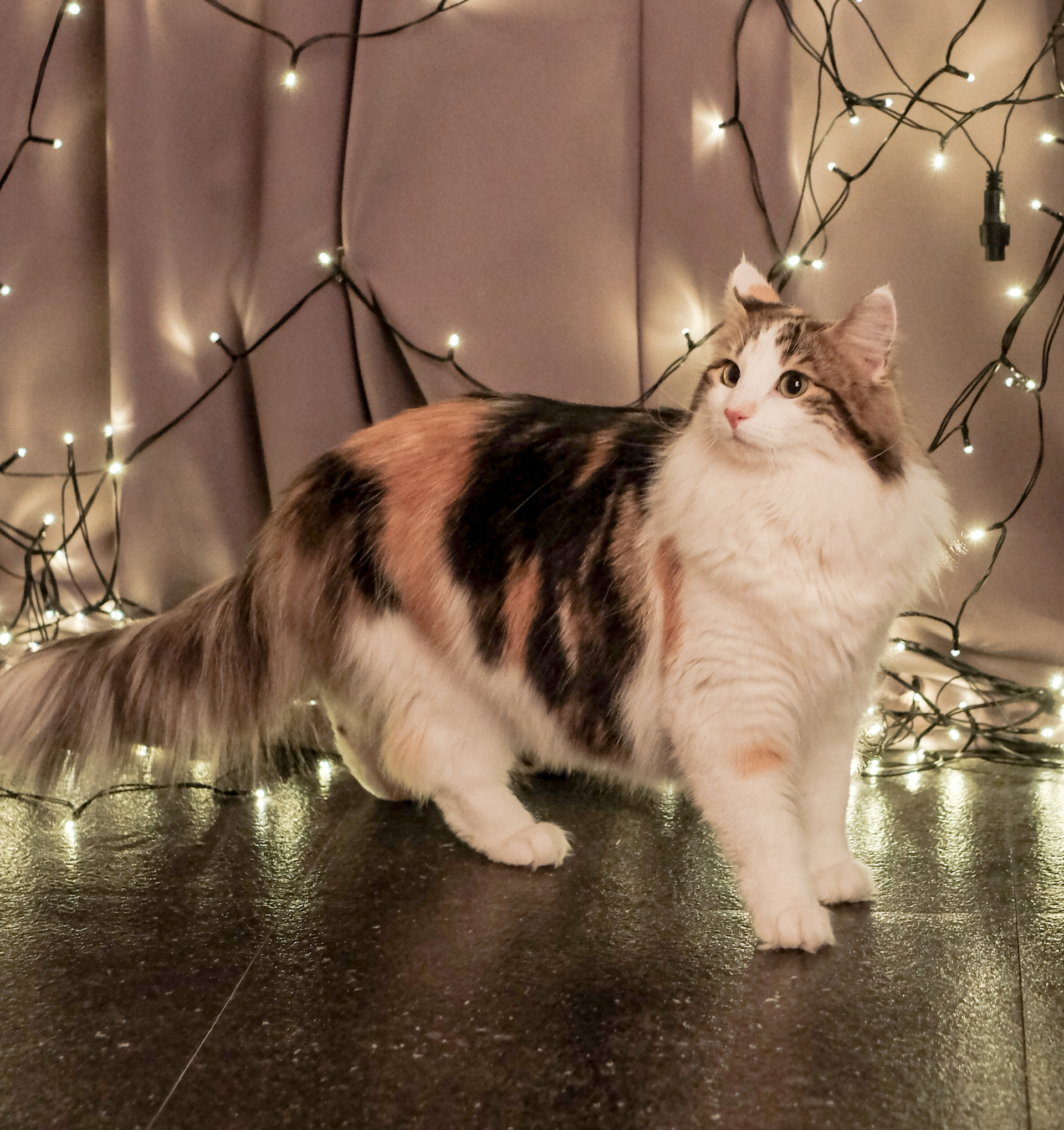
- The "Van pattern": an almost entirely chalk-white body, with coloured markings limited to the head (around the ears) and the tail
- The love of water: unlike most cats, it likes to play with water and even swim, hence the nickname "the swimming cat"
- The semi-long coat: soft, water-resistant, cashmere-like and without a woolly undercoat
- The often odd eyes: amber, blue or one of each colour (heterochromia)
- The athletic build: sturdy, muscular, agile and slow to mature
- The ancient, natural origin: a breed that developed spontaneously in an isolated region
It enters the portal among the long-haired cats, alongside the Turkish Angora, the other great Turkish natural breed, and Maine Coon, Persian, Ragdoll, Siberian and Somali. With the Angora it ideally forms the portal's "Turkish pair".
Classification and category
The Turkish Van is a breed of the domestic cat (Felis catus). In the portal it is placed among the long-haired cats, although its coat is in fact semi-long, of a particular texture. It is useful to tell it apart from similar breeds and types: the Turkish Angora — also Turkish and long-haired, but finer and more elegant and often entirely white; the Van is sturdier and has the characteristic two-colour head-and-tail pattern; the "Van Kedisi" — the entirely white Turkish cat (often with odd eyes) of the Van region, not to be confused with the true Turkish Van breed, which instead has the coloured markings; other white cats with markings — in the Turkish Van the colour is restricted to head and tail (Van pattern), while the rest of the body stays white. The combination of white body + coloured markings only on head and tail + sturdy build + love of water is the Turkish Van's "identity card". Etymology: the name comes from Lake Van, the great salt lake of eastern Turkey around which the breed developed; "Van pattern" has then become a technical term to indicate, in any cat, colouring restricted to head and tail. Parameters: Size medium-large, with males more imposing than females. Weight usually about 5-9 kg (males). Appearance a sturdy, muscular cat, with a long, athletic body. Longevity: it lives on average about 12-17 years. Peculiarity: it reaches full physical maturity very slowly, even after 3-5 years; the coat lengthens in winter and shortens greatly in summer.
Origin and ideal environment
The Turkish Van is not a wild animal, but a domestic breed with an ancient history: its origin is the Lake Van region of eastern Turkey, where it has existed for centuries as a natural cat; its distribution spread to Europe and then the world in the 20th century, and it is now bred as a recognized breed, although it remains relatively rare. Its ideal "habitat", as a very active domestic cat, is a home that supports its energy: spaces to climb and jump (it is a great jumper and loves high places); stimulation and play (intelligent and lively, it needs activity and interaction not to get bored); and water to play with (many Vans adore playing with water — taps, bowls, tubs). It is a cat with an energetic, playful, intelligent and independent character. Affectionate with its own family, it tends however to be selective and "on its own terms": it is not the classic lap cat, but a lively companion with a strong personality. Athletic and tireless, it is perfect for those seeking an active, interactive cat.
Diet
The Turkish Van is a carnivore, like all cats, and its athletic, muscular build requires a quality diet: quality animal proteins (meat as the basis, to support muscles and energy); the right amount of fat (an energy source for a very active cat); taurine (an amino acid essential for cats, present in foods of animal origin); and few carbohydrates, as befits a strict carnivore. Practical guidance: energy suited to activity (being a lively, athletic cat, it has good energy needs, to be calibrated to age and lifestyle); weight control (though sturdy, it must not become overweight; its build is muscular, not fat); and always fresh water (given its love of water, it usually drinks willingly). As with every cat, complete, balanced foods and the vet's advice are preferable to adapt the diet to age, weight and health.
Physical features
The Turkish Van is a beautiful, athletic cat with an unmistakable pattern. The "Van pattern" — the distinguishing trait: a chalk-white, shining body; coloured markings only on head and tail (classically auburn-red, but other colours exist); a coloured, bushy tail, often with darker ringing. The coat: semi-long, soft, water-resistant hair, of a cashmere-like texture; without a woolly undercoat; it lengthens in winter and shortens in summer. The body and eyes: a sturdy, muscular body, long and athletic; large, expressive eyes, amber, blue or odd (one blue and one amber, heterochromia); slow maturation (it reaches adult size after several years).
Curiosities and behaviour
The Turkish Van is a cat wrapped in charm and legend, different from the ordinary both in appearance and behaviour, starting with its unique relationship with water.
The swimming cat: unlike most cats, which avoid water, the Turkish Van is often attracted to it: it plays with taps, dips its paws in bowls and, according to the tradition tied to Lake Van, may even bathe and swim; this love of water, combined with its water-resistant coat, has earned it the famous nickname "swimming cat". The pattern that bears its name: the Turkish Van's particular colouring — a white body with markings limited to head and tail — is so characteristic that it has become a technical term: worldwide people speak of the "Van pattern" to indicate this type of marking in any cat, precisely in honour of this breed. The odd eyes: like other predominantly white cats, the Turkish Van can have eyes of two different colours (heterochromia): typically one blue and one amber; it is a much-appreciated, fascinating feature, particularly tied in the imagination to the cats of the Van region. The ancient natural breed: the Turkish Van is not a "designed" breed, but the fruit of centuries of natural evolution in an isolated region of Turkey; for this reason it is considered a Turkish national treasure, and at home a distinction is made between the Turkish Van breed (with markings) and the "Van Kedisi", the entirely white cat. The athletic "dog-cat": lively, energetic and intelligent, the Turkish Van has a temperament that sometimes recalls a dog's: it loves play, interaction and activity, is a tireless jumper and climber and bonds closely with the family; it is not the quiet couch cat, but a dynamic companion that needs attention and stimulation. Behaviour and care: the Turkish Van is a healthy, hardy cat, but its energy and intelligence require a stimulating environment, with space to move, play and climb. The semi-long coat without undercoat is relatively easy to care for, with regular brushing especially at the change of seasons. Affectionate but independent, it gives its best with active people and families, ready to support its liveliness and, why not, its unusual passion for water.
Pros
- Aspetto inconfondibile grazie al celebre 'pattern Van' (corpo bianco, testa e coda colorate)
- Insolito e simpatico amore per l'acqua: il 'gatto che nuota'
- Vivace, intelligente e interattivo, ottimo per chi cerca un gatto attivo
- Razza naturale antica, rustica e generalmente in buona salute
Cons
- Molto energico e atletico: ha bisogno di spazio, gioco e stimoli costanti
- Non è un tranquillo gatto da grembo: carattere forte e indipendente
- Maturazione lenta (anche 3-5 anni per la taglia adulta)
- Razza relativamente rara, non sempre facile da trovare