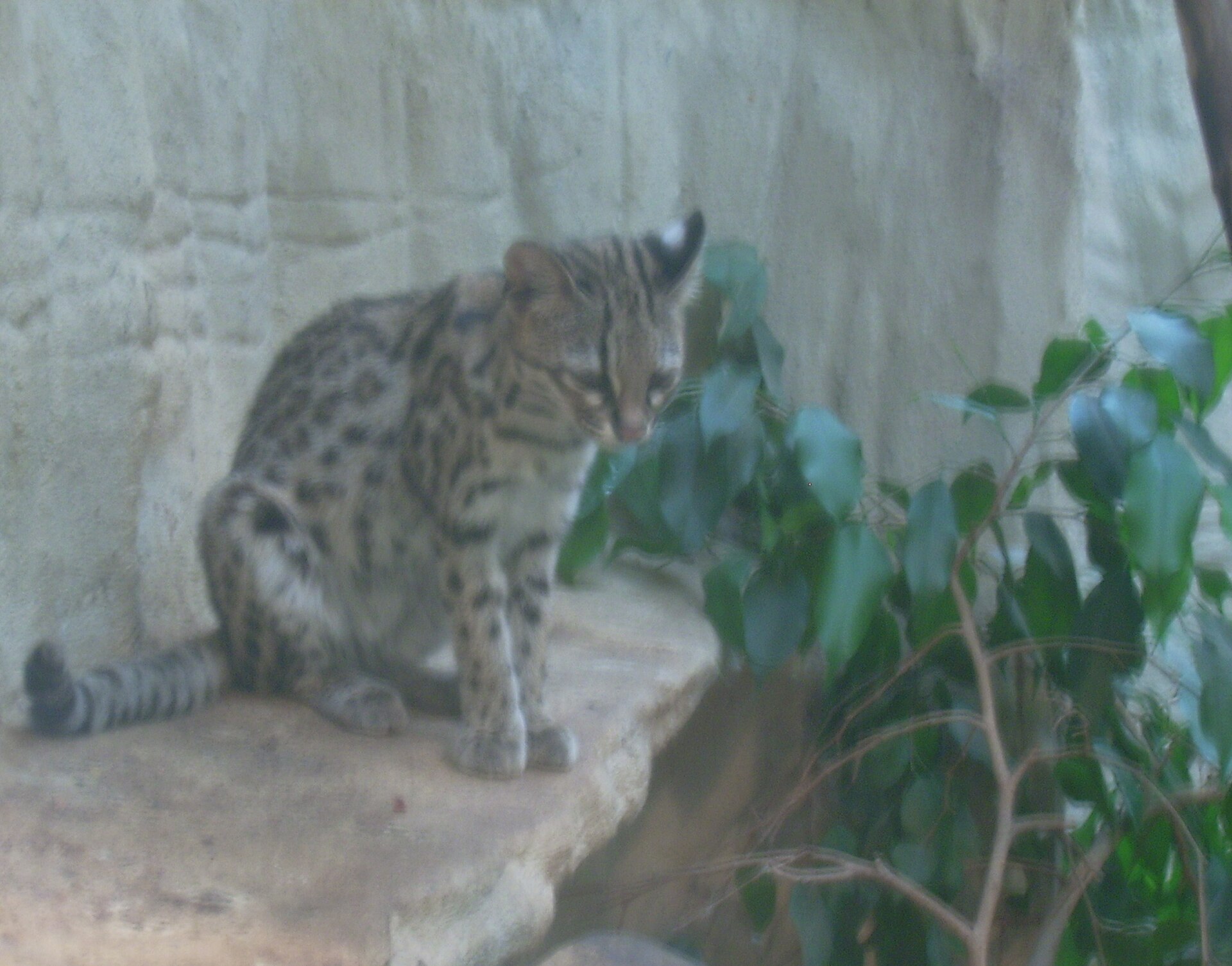
Oncilla
Leopardus tigrinus
Characteristics
Temperament
A small wild cat, NOT a pet: solitary, shy, mainly nocturnal and crepuscular, territorial. It is an agile, silent hunter, a skilled climber but one that hunts mostly on the ground. It lives an elusive, reserved life, so much so that it is one of the least studied American cats. Like all wild cats, it keeps strong predatory instincts and an independent nature, and is not suited to domestic captivity: its place is in the Neotropical forests. It is classified as Vulnerable by the IUCN and deserves protection and respect as a wild animal.
Diet
A strict carnivore and small predator: it hunts small-sized prey, above all small mammals (rodents), but also small birds, reptiles and amphibians (lizards, small snakes) and invertebrates as a supplement. It is a nocturnal and crepuscular hunter, using smell, very fine hearing and dark-adapted sight; it hunts mostly on the ground, though it is a good climber. As a small mesopredator it helps regulate populations of rodents and other small animals in the forest ecosystems where it lives.
The Oncilla (Leopardus tigrinus), also known as the northern tiger cat, little spotted cat or "tigrillo", is one of the smallest and least known wild cats of the American continent. Tiny and shy, it looks like a miniature version of the ocelot. Fascinating for:
- The tiny size: it is little bigger than a domestic cat, among the smallest cats in the Americas
- The spotted coat: tawny-ochre dotted with dark rosettes and spots, with pale underparts
- The climbing ability: agile and nocturnal, it moves well both on the ground and in the trees
- The Neotropical kinship: it belongs to the genus Leopardus, like the ocelot, margay and Geoffroy's cat
- The elusive nature: solitary, nocturnal and hard to observe in the wild
- The threatened status: it is classified as Vulnerable
IUCN status: Vulnerable (VU). It enters the portal among the wild cats, alongside the Ocelot, Margay and Geoffroy's cat: with them it completes the group of small Neotropical spotted cats of the genus Leopardus, of which the oncilla is the smallest species.
Classification and category
The Oncilla belongs to the family Felidae, subfamily Felinae (the small cats), genus Leopardus — that of the small spotted cats of the New World. The species is Leopardus tigrinus (northern tiger cat); the southern populations are now often considered a distinct species, Leopardus guttulus (southern tiger cat). In the portal it is placed among the wild cats. It is useful to tell it apart from its closest relatives, also in the portal: the Ocelot (Leopardus pardalis) — much larger and stockier, with wider, more elongated spots and rosettes; the Margay (Leopardus wiedii) — of intermediate size, with very large eyes and a very long tail, the most arboreal of the three; Geoffroy's cat (Leopardus geoffroyi) — of similar size, but with a pattern of small solid spots rather than rosettes; the oncilla differs by its smaller size, eyes proportionally less large than the margay's, and a fine-rosetted coat. The combination of tiny size + tawny rosetted coat + Neotropical forest habitat is the oncilla's "identity card". Etymology: "oncilla" is a Spanish diminutive meaning "little onza/jaguar"; the scientific name tigrinus ("tiger-like") refers to the coat's spotted pattern. Parameters: Body length about 40-55 cm, plus a tail of about 25-40 cm. Weight usually about 1.5-3 kg, comparable to or less than a domestic cat. Appearance a slender, light cat, with a small head and a long, ringed tail. Longevity: in the wild it lives a few years; in captivity it can reach 15-17 years and more. Reproduction: after a gestation of about 2-2.5 months, usually 1-2 kittens are born, raised by the mother alone.
Habitat and distribution
The Oncilla is a typically Neotropical cat, linked above all to forest and montane environments: its range runs from Central America (e.g. Costa Rica, Panama) to northern and central South America; the southernmost populations are attributed to the related species L. guttulus. Preferred habitats — varied environments, often at altitude: tropical and subtropical forests, including montane cloud forests; Atlantic forests and wooded areas; and savannas and more open environments, in some parts of the range, sometimes at high elevations. It is a mainly nocturnal and crepuscular, solitary and territorial animal. Although a good climber, it hunts largely on the ground (unlike the even more arboreal margay). It leads a shy, silent life, which makes it one of the least studied and hardest to spot American cats. IUCN status: Vulnerable (VU). The oncilla is threatened above all by the destruction and fragmentation of habitat (deforestation), direct persecution, road mortality and, historically, the fur trade. Its small size and elusive habits make it hard to estimate its populations precisely, which are nonetheless in decline.
Diet
The Oncilla is a strict carnivore, like all cats, and as a small predator it hunts small-sized prey. Its diet includes: small mammals (above all rodents, but also other small mammals); small birds; reptiles and amphibians (lizards and small snakes); and invertebrates (insects and other small animals, as a supplement). Features of its feeding behaviour: a nocturnal hunter (it uses smell, very fine hearing and dark-adapted sight to locate prey); an agile predator (it hunts mostly on the ground, but can also chase prey among the branches); and an ecological role (as a small predator it helps regulate populations of rodents and other small animals). Crucially, being a small cat, the oncilla occupies a "mesopredator" niche, hunting smaller prey than the larger cats and contributing to the balance of the forest ecosystems where it lives.
Physical features
The Oncilla is a small, slender, elegant cat with a delicate appearance. The size and build: one of the smallest cats in the Americas, little bigger than a domestic cat; a slim, light body with thin limbs; a long, ringed tail, useful for balance. The coat — its most recognizable trait: a tawny-ochre base colour, with paler underparts; dark rosettes and spots distributed over the body, recalling in miniature those of the ocelot; melanistic (entirely dark) individuals also exist, not rare in some populations. The head and senses: a small, rounded head, with broad, rounded ears; large eyes adapted to nocturnal life (but proportionally less enormous than the margay's); and sharp senses — sight, hearing and smell of a crepuscular hunter.
Curiosities and conservation
The Oncilla is a cat as fascinating as it is little known: its small size, nocturnal habits and elusive nature make it one of the most mysterious wild cats of the Americas.
The miniature ocelot: at first glance the oncilla looks like a pocket version of the ocelot, with a very similar tawny rosetted coat; in reality they belong to the same genus (Leopardus) but are different species: the oncilla is much smaller and lighter, and is indeed the tiniest of the group of Neotropical spotted cats. The "little jaguar" name: the name "oncilla" is a diminutive recalling the "onza", a term used in Latin America for large spotted cats like the jaguar; it is therefore, literally, the "little jaguar" — a name that stresses both its feline kinship and its small size. The two twin species: for a long time the oncilla was considered a single species; more recent studies have shown that the northern (Leopardus tigrinus) and southern (Leopardus guttulus) populations are genetically distinct and now often classified as two separate species, the "northern tiger cat" and the "southern tiger cat". The black individuals: as in other cats (for example the leopard or the jaguar), melanistic specimens, with an entirely dark coat in which the rosettes remain visible against the light, are not rare among oncillas either. The Leopardus group: in the portal the oncilla stands alongside the ocelot, margay and Geoffroy's cat, all belonging to the genus Leopardus; together they represent the extraordinary variety of small spotted cats of the New World, from tropical forests to the grasslands of South America. Conservation: the oncilla is classified as Vulnerable by the IUCN; its populations are in decline above all because of deforestation and habitat fragmentation, the conversion of land to agriculture, persecution and road collisions; its survival depends on the protection of Neotropical forests and the creation of ecological corridors linking protected areas; being a shy, inconspicuous animal, it often receives less attention than the big cats, despite having an important ecological role and deserving targeted conservation efforts.
Pros
- Felino selvatico raro e affascinante, uno dei più piccoli delle Americhe
- Manto maculato spettacolare, simile a un ocelot in miniatura
- Importante mesopredatore degli ecosistemi forestali neotropicali
- Completa nel portale il gruppo dei piccoli gatti maculati del genere Leopardus
Cons
- NON è un animale domestico: è un felino selvatico dagli istinti predatori
- Classificato come Vulnerabile (IUCN): popolazioni in declino
- Minacciato da deforestazione, frammentazione dell'habitat e mortalità stradale
- Elusivo e poco studiato: spesso trascurato rispetto ai grandi felini