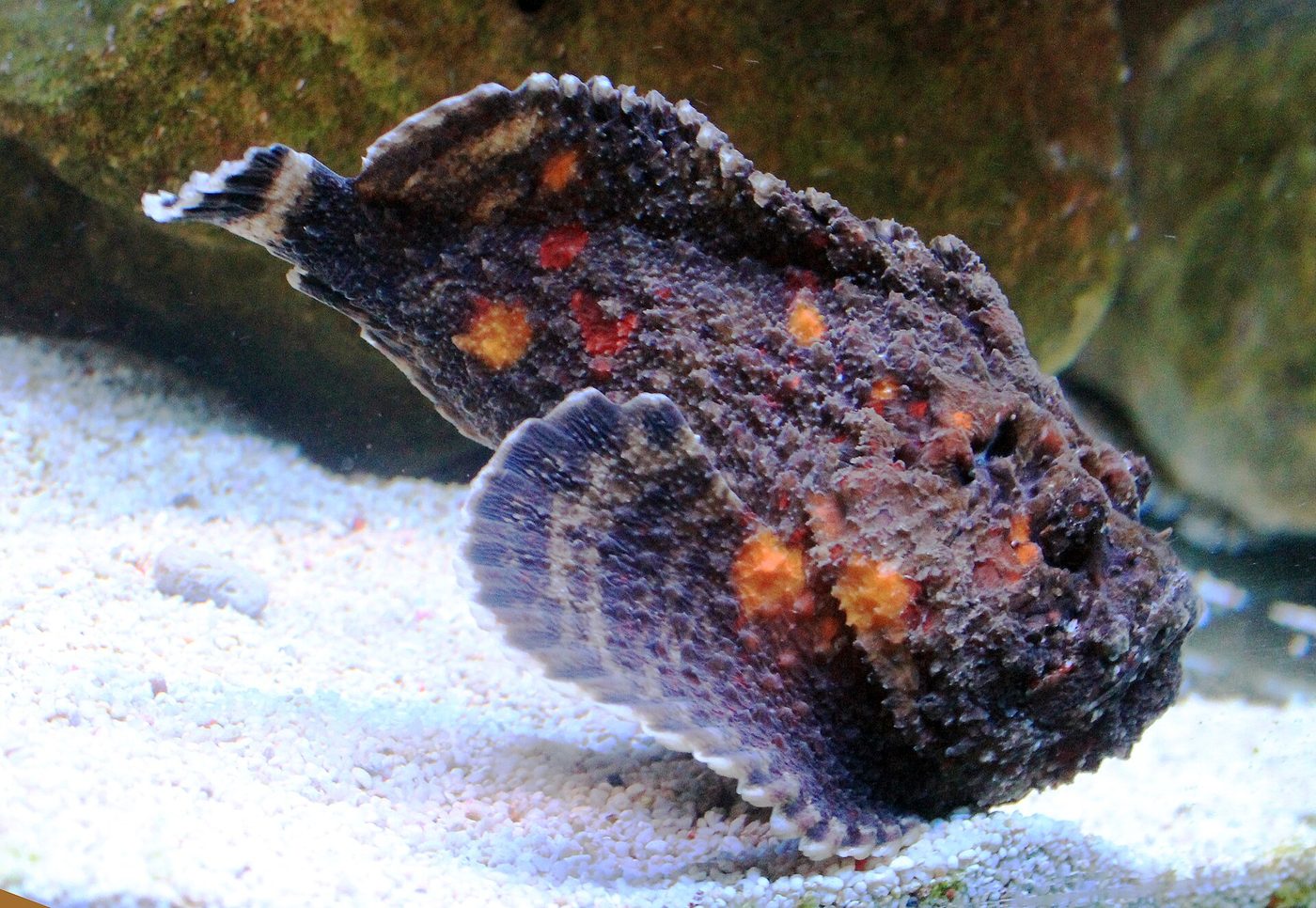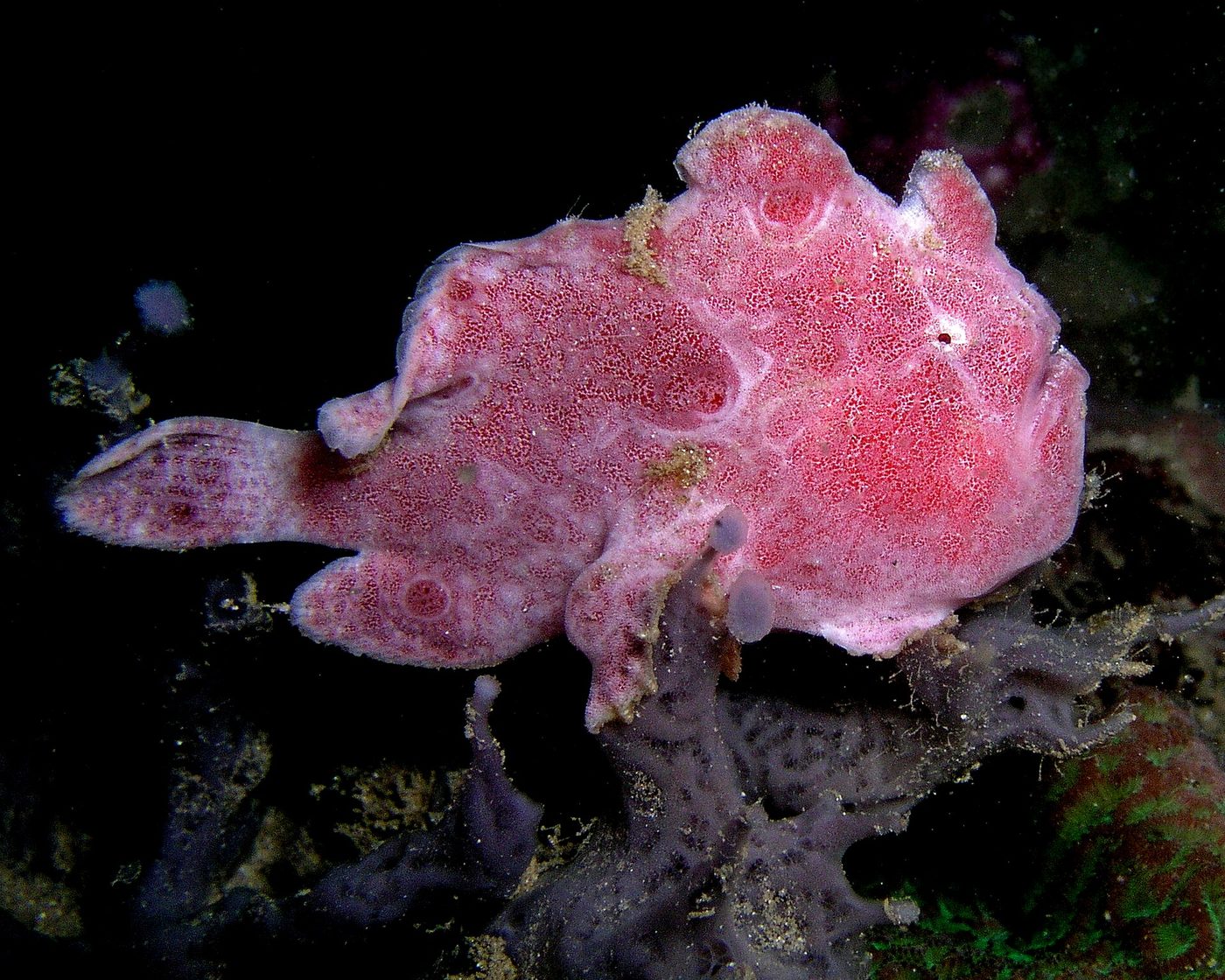
Photo: Nick Hobgood · CC BY-SA 3.0
Longlure frogfish
Antennarius multiocellatus
The longlure frogfish is a small Caribbean anglerfish and a master of disguise: it mimics sponges and lures prey with a fishing-rod appendage on its head.
Characteristics
Temperament
Sedentary and cryptic; a sit-and-wait ambush predator.
Diet
Carnivorous: fish and crustaceans lured in with the head appendage.
An angler disguised as a sponge
The longlure frogfish (Antennarius multiocellatus) is a small bony fish of the family Antennariidae, the frogfishes or anglerfishes. Its stocky, scaleless body is covered in small skin flaps and reaches about 24 cm. It has a remarkable ability to change colour — from yellow and orange to red and black — to blend in with the sponges it rests on. The first ray of its dorsal fin is modified into a long, mobile filament tipped with a lure (the illicium), which the fish waves to attract prey.
Habitat and range
It lives in the western Atlantic, mainly on the coral reefs and sponge-rich bottoms of the Caribbean, from Florida to the southern Caribbean. It favours shallow, sponge-covered habitats where it can hide in plain sight, staying motionless in ambush.
Behaviour and diet
It is an ambush predator: rather than chasing prey, it stays still and lures them in by twitching its rod-tip like a small worm or shrimp. When a fish or crustacean comes close, the frogfish opens its mouth in one of the fastest gapes in the animal kingdom, sucking the victim in within a fraction of a second. Instead of swimming, it often "walks" over the bottom, using its pectoral fins like legs.
Did you know?
Its mouth can expand enormously, letting it swallow prey almost as large as itself. Its leg-like pectoral fins and hunched posture make it look more like an amphibian than a fish — hence the name frogfish.
Conservation
The IUCN lists it as Least Concern. It is occasionally collected for marine aquariums but is not considered threatened; healthy coral reefs nonetheless remain vital to its survival.
Pros
- Extraordinary camouflage among sponges
- Lures prey with a natural fishing rod
- Least Concern, not threatened
Cons
- Voracious predator: eats smaller tankmates in aquariums
- Needs sponge-rich bottoms to camouflage
- Very hard to spot due to its disguise