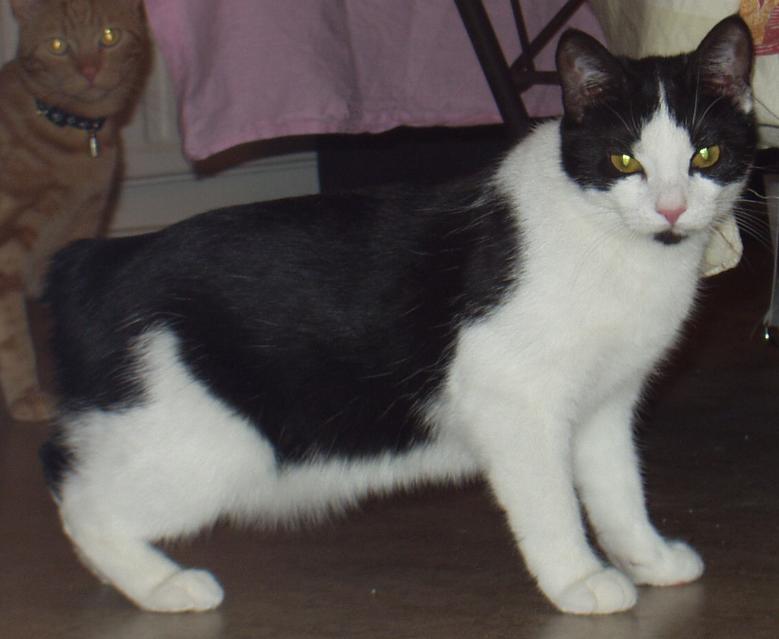
Manx
Felis catus
Characteristics
Temperament
An intelligent, playful and surprisingly "dog-like" cat: it bonds closely with its owner, follows them around the house, and some individuals even learn to fetch toys. It is sociable, affectionate and suited to family life, as well as a skilled hunter (once valued as a mouser on farms and ships). Quiet but lively, it is an excellent companion cat, adaptable to both apartment and house-with-garden life, as long as it is in the company of the people it is attached to. Its genetic peculiarity (the absence of a tail), however, requires responsible breeding to protect its health.
Diet
A carnivore like all cats: it needs a diet rich in quality animal proteins (meat as the basis), the right amount of fat and taurine, an essential amino acid present in foods of animal origin, with few carbohydrates. Complete, balanced foods formulated for cats, suited to age and needs, are recommended. Being a compact, muscular cat, its weight should be kept under control to avoid overweight. Fresh water always available and a diet adapted, under the vet's guidance, to age, weight and state of health.
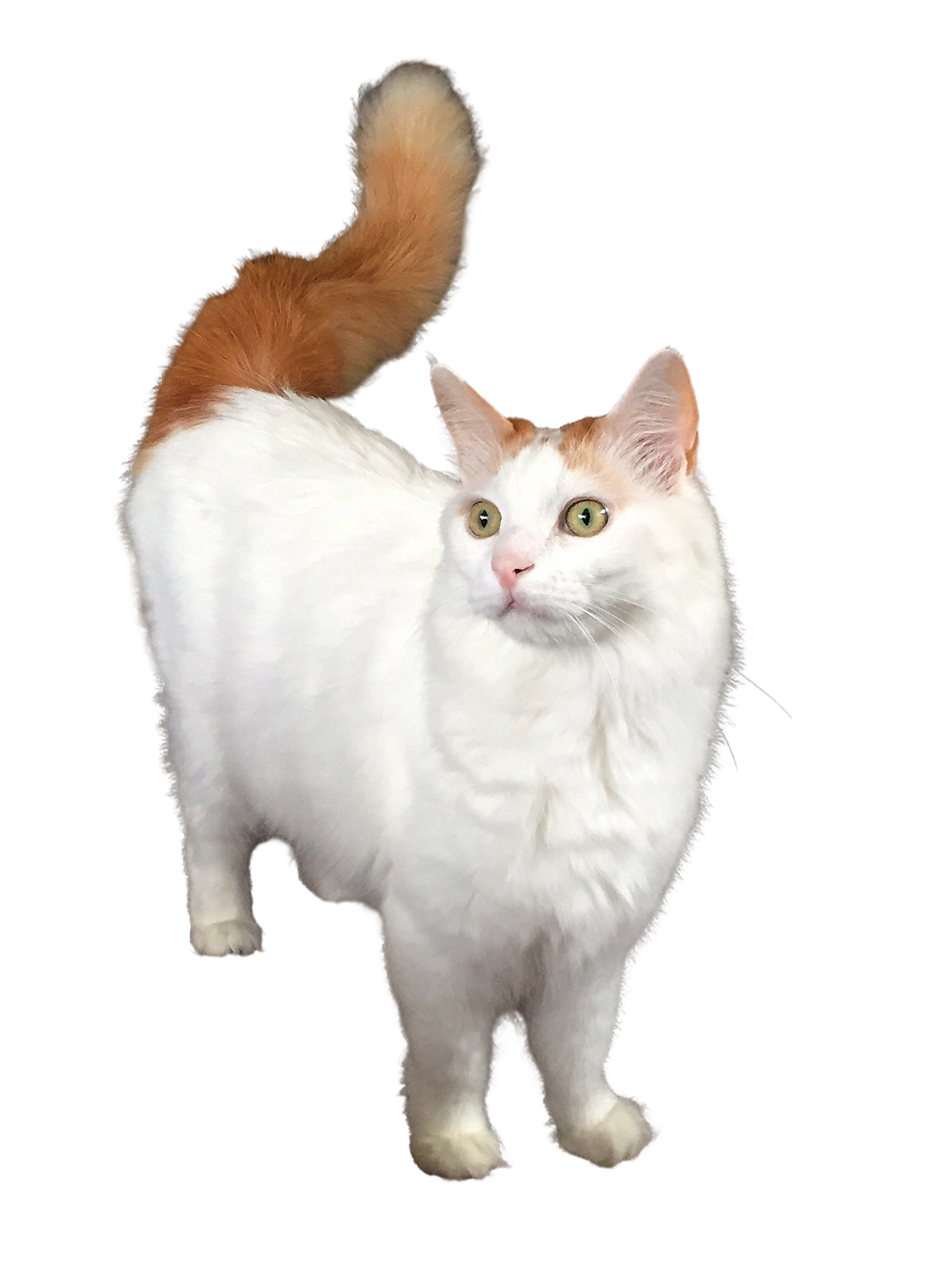
The Manx is one of the oldest, most peculiar and most recognizable cat breeds in the world: the famous tailless cat. Native to the Isle of Man, a small island in the Irish Sea, it is the result of a natural mutation preserved in an isolated population. Unmistakable for:
- The lack of a tail: the most famous trait, due to a natural genetic mutation
- The rounded body: round head, compact body and rounded rump
- The longer hind legs: which give it an arched back and a "hopping", almost rabbit-like gait
- The "dog-like" character: intelligent, playful, loyal and very attached to its owner
- The island origin: a symbol of the Isle of Man, depicted on coins and stamps
- The dense coat: double and soft, in very many colours
It enters the portal among the short-haired cats, alongside breeds like the Siamese, Burmese and Bengal. The Manx adds one of its most singular breeds to the collection, defined not by a colour or coat type, but by a unique feature: the absence of a tail.
Classification and category
The Manx is a breed of the domestic cat (Felis catus), like all cat breeds. In the portal it is placed among the short-haired cats, the category gathering the short-coated breeds, although what really distinguishes the Manx is not its coat but the absence of a tail. The Manx comes in several variants, classified precisely by the length (or absence) of the tail: "rumpy" (completely tailless, with a small dimple where the tail would be; the most typical and sought-after form in shows); "rumpy riser" (with a very small bony rise); "stumpy" (with a short tail stub); and "longy" (with an almost normal-length tail). There is also a long-haired variety, sometimes considered a separate breed and called the Cymric. The combination of absence of a tail + rounded body + longer hind legs is the Manx's "identity card". Etymology: the name "Manx" simply means "of the Isle of Man", the breed's place of origin. Parameters: Size a medium-sized cat, with a compact, muscular body. Weight usually about 3.5-5.5 kg. Appearance rounded in every line, with a rounded rump and arched back. Longevity: it lives on average about 8-14 years. Genetics and health: the lack of a tail is due to the so-called "Manx gene", which is dominant; since having two copies of the gene is generally lethal in embryonic development, all Manx carry only one copy. In some individuals the gene can cause spinal problems (the so-called "Manx syndrome"): responsible breeding aims to reduce this risk.
Origin and distribution
The Manx is not a wild animal, but a domestic cat breed with a particular history, deeply linked to its island of origin: its origin is the Isle of Man, in the Irish Sea, between Great Britain and Ireland; an isolated mutation (the small size of the population and the geographic isolation favoured the spread and preservation of the tailless mutation); and its distribution is now worldwide, bred and loved as a companion cat and show specimen. It is a domestic cat in every respect, and its ideal "habitat" is the home: an excellent companion cat (sociable, affectionate and suited to family life); a skilled hunter (in the past also valued as a mouser on farms and ships); and adaptable (it is at ease both in an apartment and in houses with a garden, as long as it is in the company of the people it is attached to). On the Isle of Man the Manx is a true national symbol: its image appears on coins, stamps and souvenirs, and it is one of the island's most recognizable emblems. Numerous folk legends have flourished around its lack of a tail, a sign of how deeply this cat has entered local culture.
Diet
The Manx is a carnivore, like all cats, and needs a diet rich in high-quality animal proteins. A correct diet includes: quality animal proteins (meat as the basis of the diet, essential for muscles and energy); the right amount of fat (an important source of energy and essential fatty acids); taurine (an amino acid essential for cats, present in foods of animal origin); and few carbohydrates, as befits a strict carnivore. Practical guidance: balanced, quality food (complete foods formulated for cats, suited to age and needs); weight control (being a compact, muscular cat, overweight that would strain its structure must be avoided); and always fresh water and adequate hydration. As with every cat, it is preferable to follow the vet's advice to adapt the diet to the animal's age, weight and state of health.
Physical features
The Manx is a rounded, compact-looking cat, made unique by the absence of a tail. The absence of a tail — the distinguishing trait: no tail (in the "rumpy" form), with a dimple where the tail would be; variants with a small stub of varying length (stumpy, longy). The rounded body: a round head, full cheeks and medium-sized ears; a compact, muscular body, with rounded lines; a round rump, one of the breed's typical features. The legs and the gait: hind legs longer than the front ones, which raise the rump and arch the back; a "hopping" gait, which to some recalls that of a rabbit. The coat: short, dense, double hair, soft to the touch (in the classic variety); very many colours and patterns allowed; a long-haired variety (the Cymric).
Curiosities, character and health
The Manx is a cat fascinating not only for its unique appearance, but also for its character and the rich body of legends that accompanies it. It is a lively, intelligent and surprisingly "dog-like" companion.
The tailless cat: the lack of a tail is the feature that defines the Manx and is due to a natural genetic mutation, not a human practice; on the Isle of Man, where the breed originated, this peculiarity has fuelled numerous legends: according to one of the best known, the Manx arrived late to Noah's Ark and had its tail crushed in the closing door; they are fanciful stories, but they show how rooted this cat is in local culture. The rabbit-like gait: because of its longer hind legs and rounded rump, the Manx has an arched back and a way of moving that sometimes recalls a rabbit's hops; this resemblance, together with the absence of a tail, gave rise to a curious but unfounded myth: that of the "cabbit", an improbable cross between cat and rabbit; in reality the Manx is a cat in every respect. The "dog-like" character: the Manx is known for a temperament unusually similar to a dog's; it is intelligent, playful, loyal and very attached to its owner, whom it often follows around the house; some individuals learn to fetch toys and love company; this sociable, affectionate nature makes it an excellent family cat. The symbol of the Isle of Man: the Manx is a genuine symbol of its island of origin; its image has been used on local coins, stamps and typical objects, making it a kind of feline "ambassador" of the Isle of Man in the world; few cats can boast such a close bond with a place and a culture. Health and responsible breeding: the same mutation that gives the Manx its characteristic taillessness can, in some cases, cause spinal problems, grouped under the name "Manx syndrome"; moreover, since a double copy of the gene is generally lethal in development, the breed's genetics require care; this is why serious, responsible breeding is essential: it selects matings to reduce the risks and protect the kittens' health; those who wish to welcome a Manx should turn to competent breeders and inform themselves well, to enjoy the company of this unique cat in full respect of its welfare.
Pros
- Aspetto unico e inconfondibile: il celebre gatto senza coda
- Carattere intelligente, giocoso e quasi 'canino', molto legato al padrone
- Ottimo gatto da compagnia e cacciatore abile
- Razza naturale antica, simbolo culturale dell'Isola di Man
Cons
- La mutazione può causare problemi alla colonna (la 'sindrome del Manx')
- Richiede un allevamento responsabile per la complessa genetica del gene Manx
- Il manto doppio comporta una certa perdita di pelo
- Non è un animale 'esotico': è un gatto domestico che ha bisogno di compagnia