Ocelot
Leopardus pardalis
Characteristics
Temperament
Solitary, nocturnal-crepuscular, territorial. "Little leopard" of the Americas. ROSETTE coat UNIQUE to each individual (photo-ID). Versatile: hunts on ground, in trees, IN WATER (excellent swimmer, rare among felids). Vast distribution Texas-Argentina. Predator of medium mammals (agouti, paca, opossum). Small litter (1-2 cubs, K-selected). Historically hunted for fur, saved by CITES.
Diet
Generalist carnivore of medium-small prey. Mammals 65-90% diet (rodents: agouti, paca, rats; opossums, armadillos, rabbits, small monkeys), reptiles (lizards, snakes, turtles), birds 10-15%, fish and crustaceans (caught IN WATER!), amphibians. Versatile hunting: ground, trees, water. Nocturnal patrol + stalking + short charge + lethal bite. 600-800 g meat/day.
The Ocelot (Leopardus pardalis), also known as Manigordo ("thick paw" in Central America), Jaguatirica in Portuguese, is one of the most beautiful and widespread felids of the Americas. Main features:
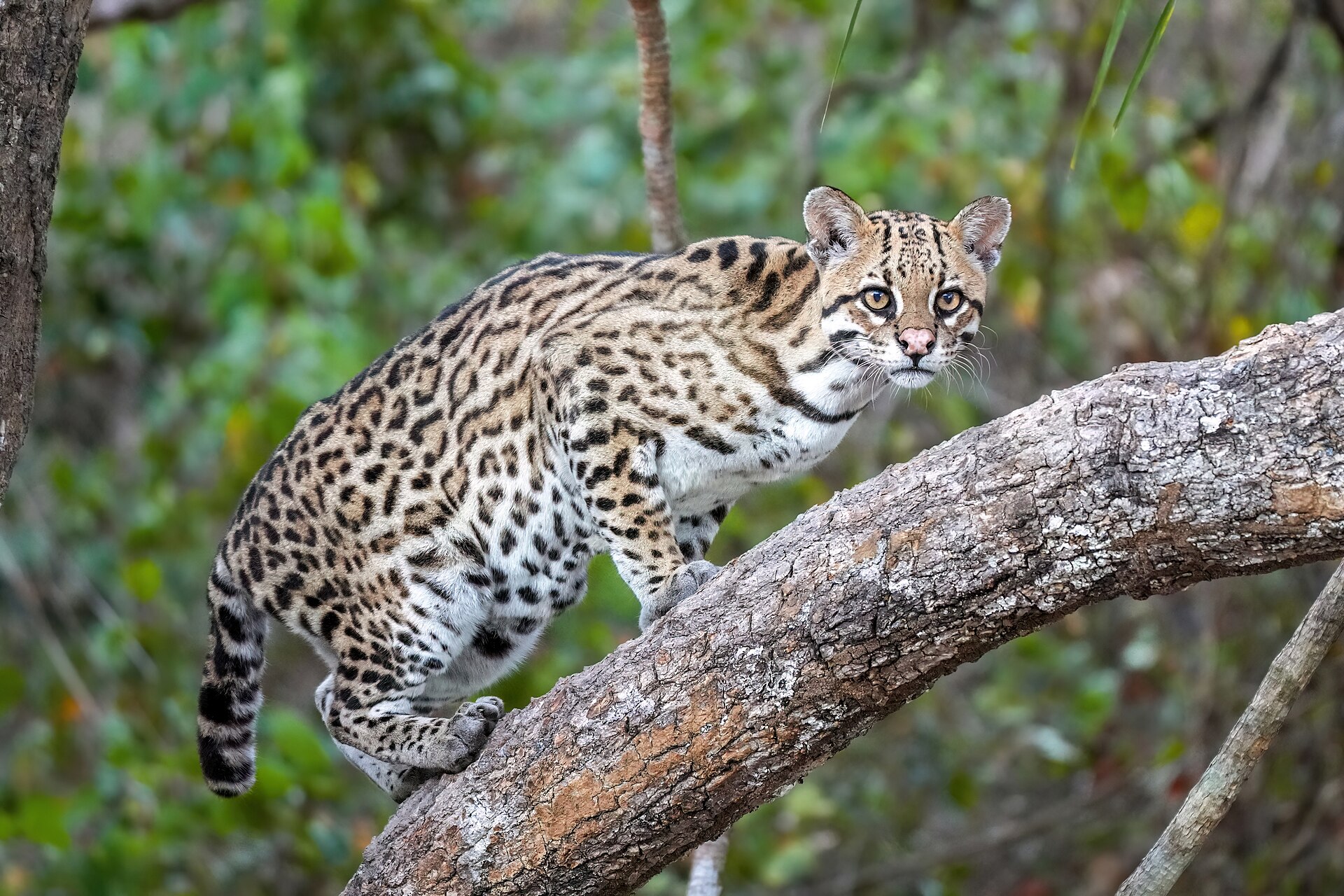
- Spectacular ROSETTE coat: black/brown rosettes on yellow-orange background — pattern is unique to each individual (like fingerprints!)
- Vast distribution: from southern Texas to northern Argentina
- Nocturnal-crepuscular
- Climber and swimmer: agile in trees, swims willingly (rare among felids)
- Solitary and territorial: 5-30 km² territories
- Predator of medium mammals: agouti (in catalogue!), paca, opossum, small monkeys
- Weight 8-15 kg: largest of genus Leopardus
IUCN status: Least Concern (LC) globally. Some subpopulations at risk (Texas: ~80 remaining, locally Endangered). Historically hunted intensively for fur, now protected by CITES.
Classification and category
Order Carnivora, family Felidae, subfamily Felinae, genus Leopardus. Genus contains ~10 species of "small spotted American cats": L. pardalis (this entry, largest), L. wiedii (Margay), L. tigrinus (Oncilla), L. geoffroyi (Geoffroy's cat), L. colocola (Pampas cat), L. jacobita (Andean cat, Endangered), L. guigna (Kodkod, smallest American cat). Closest relative: Margay (L. wiedii). Etymology: "Leopardus" Latin "small leopard". "Pardalis" Greek "leopard". "Ocelot" from Nahuatl "ōcēlōtl" (which actually meant "jaguar" to Aztecs!). Described by Linnaeus 1758. Parameters: Weight 8-15 kg (record 18.6 kg). Length 70-100 cm. Shoulder 40-50 cm. Tail 30-45 cm. Longevity 8-12 years natural, 20+ captive (record 23). Litter 1-3 cubs (avg 1-2). 1 litter every 1-2 years.
Habitat and distribution
One of widest distributions among American cats. USA (S. Texas ~80 individuals, locally Endangered), Mexico, all Central America, all of northern/central South America to N. Argentina, Trinidad. Habitats: tropical rainforest (main), deciduous forest, mangroves, savannas/cerrado, thorn scrub (Texas/Mexico), wetlands/Pantanal. Needs dense vegetation cover. Avoids open areas, true deserts, urban, high mountains. IUCN: Least Concern globally. Texas Endangered. Threats: fur hunting (historically 200,000+ pelts/year in 1980!), habitat loss, fragmentation, road accidents (main Texas cause), pet trade, persecution. CITES: Appendix I.
Diet
Generalist carnivore of medium-small prey. Diet: small/medium mammals 65-90% (rodents — agouti, paca, rats; opossums, armadillos, rabbits, small monkeys), reptiles (lizards, snakes, small turtles, young iguanas), birds 10-15%, fish and crustaceans (caught in water — Ocelot swims!), amphibians, large insects, occasional sloths, deer fawns. Hunting: nocturnal patrol (1-3 km/night) + olfaction/hearing + stalking + short charge + nape/throat bite. Versatile: hunts on ground, in trees, in water. 600-800 g meat/day.
Physical features
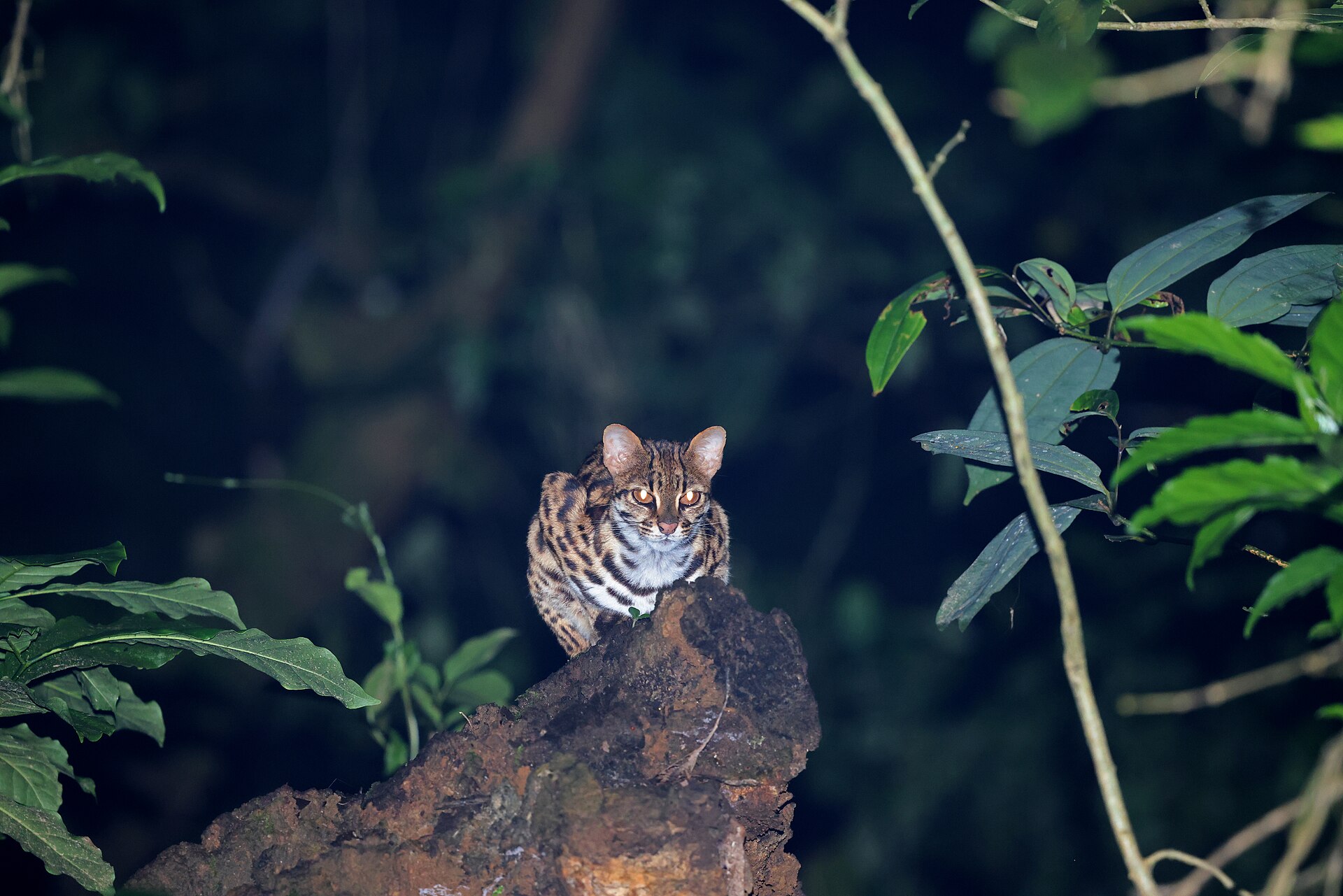
Elegant silhouette like a small leopard. Coat: yellow-orange/fulvous/grey-cream base, black/brown ROSETTES with lighter centers forming chains, UNIQUE to each individual (photo-ID), cheek/head stripes, white belly with black spots, ringed tail, ear "ocelli" (white dorsal spots = false eyes). Head: short robust muzzle, large brown-gold eyes (excellent night vision), rounded ears with ocelli, long vibrissae. Body: slender muscular, relatively short but strong legs ("Manigordo" = thick paws), retractable sharp claws, 30-45 cm tail. Speed 50-60 km/h, jump 2-3 m, excellent swimmer, excellent night vision.
Behaviour and curiosities
Solitary, nocturnal-crepuscular, territorial. Territory 5-15 km² F, 10-30 km² M. Polygamous. Gestation 79-85 days. Litter 1-3 cubs (small, K-selected strategy). Independence 12-24 months. Shy, rarely attacks humans. Predators: jaguar, puma (in catalogue), harpy eagle (in catalogue!), anaconda, caimans.
Famous: "unique coat" — every Ocelot has absolutely unique rosette pattern (fingerprint-like), used for photo-ID. "Jaguar name confusion": "Ocelot" from Nahuatl "ōcēlōtl" which meant JAGUAR to Aztecs! Spanish misapplied it. Salvador Dalí: had pet Ocelot "Babou", told a scared restaurant lady it was "a painted housecat"! Fur hunting: 140,000+ pelts/year USA imports 1970, 200,000+ globally 1980 — CITES Appendix I (1989) saved species. Texas Ocelot: ~80 remaining, Critically Endangered locally, road accidents main cause. Hunting versatility: ground, trees, water. Swimmer: rare among felids. Ear "ocelli": false eyes confuse predators. vs Margay: larger, shorter tail, more terrestrial (Margay rotates ankles 180° for head-first tree descent). Mesoamerican culture: Aztec ocelot/jaguar warriors elite. Longevity: 23 years Woodland Park Zoo.
Pros
- Mantello a rosette unico per ogni individuo (foto-ID)
- Distribuzione tra le più ampie tra felini americani
- Versatile cacciatore (terra, alberi, acqua)
- Storia di recupero da CITES (caccia pelliccia fermata)
Cons
- Sottopopolazione Texas Critically Endangered (~80)
- Bracconaggio illegale per pelliccia persiste
- Riproduzione lenta (nidiata 1-2 cuccioli)
- Vulnerabile a deforestazione e investimenti stradali